Scientists Discovered a Single Blood Molecule That Holds the Secret to Longer Life

A hidden blood molecule may hold the secret to slowing the aging clock.

©Image license via Canva

Scientists at the University of Tsukuba discovered a molecule called CtBP2 in the bloodstream that appears to regulate how your body ages. Their research found that higher levels of CtBP2 were linked to longer, healthier lives, while lower levels corresponded to faster decline. According to the study, this molecule acts like a “master switch” across organs rather than enforcing aging one tissue at a time.

It’s a breakthrough in understanding aging—not just as wear and tear but as a coordinated process. Measuring CtBP2 might one day tell you not just your age, but how your body is actually performing and how to slow the clock.

Read more

Retirees Are Trading Florida’s Beaches for Greece’s Islands — Here’s Why

The sunshine’s the same, but the lifestyle costs half as much.

©Image license via Canva

A surprising wave of American retirees is skipping Florida’s beaches and heading for Greece’s islands. The shift isn’t just about scenic views—it’s about value, simplicity, and a slower rhythm that’s becoming harder to find in the U.S. For many, this move feels less like a gamble and more like a return to balance.

Here’s why so many retirees are trading palm trees for olive groves and discovering their best years abroad.

Read more

These Online Memory Workouts Turn the Clock Back 10 Years

Scientists say your brain might be younger than you think—with the right kind of training.

©Image license via Canva

A groundbreaking study has found that a 10-week online memory program can reverse up to 10 years of brain aging. Participants didn’t need pills, surgery, or expensive therapies—just structured digital exercises that trained attention, working memory, and processing speed.

The results hint at something profound: the aging brain is far more adaptable than we’ve assumed. Here’s how this digital workout delivers such remarkable results.

Read more

Research Says Skip Short Strolls – Turns Out That Longer Daily Walks Are Better For Your Heart

Longer, steadier walks give your heart what short strolls can’t.

©Image license via Canva

Recent findings from a study led by University of Sydney and Universidad Europea show that walking in longer, continuous bouts—rather than brief, scattered strolls—reduces the risk of cardiovascular events and death. Participants who walked for at least 10–15 minutes in one stretch had markedly lower risks compared with those whose walks were under five minutes.

It turns out the body thrives on momentum: extending a walk into the 30-45-minute zone keeps the heart in a sustained training state, strengthens blood vessels, and teaches your metabolism to burn fuel more intelligently. Short strolls feel good—but longer walks reshape your cardiovascular baseline.

Read more

What If Time Travel Turned Out to Be Possible?

The biggest shock wouldn’t be that it works—it’d be how it changes everything we believe.

©Image license via iStock

If time travel suddenly became possible, it wouldn’t just alter history—it would rewrite what we think about existence, morality, and even identity. The moment someone could step into the past or future, the world would lose its sense of linear certainty. Nothing would ever feel final again.

Every decision, mistake, and memory would gain a new kind of fragility, and humanity would have to decide what to do with that power.

Read more

Health Symptoms Over-40s Should Never Ignore—Latest Life-Saving Breakthroughs

Your body whispers before it screams—if you listen, you can change everything.

©Image license via Canva

Hitting your forties doesn’t mean slowing down, but it does mean paying closer attention. Small aches or unusual fatigue can signal much more than just getting older. The good news is that modern medicine is catching up fast, offering new ways to detect and prevent disease before it takes hold.

Understanding the warning signs—and the breakthroughs behind them—can literally add years to your life, not just days to your calendar.

Read more

Sweden’s “Aging in Place” Model for Seniors is Brilliant

Independence doesn’t fade with age—it’s built into the system.

©Image license via Canva

Sweden has quietly perfected a model of senior living that keeps people in their homes longer, healthier, and happier. Instead of pushing older adults into institutional care, the country designs communities that support autonomy and connection. It’s not luck—it’s planning, policy, and respect for aging as a natural part of life.

Their approach redefines what it means to grow old, blending compassion with practicality in a way few nations have managed to match.

Read more

Global Report Finds Climate Change Is Causing Millions of Preventable Deaths

The planet isn’t just warming—it’s quietly shortening lives.

Residential street, palm trees bent by hurricane winds, flooded road, overcast daylight, documentary style, no people.
©Image license via iStock

A major global health report has confirmed what experts feared: climate change is directly causing millions of preventable deaths each year. Rising heat, worsening air quality, and collapsing ecosystems are converging into a public health emergency that no longer hides behind distant forecasts.

These deaths aren’t random—they’re systemic, predictable, and avoidable. Each statistic represents a person lost to conditions humanity still has the power to control.

Read more

Social Security’s 24% Cut Is Getting Closer — Here’s What Lawmakers Might Do

Congress has fewer than ten years to act before Social Security’s “haircut” becomes law.

©Image license via Canva

The beleaguered Social Security program is now projecting insolvency around late 2032, setting the stage for an automatic cut of roughly 24 percent in benefits unless lawmakers intervene. That looming drop could wipe out tens of thousands of dollars a year for couples retiring soon, turning what many assumed was a bedrock entitlement into a significant financial risk.

Here are the six most likely paths Congress might consider—and how they could reshape retirement for generations.

Read more

Millennial Parents Are Raising Kids Differently—and It’s Driving Their Boomer Parents Crazy

From gentle parenting to screen-time boundaries, millennials are rewriting the parenting playbook—and boomers aren’t sure what to make of it.

Bright living room, stressed older couple on couch, energetic kids running, daylight, documentary style, people.
©Image license via iStock

Millennial parents are breaking nearly every rule their own parents lived by. They’re questioning discipline styles, rethinking education, and prioritizing emotional intelligence over obedience. To boomers, it can look like chaos—or even weakness—but for millennials, it’s intentional. They’re raising kids in a different world, one that values empathy, inclusivity, and mental health as much as achievement. The generational clash is real, but beneath it lies something deeper: a shared hope for raising happier, healthier humans.

Read more

10 Topics Guaranteed to Start an Argument at Any Boomer Family Dinner

Everyone thinks they’re right, but nobody’s actually listening.

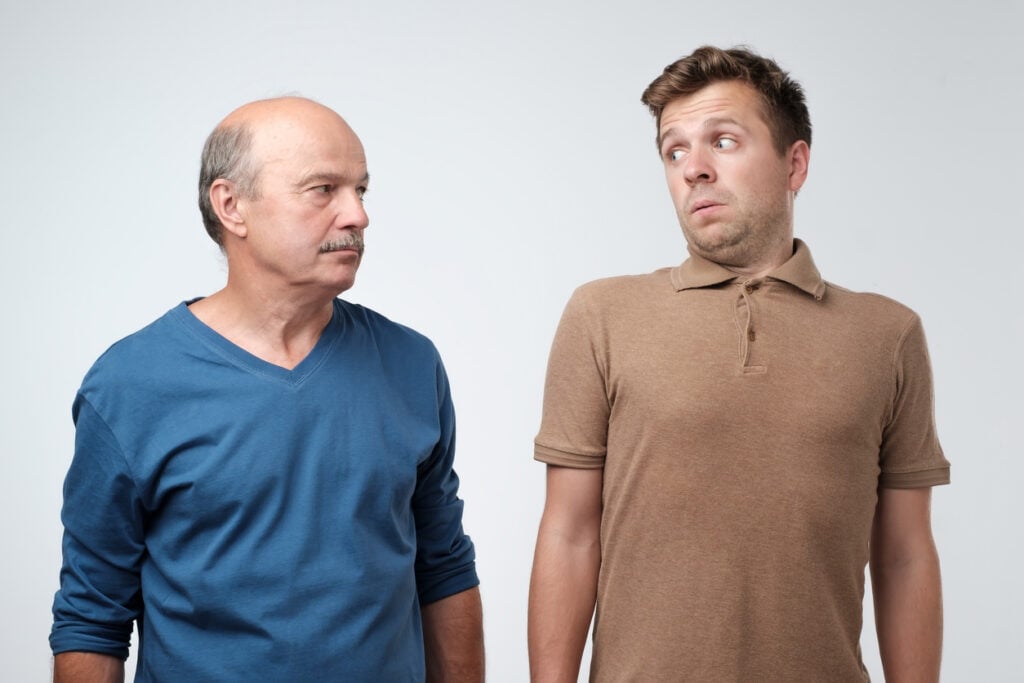
Plain backdrop, older man facing younger man, tense eye contact, even lighting, documentary style photograph, people.
©Image license via iStock

There’s something magical about a boomer family dinner—until someone mentions politics, taxes, or that one cousin who “doesn’t work.” Suddenly, the roast gets cold while voices rise and eye rolls become the evening’s soundtrack. Everyone at the table has a story, an opinion, and a memory that’s somehow more accurate than anyone else’s version.

The topics might sound innocent at first, but they’re time-tested grenades. All it takes is one comment to turn dinner into a full-blown debate no one wins.

Read more

Boomers Admit: These Are the 10 Skills They Wish They’d Mastered Earlier

The small, practical skills that make life run smoother.

Bright living room, two men on couch, focus on shared smartphone, daylight ambience, editorial travel photo, people present.
©Image license via iStock

Experience has a way of circling back and underlining the lessons that mattered. The list isn’t flashy; it’s the unglamorous toolkit that turns everyday friction into something manageable. Most people learn them piecemeal and too late to enjoy the compounding benefits.

The good news is that none of these skills require rare talent or perfect timing. A notebook, a few honest conversations, and small routines can move the needle fast. That’s the part many of us wish we’d known sooner.

Read more

Women Don’t Realize These Small Habits Are Making Them Less Likable As They Age

Subtle behaviors can slowly change how others see you—these habits might be costing your charm and warmth.

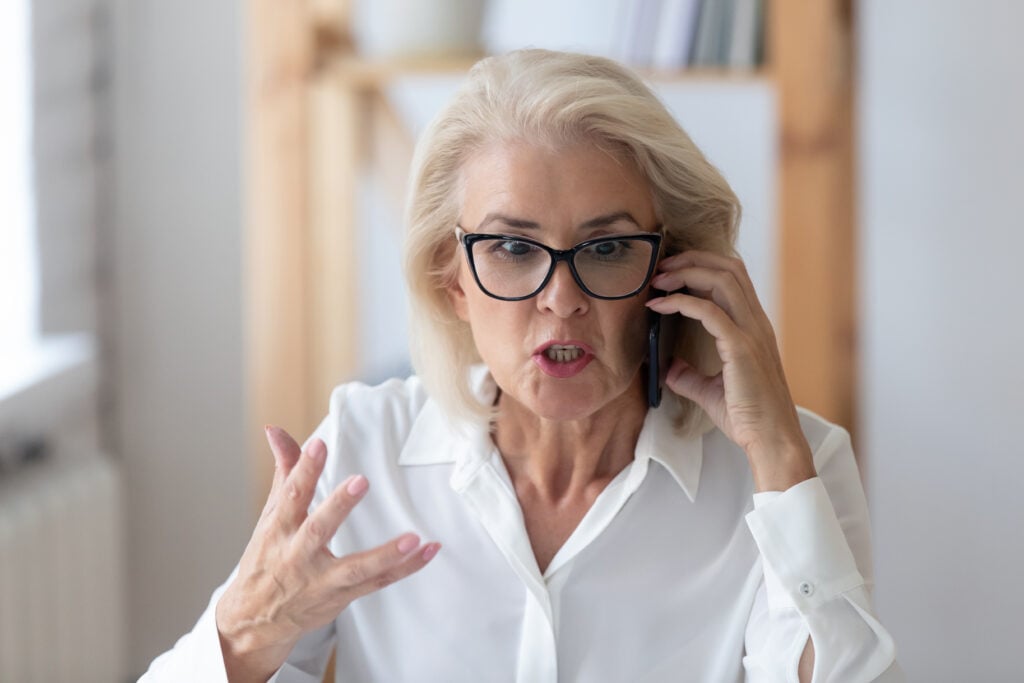
Indoor office, upset older woman on smartphone mid-gesture, waist-up view, daylight, documentary style, people.
©Image license via Canva

It’s easy to overlook the little things that change how people see us as we get older. Over time, small habits—like interrupting too often, dominating conversations, or seeming disinterested—can quietly chip away at the warmth others once felt toward you. The truth is, likability isn’t about age or looks; it’s about awareness and energy. When you start noticing these subtle patterns, you can shift them and rebuild the easy, magnetic charm that makes people genuinely enjoy being around you.

Read more

Why Boomers Are Starting to Admit They Got Some Things Wrong

After decades of confidence, many boomers are finally reflecting on the choices and beliefs that shaped a generation.

Kitchen interior, laptop-centered duo, wide composition, daytime natural light, documentary style, two surprised older adults.
©Image license via iStock

For years, boomers were seen as the generation that had it all figured out—financial security, strong values, and the drive to build a better life. But now, many are beginning to admit that not everything turned out the way they imagined. From career obsession to parenting styles and social attitudes, hindsight has brought a wave of humility. It’s not regret so much as realization—a willingness to own mistakes and grow wiser from them.

Read more