
A century-old claim about hidden caves containing egyptian artifacts continues to spark controversy and intrigue.
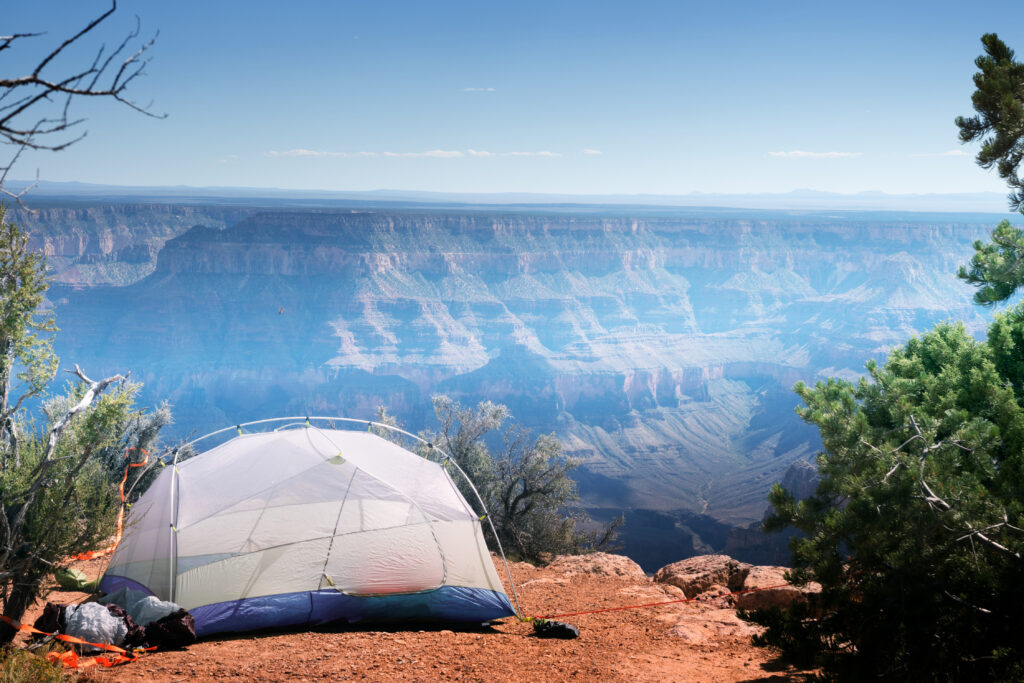
In 1909, a Grand Canyon explorer named G.E. Kincaid allegedly discovered an enormous underground citadel filled with Egyptian relics deep within the canyon walls. His story appeared in the Arizona Gazette, describing elaborate tunnels, hieroglyphics, and artifacts that would rewrite American history.
The Smithsonian Institution reportedly funded the expedition, yet today they deny any record of Kincaid, the expedition, or the discovery, fueling decades of speculation about what really happened.
1. The original newspaper article described an astonishing archaeological find in precise detail.

The Arizona Gazette published Kincaid’s account on April 5, 1909, claiming he discovered the entrance to a vast cavern system while rafting down the Colorado River. According to the article, Kincaid found a network of rooms carved into the canyon wall, some measuring up to 850 feet long. The report described Egyptian-style statues, copper instruments, hieroglyphics covering the walls, and mummies stored in burial chambers arranged in tiers.
Kincaid supposedly worked with Smithsonian archaeologist Professor S.A. Jordan, who led a team of researchers to catalog the findings. The article provided specific location details, mentioning the site was near the confluence of the Colorado and Little Colorado rivers. It described artifacts suggesting advanced civilization including granaries, sleeping quarters, and what appeared to be a shrine or temple area. The level of detail lent credibility to the story, making it seem like legitimate journalism rather than pure fabrication or hoax.
2. The Smithsonian Institution maintains no records of Kincaid, Jordan, or any such expedition.

Researchers have repeatedly contacted the Smithsonian seeking information about this alleged discovery, only to be told that no archaeologist named S.A. Jordan ever worked there. The institution has no documentation of funding an expedition to the Grand Canyon in 1909, no artifacts matching the descriptions, and no employee records for anyone named G.E. Kincaid. Their archives contain nothing about this supposedly groundbreaking find that would have revolutionized understanding of pre-Columbian America.
The Smithsonian’s consistent denial has taken various forms over the decades, ranging from flat rejections to polite suggestions that the story was likely a hoax or April Fool’s joke. Institution representatives have explained that they maintain meticulous records of all expeditions, acquisitions, and personnel, making it essentially impossible for something this significant to simply disappear. Skeptics point out that the timing—just days after April 1st—suggests the newspaper story might have been elaborate fiction designed to boost readership during a slow news period.
3. No physical evidence or location coordinates have ever been verified by independent researchers.

Despite the article’s seemingly specific geographical details, nobody has successfully located the cave entrance Kincaid described. The Grand Canyon covers an enormous area with countless caves and rock formations, but extensive searches by amateur archaeologists and treasure hunters have turned up nothing matching the description. Modern explorers using the article’s clues find that the landmarks don’t quite align or that access to certain areas would have been nearly impossible in 1909.
The National Park Service has fielded countless inquiries about the cave system over the years, and rangers consistently report that no such archaeological site exists in their records or experience. Some theorists suggest the entrance might have collapsed or been deliberately sealed, but geologists argue that closing off a cavern system of that magnitude would leave obvious traces. The complete absence of physical evidence—no artifacts in private collections, no photographs, no secondary accounts—makes the story increasingly difficult to support despite its persistent popularity.
4. The story taps into long-standing alternative theories about ancient trans-oceanic contact.

Tales of Egyptian or other Old World civilizations visiting the Americas before Columbus have circulated for centuries, appealing to those who question mainstream archaeological narratives. The Kincaid story fits neatly into this tradition, offering seemingly concrete evidence that ancient Egyptians crossed the Atlantic and established colonies in North America. Such theories gain traction because they’re exciting and challenge academic orthodoxy, even when they lack supporting evidence.
Legitimate archaeology has documented some pre-Columbian trans-oceanic contact, particularly Norse settlements in Newfoundland, but nothing suggests Egyptian presence in Arizona. The Grand Canyon story specifically resonates because it combines mystery, government denial, and exotic foreign civilizations in America’s iconic landscape. Believers argue that mainstream archaeology dismisses inconvenient discoveries that don’t fit established timelines, while skeptics counter that extraordinary claims require extraordinary evidence. The Kincaid tale provides neither the evidence nor the logical explanations that would satisfy scientific scrutiny, yet it persists in popular imagination.
5. Several elements of the original story contain suspicious details and internal inconsistencies.

The article describes finding Egyptian hieroglyphics, yet Egyptologists who’ve examined the published account note that the symbols described don’t match actual Egyptian writing systems. The architectural details sound impressive but combine elements from different Egyptian periods in ways that wouldn’t make historical sense. The supposed artifacts represent a hodgepodge of Egyptian, Tibetan, and other cultural items that wouldn’t plausibly appear together in a single site.
Additionally, the story claims Kincaid stumbled upon this discovery accidentally while alone, yet somehow the Smithsonian immediately launched a major expedition—a response time and commitment level that seems implausible for 1909. The article never explains how ancient Egyptians would have traveled thousands of miles inland to Arizona, or why they would have established a colony in such a remote location. These logical gaps and cultural mishmashes suggest someone with superficial knowledge of archaeology crafted an entertaining story rather than documenting a genuine discovery.
6. Conspiracy theories suggest the government deliberately suppresses evidence of the find.

Believers in the Kincaid story often claim that powerful institutions are hiding evidence that would upset established historical narratives and academic careers built on current theories. They argue the Smithsonian either destroyed the artifacts or has them locked away in storage where the public can’t access them. Some versions suggest the government classified the discovery for national security reasons, though what those reasons might be remains vague and unconvincing.
These conspiracy theories typically lack any supporting documentation—no whistleblowers, no leaked memos, no deathbed confessions from supposed participants. The arguments rely heavily on absence of evidence being treated as evidence of absence, a logical fallacy that conspiracy thinking frequently employs. More pragmatically, keeping such a monumental secret for over a century would require thousands of people remaining silent, including multiple generations of Smithsonian employees, Park Service rangers, and archaeologists. The larger and longer a conspiracy supposedly runs, the less plausible it becomes, yet true believers remain convinced.
7. The Arizona Gazette itself has a complicated history that raises questions about credibility.

The newspaper that published the original story was a small Phoenix publication that frequently ran sensational stories to compete with larger papers. Early 20th-century journalism standards differed dramatically from today, with fact-checking being less rigorous and entertainment value sometimes trumping accuracy. Papers regularly published tall tales, exaggerated accounts, and outright fabrications to sell copies, especially in the American West where readers expected colorful storytelling.
Researchers examining the Gazette’s archives have noted that the publication sometimes ran stories that were later proven false or that appeared nowhere else despite supposedly being major discoveries. The paper’s business model relied on attracting readers in a competitive market, creating incentives to publish eye-catching stories regardless of their veracity. The fact that no other newspaper picked up this supposedly revolutionary archaeological find—in an era when major discoveries were widely reported across multiple publications—strongly suggests the story never gained traction because journalists recognized it as dubious or fabricated content.
8. Modern archaeological methods have thoroughly explored the Grand Canyon without finding such evidence.

The Grand Canyon has been extensively surveyed, mapped, and studied by professional archaeologists over the past century using increasingly sophisticated technologies. Ground-penetrating radar, LIDAR mapping, and other tools have revealed numerous genuine archaeological sites throughout the canyon, primarily belonging to ancestral Puebloan and other Indigenous cultures. None of these scientific surveys have detected anything resembling the massive cave system Kincaid described with its Egyptian artifacts and architecture.
Genuine archaeological discoveries in the Grand Canyon have documented thousands of years of human habitation by Native American peoples, with fascinating but entirely different artifacts and structures than the Kincaid story suggests. These real finds demonstrate that when legitimate archaeological sites exist, they get discovered, documented, and studied rather than hidden away. The complete absence of corroborating evidence after decades of professional investigation strongly indicates the story was fiction, yet it remains one of the most enduring archaeological legends in American popular culture, demonstrating how compelling narratives can outlive facts.