
Ten minutes of effort can flip on protective biology in your blood.

It’s kind of wild to think your body can start sending out anti-cancer signals before your sweat even dries. But that’s what researchers are seeing when people do short, intense bursts of exercise, even something as simple as hard cycling for ten minutes.
In a recent study of overweight adults ages 50 to 78, post-exercise blood serum triggered DNA repair activity and suppressed cancer-linked genes in lab-grown colon cancer cells.
1. A 10-minute workout can change what’s floating in your bloodstream.

Short bursts of vigorous exercise don’t just burn calories, they change your internal chemistry fast. In the study, just 10 minutes of high-intensity cycling created measurable molecules in the blood that acted like anti-cancer signals. That alone should make people rethink the idea that only long workouts “count.”
The participants were overweight or obese and between 50 and 78, a group already at higher risk for certain cancers. That makes the finding more relevant, because it’s not based on 22-year-old athletes with perfect health.
2. Scientists tested blood before and after one intense cycling session.

This wasn’t a survey or a guess based on fitness trackers. Researchers at Newcastle University took blood serum samples from 30 volunteers right before and right after a 10-minute high-intensity cycling workout. Then they used that serum in a lab experiment.
It’s a clever setup because it isolates what exercise changes immediately. Nothing else had time to interfere. No supplement routine, no weight loss program, no month-long training plan. Just a simple before-and-after snapshot of what vigorous movement can switch on.
3. Post-exercise blood affected more than 1,300 genes in cancer cells.

Here’s the part that makes your eyebrows go up. When the researchers applied the post-exercise serum to lab-grown colon cancer cells, it altered over 1,300 genes. That’s not a subtle tweak. That’s a full-on message being delivered at a cellular level.
Some genes linked to DNA repair ramped up, and genes tied to rapid cell division dialed down. In plain language, the blood chemistry created by intense effort seemed to push cells toward more controlled behavior instead of reckless growth.
4. Interleukin-6 appears to play a key protective role.

One of the proteins connected to this effect is interleukin-6, which spikes during exercise and acts like a signaling molecule. People sometimes hear “inflammation” and panic, but this is a different context. Exercise-triggered signals can be temporary and useful.
The body uses these molecules to communicate and adapt. In this case, those signals may support DNA repair pathways and help slow down processes that cancer cells love. It’s like your muscles send out a quick memo that says, “Clean up and stabilize.”
5. Better DNA repair means fewer chances for mutations to snowball.
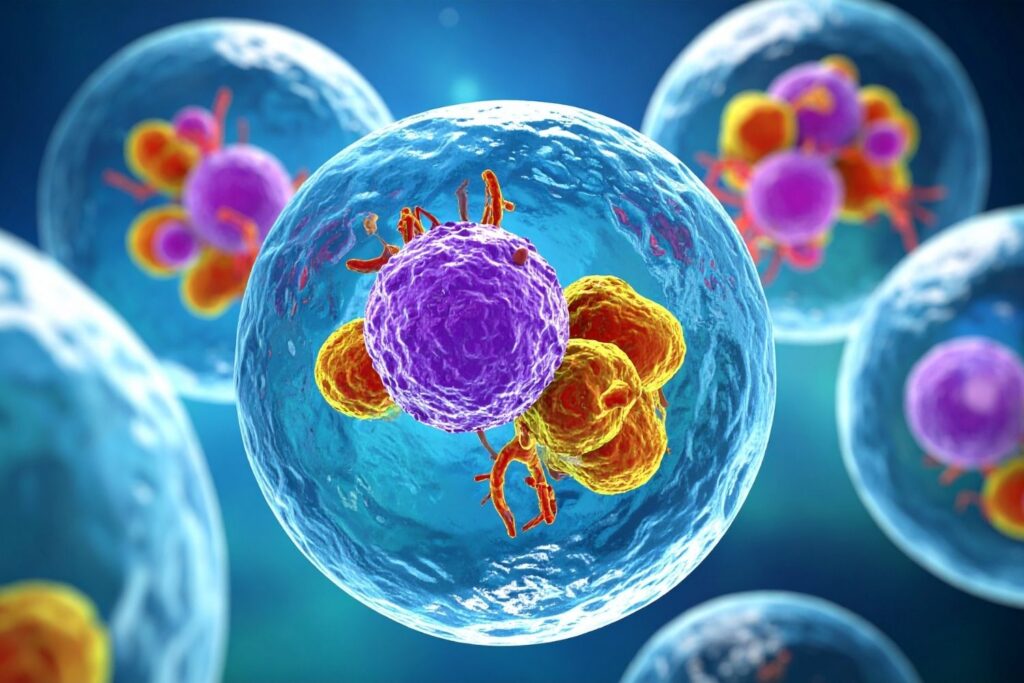
Cancer doesn’t begin as a full-blown disaster. It starts with damage, mistakes, and mutations that don’t get fixed. That’s why DNA repair is such a big deal. The study suggests intense exercise releases molecules that help the body strengthen that repair process.
That doesn’t mean ten minutes makes you immune to cancer. But it does suggest your body can become a little more “repair-oriented” after short bursts of hard effort. That’s a smart direction to move, especially as we get older.
6. Some cancer-related growth pathways get temporarily suppressed.

The post-exercise serum didn’t only boost repair. It also appeared to suppress genes involved in rapid cell growth and division, the exact kind of thing cancer cells thrive on. That’s a big part of the headline about “anti-cancer signals.”
It’s fascinating because it suggests exercise isn’t only prevention through weight control or fitness. It’s also a direct biochemical nudge, even after a single short session. Your blood literally becomes a different environment for cells to respond to.
7. The effect seems especially meaningful for colon cancer biology.

The lab experiment focused on colon cancer cells, and that matters because colon cancer risk rises with age, weight gain, insulin problems, and inflammation. It’s one of those cancers that feels quietly common, which makes this research hit harder.
The participants were ages 50 to 78, so the study wasn’t playing in the shallow end. It was looking at people with realistic risk factors. That makes the result feel less like fitness-world hype and more like something ordinary people can actually use.
8. Exercise also helps by improving insulin sensitivity and immunity.

Even outside the lab-cell gene changes, exercise is tied to lower cancer risk in other ways. Vigorous movement improves insulin sensitivity, reduces chronic inflammation, and boosts immune surveillance, which is your body’s ability to detect and clear abnormal cells.
These effects stack, and you don’t need marathon training to get them started. It’s more like your body responds to intensity as a signal that it needs to upgrade its internal systems. That’s a great trade for ten minutes of discomfort.
9. Tiny daily bursts may lower cancer risk more than people expect.

One of my favorite parts of this whole topic is how small the “dose” can be. Research has linked just 3 to 4 minutes a day of vigorous intermittent activity to a 17 to 32 percent lower risk of cancers like colon, breast, and lung in people who otherwise don’t exercise.
That’s the opposite of intimidating. It’s basically a few hard moments sprinkled into your day. Fast stairs, a brief cycling sprint, a short hill walk. You’re not training for a medal, you’re just flipping switches.
10. Older adults can use intensity without committing to long workouts.
At 67, a lot of people are active but tired of the idea that they need longer and longer sessions to “keep up.” This research points to something more doable: short high-effort bursts layered onto walking or strength training.
It’s a smart strategy because the time cost is tiny, but the biological signal can be strong. A brisk uphill walk for one minute, then recover. Repeat a few times. It’s not punishment. It’s a focused stimulus your body knows how to respond to.
11. The results are promising, but they’re not a medical guarantee.

It’s important to keep perspective. The study measured immediate post-exercise effects and tested them on lab-grown colon cancer cells. It did not prove long-term prevention in humans, and it didn’t show results across every cancer type.
Still, it’s a powerful clue that exercise creates fast, helpful biochemical changes. Bigger studies are needed, especially for people who already have a diagnosis. If you have joint issues, heart concerns, or medical limitations, it’s worth getting doctor approval before going hard.