
The biggest shock wouldn’t be that it works—it’d be how it changes everything we believe.
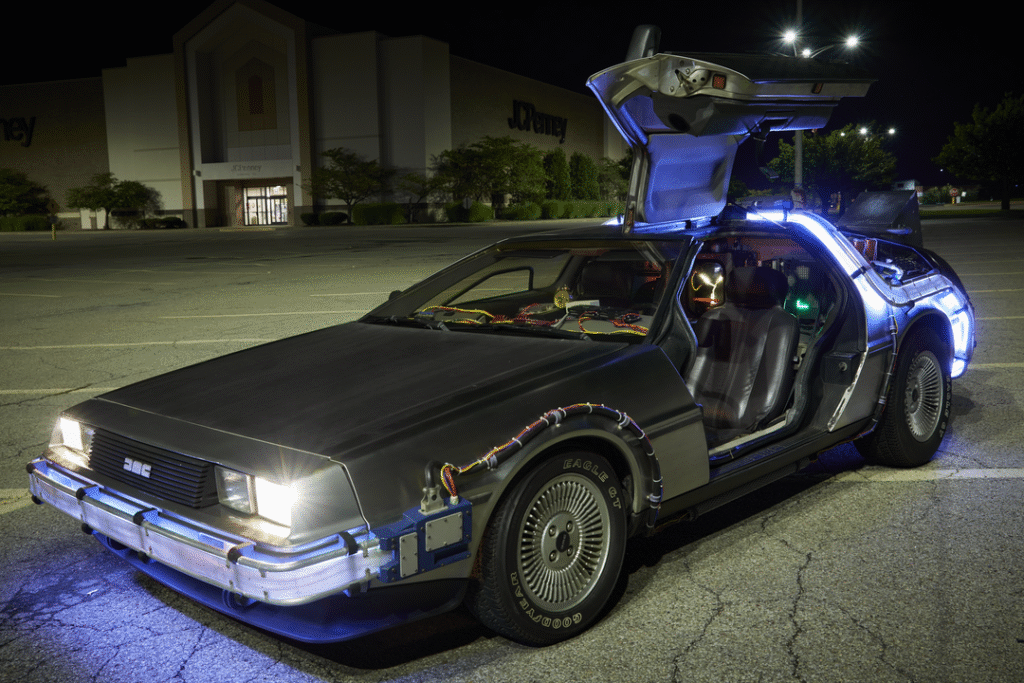
If time travel suddenly became possible, it wouldn’t just alter history—it would rewrite what we think about existence, morality, and even identity. The moment someone could step into the past or future, the world would lose its sense of linear certainty. Nothing would ever feel final again.
Every decision, mistake, and memory would gain a new kind of fragility, and humanity would have to decide what to do with that power.
1. History would stop feeling like history.

Once people could visit the past, it would no longer exist as distant or untouchable. Every recorded event would become an experience, not a story. Scholars would no longer debate what happened at Waterloo or ancient Rome—they’d witness it firsthand.
But that access would come with chaos. Competing interpretations of the “real” past could spark endless disputes. History, once stable, would become fluid. The more people traveled, the harder it would be to agree on what truly happened.
2. Regret would become a dangerous obsession.

Imagine knowing you could fix your biggest mistake—a lost love, a failed dream, a tragic moment. The temptation would be unbearable. Time travel would turn regret into a global addiction. People might spend their lives chasing second chances instead of living in the present.
Psychologists already warn about the weight of “what if.” Multiply that by actual opportunity, and the result could be emotional collapse. The ability to undo pain might destroy the very resilience that gives life meaning.
3. The economy would collapse and rebuild overnight.

If people could move through time, money would lose its foundation. Stocks, currencies, and property would become meaningless once future profits or past prices could be manipulated. The market would implode in a day.
But new industries would rise—temporal travel insurance, timeline regulation, time-tourism security. The concept of value would shift from scarcity to control of time itself. The new currency wouldn’t be gold or data—it’d be access to history.
4. Governments would weaponize time before anyone else.

Before everyday people got the chance to use it, time travel would become a geopolitical tool. Nations would race to alter critical events, rewrite outcomes, or secure technological advantages before their enemies. Wars wouldn’t just happen in space or cyberspace—they’d unfold across centuries.
Eventually, governments might agree to “temporal treaties,” but enforcement would be impossible. Once someone changes one thing, who decides what’s real anymore? The idea of international law would crumble under infinite versions of truth.
5. Relationships would fracture under constant revision.

If people could revisit moments in their relationships—first fights, breakups, or betrayals—they’d lose the ability to move forward. Every argument could be replayed. Every heartbreak could be “undone.” Love would no longer evolve; it would loop endlessly.
Some would use time travel to cling to perfect memories, refusing to accept how people change. Others might try to erase pain entirely. But without shared timelines, connection would dissolve. Love depends on continuity, and time travel would make that impossible.
6. Religion would face its greatest test yet.

Time travel would challenge faith at its core. People could witness supposed miracles or historical religious events firsthand—and the results might not match scripture. Belief built on mystery would struggle to survive under direct observation.
But paradoxically, time travel could also deepen spirituality. Seeing the enormity of time might humble humanity, reminding people how small and interconnected everything truly is. For some, proof would destroy faith; for others, it would strengthen it beyond measure.
7. Mortality would lose its meaning.

If someone could always go back and prevent death, the concept of mortality would dissolve. Losing loved ones would no longer be final—it would be optional. But that safety would erode the very thing that makes life precious: its impermanence.
Society might fracture between those who chase eternal life through time loops and those who still choose to live linearly. The question wouldn’t be how to survive—it’d be whether endless existence is worth the cost of feeling human.
8. Ethics would become unrecognizable.

Should you save one person if it means changing millions of lives down the line? Should you erase an atrocity knowing it might erase progress that came after? These moral dilemmas would dominate every debate.
Time travel would make “good” and “bad” unstable concepts. Every act of kindness could ripple into disaster; every tragedy could spawn beauty. Humanity would have to develop a new kind of ethics—one rooted in uncertainty rather than certainty.
9. Personal identity would blur beyond recognition.

If you could meet your younger or future self, which version would be “you”? Memory, aging, and experience would lose their order. People might exist in overlapping timelines, living multiple lives simultaneously.
Identity would fragment. Some would chase their “best” versions; others would collapse under too many realities. In the end, selfhood might become as fluid as time itself—an ever-shifting mosaic of choices, mistakes, and rewrites.
10. Curiosity would become humanity’s greatest threat—and its salvation.

Even knowing the risks, people would still go. Curiosity is built into us. We’d explore the past, the future, the unrecorded moments in between. And in doing so, we’d redefine what it means to exist at all.
Time travel wouldn’t destroy humanity—it would magnify it. Every flaw, every brilliance, every contradiction would stretch across centuries. The danger wouldn’t be the machine—it would be what we choose to do with it once the doors open.