
Ancient footprints and stone tools are forcing scientists to rethink everything.

For decades, school textbooks and museum exhibits told the same story — that humans first reached the Americas about 13,000 years ago. But new discoveries scattered across caves, riverbeds, and deserts are upending that timeline entirely. The evidence points to something astonishing: people may have been here tens of thousands of years earlier than anyone imagined.
Each unearthed clue deepens the mystery and suggests a far older chapter in human history still waiting to be understood.
1. Footprints in New Mexico shattered the timeline.

In White Sands National Park, researchers uncovered ancient footprints pressed into layers of sediment that date back roughly 23,000 years — possibly older. The prints belonged to adults and children walking along a once-lush lakeshore, leaving behind a ghostly record of life long before the last Ice Age ended. These tracks are now considered among the oldest direct evidence of humans in the Americas.
The dating of the footprints stunned archaeologists who long believed the “Clovis-first” theory. The precision of radiocarbon tests on ancient seeds embedded in the same layers has been cross-verified multiple times. For many scientists, these tracks were the moment they realized humanity’s American origin story wasn’t just off by a few centuries — but by tens of millennia.
2. Stone tools in Mexico predate the Ice Age migration.

Deep in a cave in central Mexico, archaeologists found more than 1,900 stone tools buried beneath layers of volcanic ash. Tests suggest they could be up to 30,000 years old — doubling the accepted timeline of human arrival in the Americas. These tools weren’t crude flakes; they showed sophisticated shaping, suggesting an established, thriving community.
Such a find challenges the idea that people only arrived after glaciers receded. It raises new possibilities: were early humans navigating coastlines or crossing land bridges long before the Ice Age thawed? The discovery in Mexico hints at migrations that might have occurred in waves, rewriting the entire understanding of when and how the first Americans truly came.
3. DNA evidence is complicating the narrative.

Genetic research has linked all Indigenous peoples in the Americas to a common ancestry in Siberia about 25,000 years ago. Yet the fossil and artifact record suggests humans may have been present even earlier. The genetic timelines and archaeological evidence don’t quite line up, forcing scientists to question how these early populations spread and survived.
Some researchers now propose that earlier groups came before the ancestors of modern Native Americans — and possibly disappeared without descendants. It’s a haunting idea: entire populations lost to time, leaving behind only a few tools or footprints. The DNA mystery reminds us that migration wasn’t one event, but a long, unpredictable process that spanned thousands of years.
4. The Bering Land Bridge may not have been the only route.
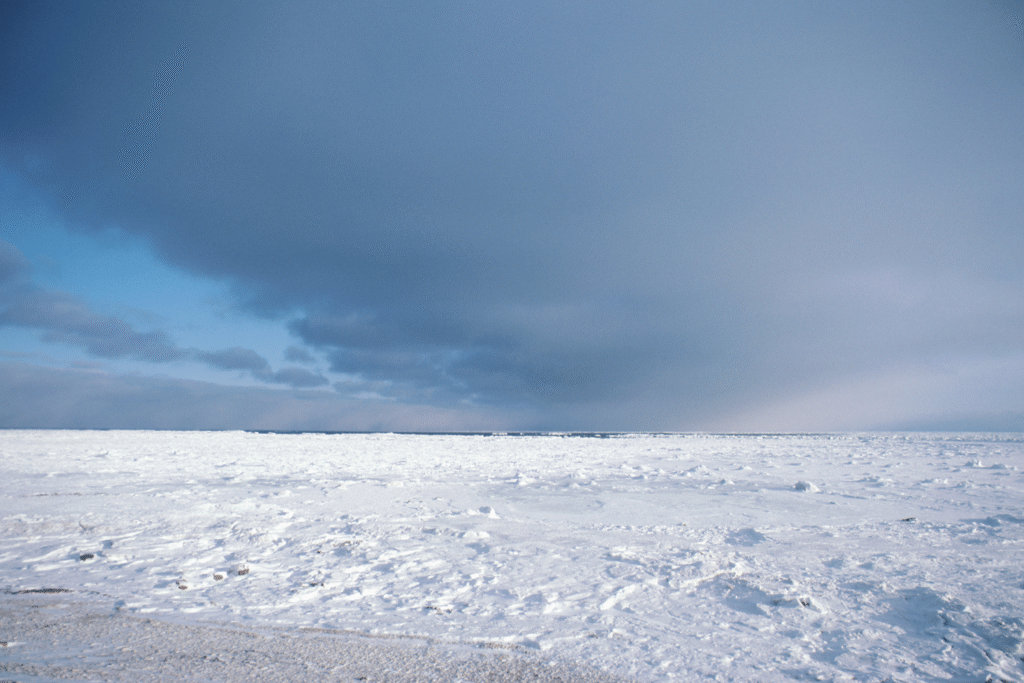
For generations, textbooks taught that humans crossed into the Americas via the Bering Land Bridge between Siberia and Alaska. But new research suggests this wasn’t the only way in. Some scientists argue early travelers may have followed the Pacific coast by boat, surviving on shellfish and seaweed as they made their way south.
This theory, known as the “kelp highway hypothesis,” is gaining traction as more coastal sites emerge. Rising sea levels have likely swallowed many of these ancient settlements, leaving gaps in the record. Still, hints of maritime migration are beginning to surface, offering a more complex picture of how the first Americans might have reached this vast, uncharted land.
5. Artifacts in South America defy logic.

Sites in Brazil and Chile contain stone tools and charcoal deposits that date back more than 25,000 years. One famous site, Monte Verde in Chile, has long puzzled researchers with its preserved wooden structures, hearths, and even plant remains that suggest year-round occupation. The people who lived there were not transient wanderers — they had adapted fully to their environment.
If Monte Verde’s dating holds true, it means humans reached the southern tip of South America thousands of years before traditional migration models allow. That defies not only timelines but also logic: these early travelers would have had to traverse glaciers, deserts, and mountains long before roads or trails existed. It’s proof that human resilience knows no era.
6. Ancient tools hint at forgotten cultures.

Some artifacts found in North America bear no resemblance to Clovis points — the finely crafted spearheads once believed to mark the continent’s first inhabitants. Instead, these tools show styles seen nowhere else, implying that earlier, unrelated cultures existed and later vanished without trace. Their disappearance raises profound questions about survival, adaptation, and memory.
Were these early groups wiped out by climate shifts, disease, or competing tribes? The silence in the archaeological record makes it impossible to say for sure. What’s certain is that multiple cultures may have risen and fallen long before history began recording human presence here. The first Americans, it seems, were far from a single story.
7. The mystery forces us to rethink what we know about ourselves.

Every new discovery reshapes the narrative of how humans spread across the planet. The evidence now points to a far earlier and more complicated migration than once imagined — one that required courage, innovation, and persistence. These early travelers weren’t primitive wanderers; they were explorers carving paths into an unknown world.
Their legacy still ripples through modern science, forcing us to confront just how little we truly understand about our beginnings. The story of the first Americans is no longer about when they arrived — it’s about how their presence continues to redefine what it means to be human.