
Scientists say losing your sense of smell could quietly predict how long you’ll live.

New research has revealed a startling connection between a fading sense of smell and an increased risk of early death. Multiple long-term studies show that olfactory loss can predict mortality more accurately than some chronic diseases, including cancer and heart failure.
The findings suggest that your nose may be more than a sensory organ—it might be an early warning system for overall health and longevity.
1. Loss of smell predicts death better than major diseases.

In several large studies, adults who failed simple smell tests were 46% more likely to die within ten years compared to those with normal olfactory function. Even after adjusting for age, smoking, and existing illnesses, the link remained strong. In fact, it sometimes outperformed traditional predictors like cardiovascular disease or diabetes.
Scientists say the correlation doesn’t mean smell loss causes death directly—it’s a sign that something deeper is wrong. The brain’s olfactory system is tightly linked to neurological and metabolic health, meaning its decline may signal early system-wide deterioration long before symptoms appear elsewhere.
2. The sense of smell is connected to the nervous system’s health.
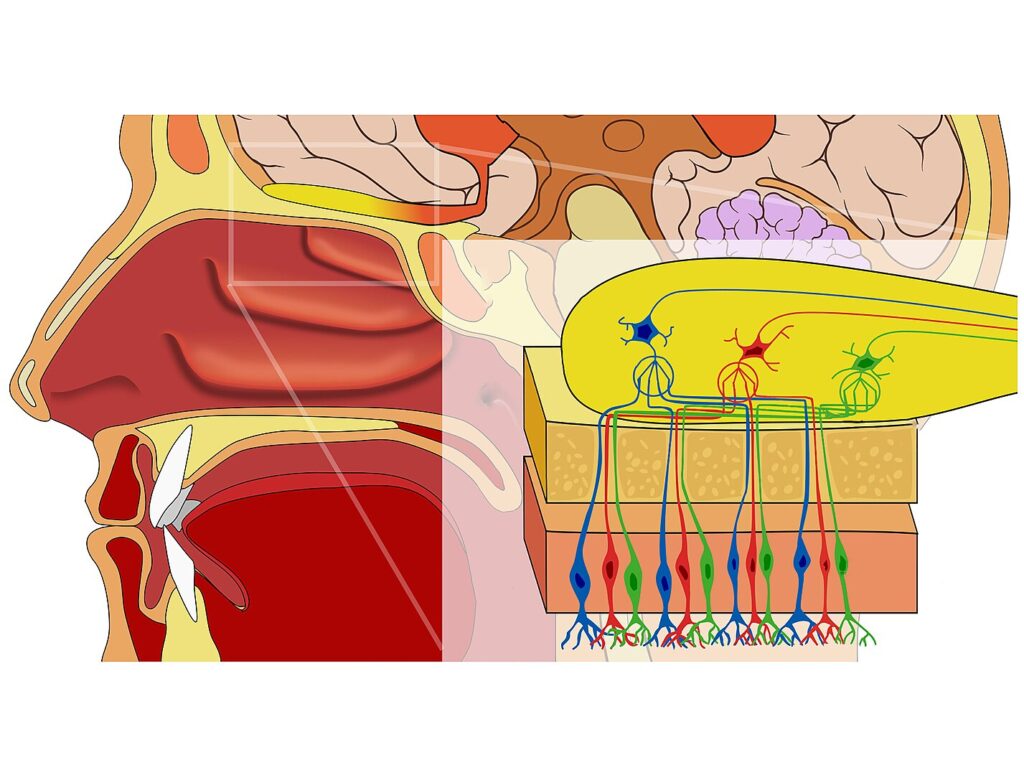
Your sense of smell relies on nerve cells that regenerate regularly, one of the few parts of the body that can do so. When this regeneration slows or stops, it’s often a sign of broader aging processes affecting the brain and nervous system. Researchers believe this is why loss of smell is an early symptom in conditions like Parkinson’s and Alzheimer’s disease.
Essentially, a weakened sense of smell might indicate the brain is losing resilience. It’s like a small sensor going offline, hinting that deeper neural circuits are struggling to repair or communicate effectively. That’s why doctors now view it as an early red flag rather than a minor inconvenience.
3. Smell loss often appears before dementia or Parkinson’s.

One of the most consistent findings in recent research is that smell loss frequently precedes cognitive decline by several years. People who later develop Alzheimer’s or Parkinson’s often show early olfactory dysfunction long before diagnosis. It’s becoming one of the most reliable early indicators of these diseases.
By the time symptoms like memory loss or tremors appear, brain damage is often well underway. Smell testing could help catch these conditions earlier, allowing intervention when it can still make a difference. The nose, it turns out, may offer a rare window into the brain’s earliest warning signs.
4. Poor smell can lead to malnutrition and other risks.

Beyond neurological concerns, losing your sense of smell can subtly harm physical health. People with smell loss often lose their appetite or fail to enjoy food, leading to poor nutrition or weight loss. They’re also more likely to miss warning odors like gas leaks, smoke, or spoiled food, raising the risk of accidents or illness.
These small hazards can accumulate over time, especially in older adults. Malnutrition alone weakens immunity and recovery ability, compounding other age-related risks. What seems like a sensory quirk can quickly become a chain reaction affecting overall vitality.
5. It may signal overall frailty, not just one illness.

Scientists emphasize that smell loss isn’t necessarily about a single disease—it’s often a sign of systemic frailty. The body’s ability to repair and regenerate declines with age, and the olfactory system is one of the first places that shows it. In studies, older adults who struggled with smell tests were four times more likely to die within five years.
That makes olfactory decline a kind of health barometer. It reveals how well your body’s systems are holding up under the stress of aging, chronic inflammation, and declining cellular function—all factors that quietly shorten lifespan.
6. Doctors are calling for routine smell testing in older adults.

Medical experts now believe smell testing could become as common as blood pressure checks for seniors. It’s simple, inexpensive, and provides critical insight into neurological and metabolic health. Detecting olfactory dysfunction early could help identify at-risk patients before serious diseases take hold.
Preventive care is shifting toward subtle biological signals, and smell is emerging as one of the most telling. In the near future, your doctor might ask not just how you’re feeling—but how well you can smell your morning coffee.
7. The loss of smell shouldn’t be ignored.

A declining sense of smell might seem harmless or merely inconvenient, but researchers say it deserves attention. If you suddenly find yourself unable to detect odors as clearly, it’s worth getting evaluated. In some cases, it could indicate reversible causes like sinus issues, but persistent loss may signal deeper health concerns.
The takeaway is simple: your nose is talking to you. Smell isn’t just about savoring life’s pleasures—it’s a direct reflection of how well your body and brain are functioning. Listening to it might just add years to your life.