
Scientists are stunned by a new predator technique unfolding off Mexico’s coast.

Marine biologists studying the waters near Baja California have documented killer whales using an unprecedented strategy to hunt great white sharks — flipping them upside down to paralyze them. The footage, both brutal and brilliant, has challenged everything scientists thought they knew about ocean predators.
The behavior reveals a chilling level of intelligence and teamwork among orcas, proving they may be the most cunning hunters in the sea.
1. The tactic exploits a shark’s hidden weakness.

When a shark is flipped upside down, it falls into a trance-like state called tonic immobility. For up to fifteen minutes, the animal becomes completely paralyzed, unable to move or defend itself. Orcas have somehow figured this out — and use it with eerie precision. Observers have watched pods isolate a great white, then flip it over with shocking coordination.
In those frozen moments, the shark’s power becomes its downfall. The orcas take advantage of its helpless state to extract the liver — a nutrient-rich organ they seem to specifically target. No other predator in the ocean is known to use this tactic, and its emergence suggests an evolutionary leap in how orcas understand and manipulate their prey.
2. The attacks show advanced social intelligence.
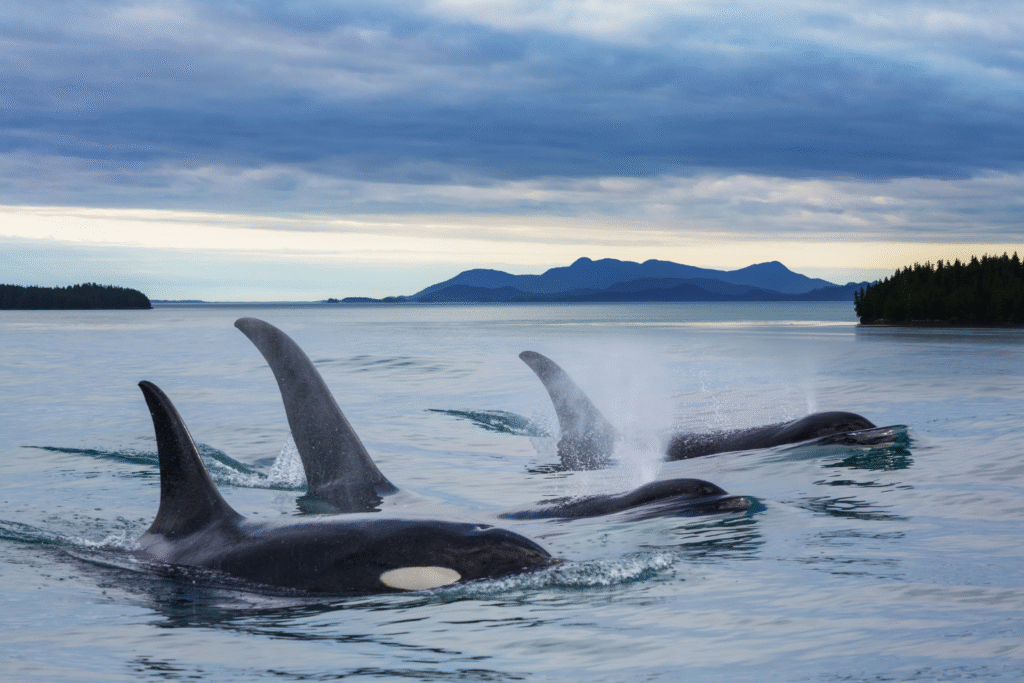
Each orca in the pod plays a distinct role during a hunt, suggesting remarkable communication and planning. Some create chaos by ramming or circling the shark, while others wait for the perfect moment to flip it. The precision is unnerving, as though they’ve rehearsed every move. These hunts unfold with an efficiency that rivals any pack of land predators.
Such coordination isn’t accidental — it reflects deep social learning and imitation within the pod. Young orcas appear to study these kills closely, learning from their elders. The behavior isn’t just instinct; it’s culture. That makes this tactic more than an adaptation — it’s a passed-down survival skill, proving orcas are redefining what animal intelligence looks like.
3. Great white sharks are abandoning key territories.
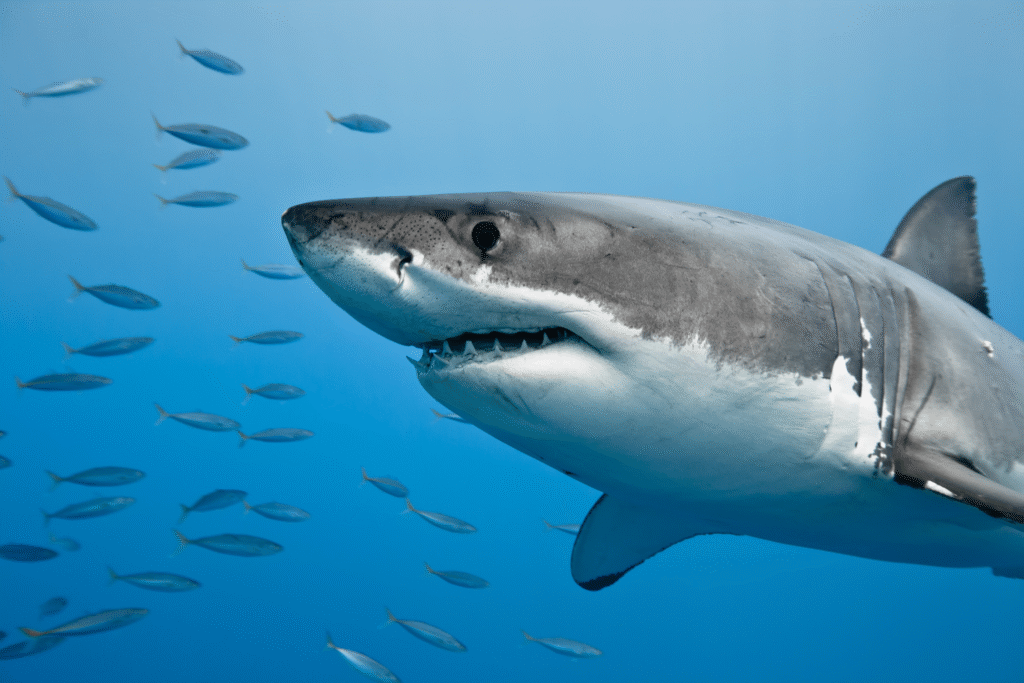
Following a series of these orca attacks, researchers have noticed an eerie silence across once shark-dominated waters. In regions near Guadalupe Island, great whites vanished almost overnight, fleeing the very places they once ruled. The ocean’s balance is shifting, and apex predators are now playing defense.
The sudden absence of sharks has ripple effects throughout the ecosystem. Seal populations, previously controlled by shark predation, are beginning to rebound, altering local food webs. Orcas’ new hunting dominance is forcing a historic reshuffling of marine hierarchies. For the first time, great whites seem to have met their match — and they’re retreating fast.
4. The liver obsession reveals a deeper motive.
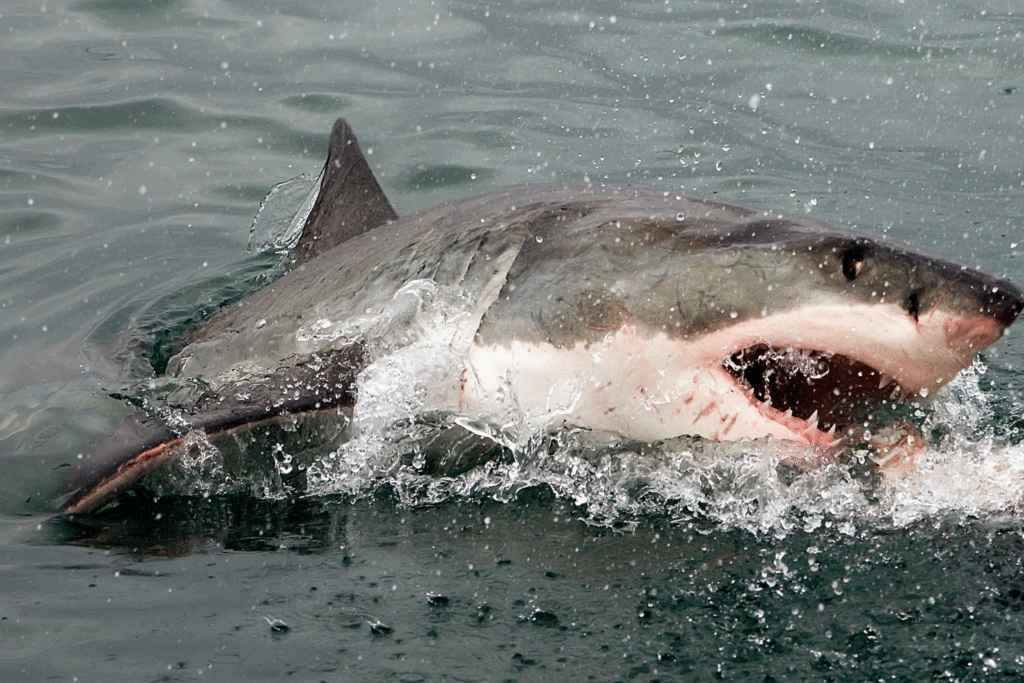
When scientists examine the shark carcasses left behind, a pattern emerges: the livers are missing, but most of the body remains untouched. Orcas appear to extract them with surgical precision, puncturing specific areas just below the pectoral fins. The liver is massive — rich in fats and buoyant oils that serve as an energy powerhouse.
This selective feeding hints at calculated efficiency. Instead of wasting time consuming an entire shark, orcas take only the most nutritious part, then move on. Such behavior shows not only intelligence but restraint — they kill for fuel, not frenzy. In nature, efficiency often signals evolution at work, and these orcas seem to have mastered it.
5. The behavior may be spreading among pods.

Marine biologists are starting to see similar shark-hunting tactics appear in other regions, suggesting orcas might be teaching one another across vast distances. These aren’t isolated incidents — they could represent the early stages of a learned cultural trend within the species. It’s how innovation spreads in the animal kingdom.
If the behavior continues to spread, great white populations could decline sharply in certain areas. Orcas are already apex predators, but this shared knowledge could cement their dominance across oceans. It’s an extraordinary example of how intelligence and adaptability allow one species to quietly rewrite the rules of survival.
6. Researchers are questioning what triggered the shift.

The sudden emergence of this hunting style has scientists asking what drove orcas to target sharks in the first place. Some believe declining fish stocks and environmental changes have pushed them to seek alternative prey. Others think it’s curiosity turned mastery — a learned behavior that started as exploration and became a perfected craft.
Whatever the origin, it reflects orcas’ unmatched ability to adapt. Few animals can reprogram their diets and strategies so fluidly. The shift also hints at a larger truth about marine ecosystems: when one predator evolves, the ripple effect touches everything that swims, feeds, or hides beneath the waves.
7. The discovery blurs the line between intelligence and strategy.

Orcas’ shark-flipping technique feels almost cinematic — too deliberate to be dismissed as instinct. It’s forcing scientists to reconsider what “intelligence” means in the wild. These animals plan, coordinate, and execute with eerie precision. Their actions show foresight, patience, and even a sense of experimentation.
For humans, it’s both fascinating and unsettling to witness nature’s top minds at work. The orcas off Mexico’s coast have revealed not just a new way to hunt, but a new way to think about power beneath the waves. In the vast ocean chessboard, the sharks may have ruled the board — but the orcas are now rewriting the game.