
Attics often house forgotten treasures from the Boomer era with stories worth revisiting today.

Hidden away in cardboard boxes and dusty trunks, vintage household items from the Baby Boomer era quietly carry decades of stories. These relics, once central to daily life, now rest in attics across the country, waiting to be appreciated anew. From rotary phones to crocheted wall hangings, each object offers a glimpse into mid-century life and design. Exploring these pieces helps preserve personal history—and might even breathe new life into your home.
1. Rotary phones with cords that stretch across the hall.

Rotary phones converted spoken words into electrical pulses, routing calls through switchboards operated by hand or machine. The curly wires stretched across living rooms, often coiling under doorways or snagging table legs as family members paced during conversations.
Once unremarkable, the phone’s heavy handset and mechanical dial now serve as tactile memories of slower communication—recalling birthday calls placed with the deliberate spin of a numbered wheel, followed by the faint click-click-click as it reset.
2. Vinyl record collections packed in milk crates and cardboard sleeves.
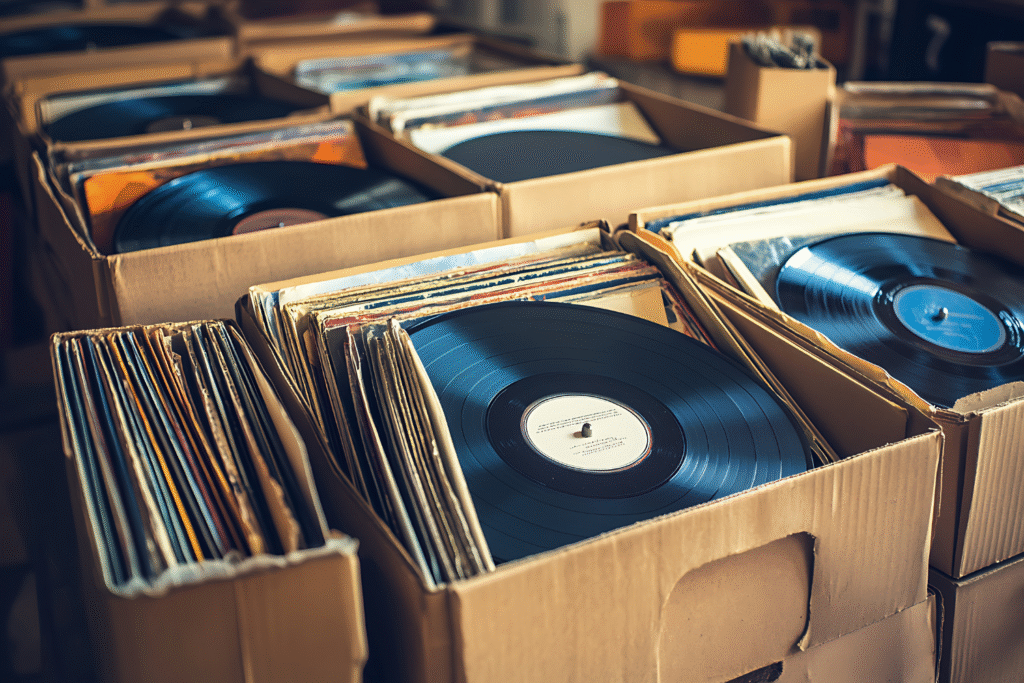
Vinyl records stored in milk crates or cardboard sleeves could stack taller than a toddler, with covers faded at the corners or marked by ring wear. These analog disks carried music physically—grooves etched into vinyl by a cutting lathe.
That physicality mattered to the listening ritual: lifting the needle arm, hearing the soft crackle before track one. Albums didn’t just play; they invited listeners to pause, flip sides, and settle into full-length stories sung at 33 revolutions per minute.
3. Wood-paneled TV sets with buttons that click when you change channels.

Wood-paneled televisions served as both appliance and furniture, often anchoring entire living rooms beneath family portraits or vases of artificial flowers. The channel knobs turned with a firm click, sometimes requiring a good smack if the image rolled or ghosted.
Many included built-in speakers with fabric grilles to the sides, giving the units a console look. Tuning into Saturday morning cartoons or game shows meant negotiating with siblings and manually adjusting rabbit-ear antennas for a clearer picture.
4. Polaroid cameras with faded snapshots still tucked inside.

Original Polaroid cameras used self-developing film to produce nearly instant photos, requiring a steady hand and a smooth pull from the camera’s front slot. The square images emerged cloudy, then slowly sharpened in daylight as chemical layers reacted.
Snapshots often remained tucked behind photo flaps or travel souvenirs—quick captures of birthday cakes, backyard barbecues, or first days of school. Some still wait in family albums, colored now in soft pastels and slightly curled at the corners.
5. Manual typewriters with sticky keys and worn ribbon spools.
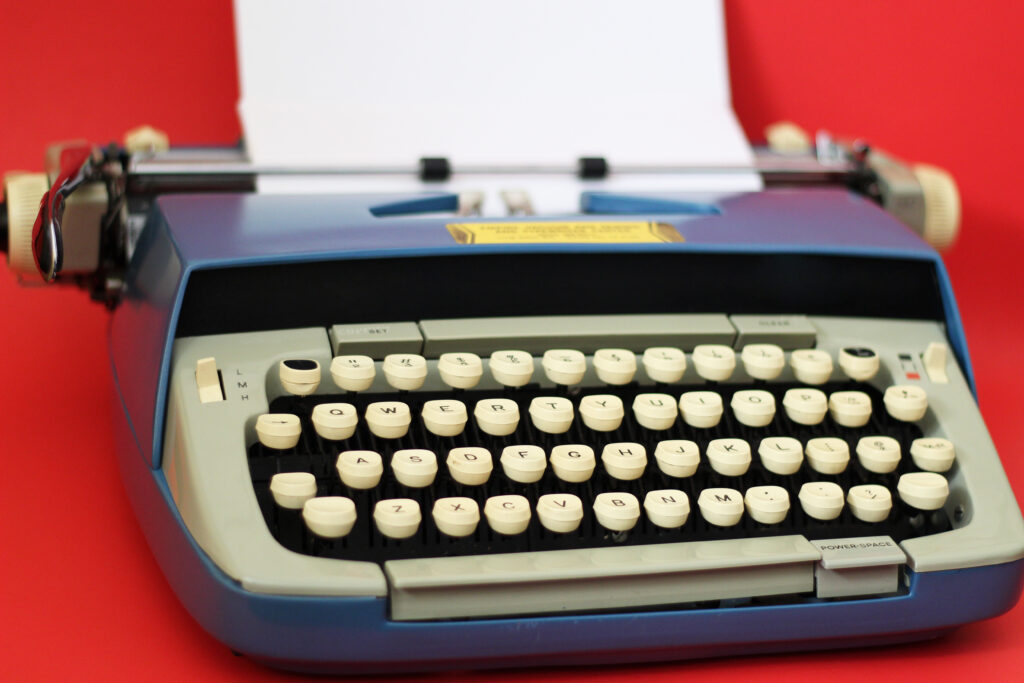
Manual typewriters required deliberate pressure on the keys, striking inked letters through a ribbon and onto paper. Models often had metal arms that jammed when pressed too quickly, forcing a pause and a gentle nudge to separate them.
The clatter of the carriage return and ding of the bell marked each line’s end. Drafting letters or college essays on these machines demanded patience, especially when fixing a typo meant starting the page again from scratch.
6. Macramé plant holders and crochet wall hangings from retro home decor.
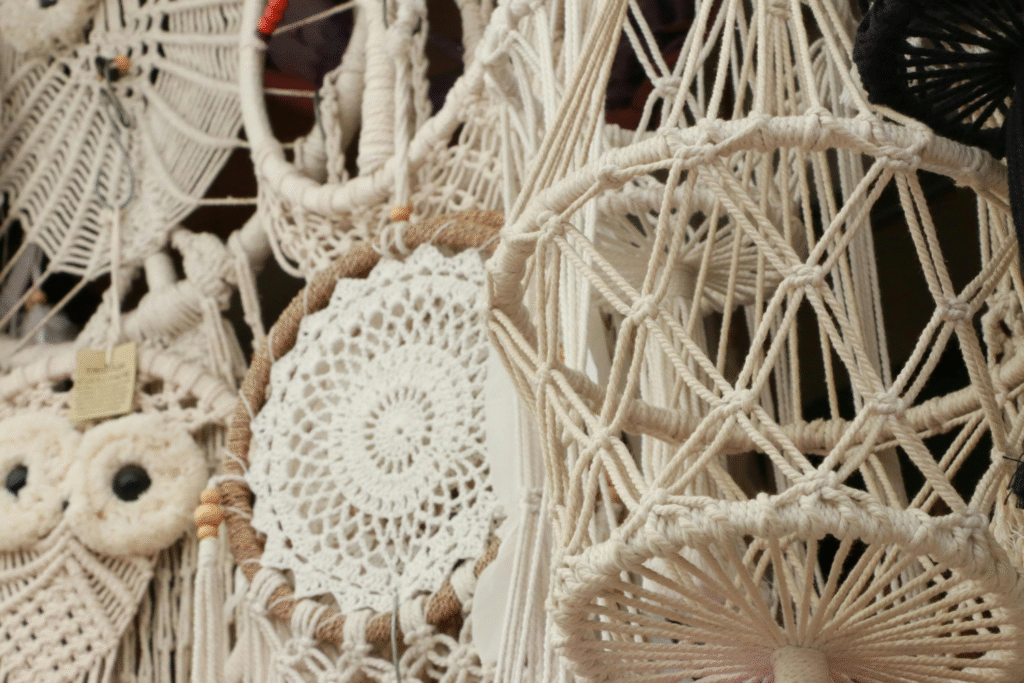
Macramé plant holders knotted from cotton rope often cradled spider plants or ivy, suspended from ceiling hooks in sunlit kitchens. Nearby, crochet wall hangings added loops of orange, mustard, and avocado yarn to textured white walls.
The handmade pieces reflected leisure time spent crafting at kitchen tables scattered with spools, scissors, and half-knotted strands. Now packed in attic boxes, their fringe remains soft under dust, shaped by years of gentle swaying near open window panes.
7. Bell-bottom jeans folded neatly next to stacks of concert tees.
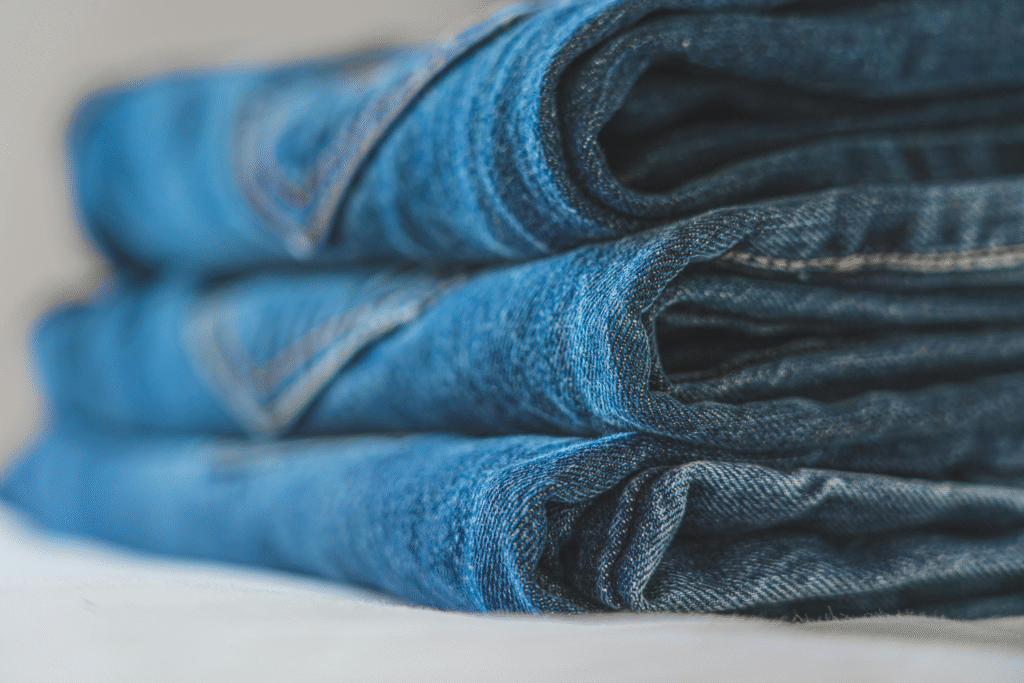
Bell-bottom jeans flared dramatically from the knee, brushing the tops of corduroy couches or leather boots tapped in concert lines. Their thick seams and faded thighs held the shape of the wearer’s movements across years of dancing and warm pavement.
Beside them, stacks of soft concert tees told music-lover timelines: logos from Rolling Stones tours or local punk nights screen-printed in fuzzy ink. The fabric, worn thin at the collar, still carries the faint scent of patchouli and laundry soap.
8. Tin lunchboxes with superheroes or cartoon prints from morning cartoons.
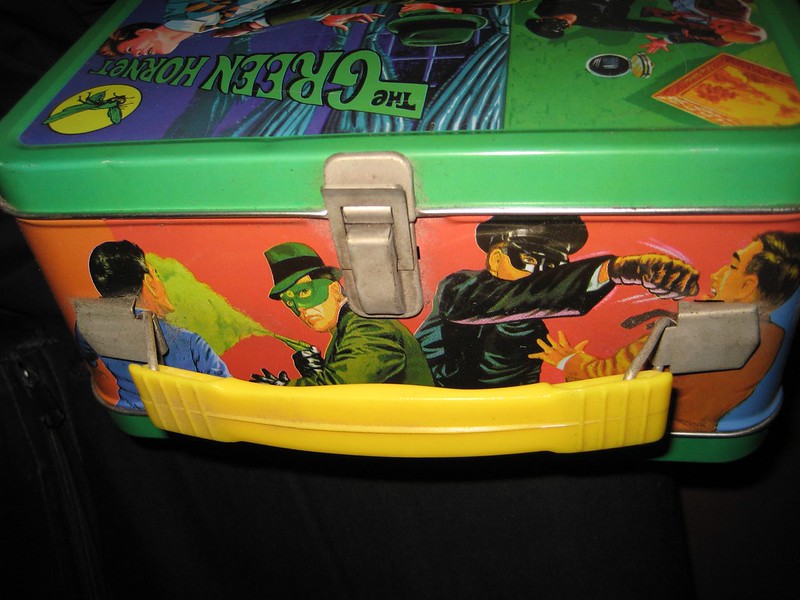
Tin lunchboxes once clanked in school halls, painted with superheroes, cartoons, or pop stars under chipped enamel. Their metal clasps creaked open to sandwiches wrapped in wax paper, apple slices browning near a thermos filled with chocolate milk.
Illustrated panels often dented from locker tumbles or sibling squabbles, these lunchboxes acted as mobile billboards of taste and age. Kept in attics, they preserve both quirky graphics and the echo of grade school chatter over linoleum floors.
9. Lava lamps with murky liquid waiting to swirl again.

Lava lamps used heat from a bulb to liquefy colored wax, sending it aloft in slow domes before breaking into blobs. The transparent glass cone, warm to the touch, turned ordinary rooms into psychedelic dreamscapes once dusk settled.
Over time, wax solidified or separated, giving the glow a murky stillness. But one flip of the switch reveals fragmented motion, like a paused dance from a carpeted basement where beanbag chairs nestled close to woodgrain record consoles.
10. Roller skates with scuffed leather and jingling toe stops.
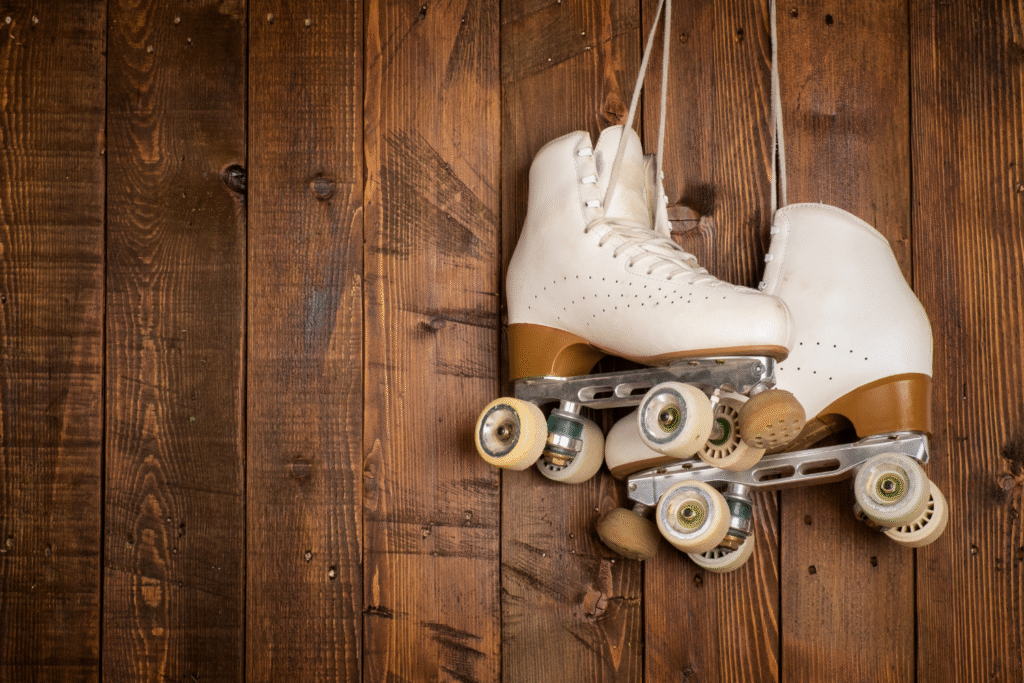
Leather roller skates with worn laces and metal toe stops once echoed off gym floors and parking garage ramps. Each scuff mapped a tumble or tight turn, wheels humming over concrete as kids coasted beneath string lights or disco balls.
Stored in shoe boxes beneath holiday ornaments, the skates may still carry flecks of glitter and rusted axles. Unlacing them now unlocks echoes of weekend afternoons spent circling under music too loud and friends yelling over wind.
11. Vintage board games with cheerful illustrations and missing dice.
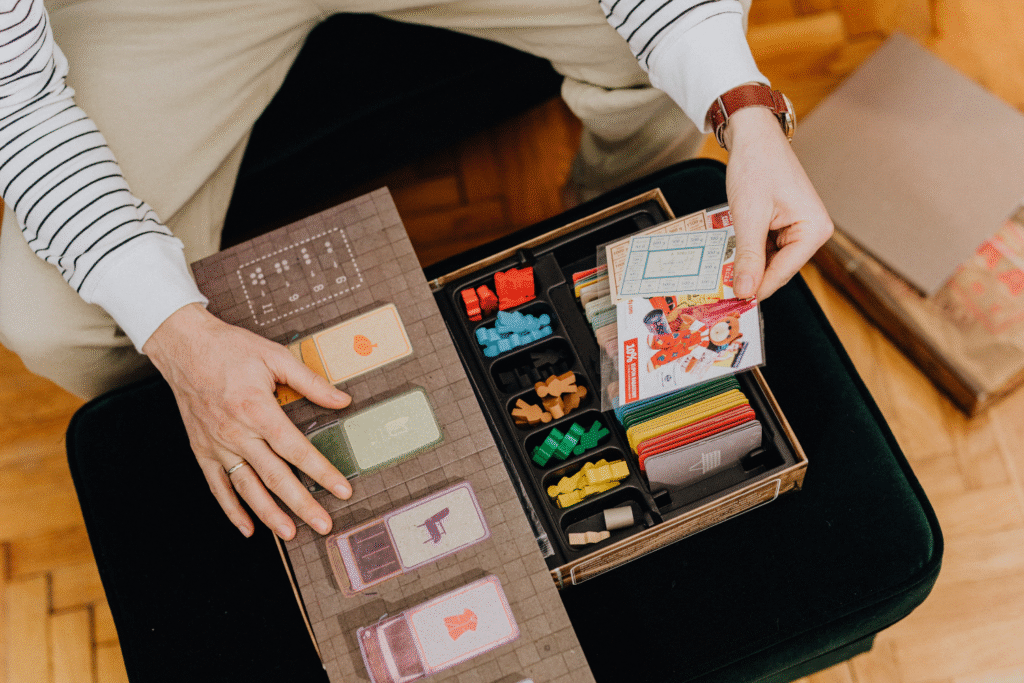
Board games printed in saturated colors featured spinning arrows, cash stacks, or plastic tokens barely fitting back in their boxes. Cardboard boards folded into fourths, creased deeply at the hinges from decades of family weekend play.
After opening the lid, missing dice or uneven pieces don’t ruin the moment—they stir memories of house rules invented mid-play, cousins arguing over trivia, or popcorn kernels wedged under couch cushions by the end of game night.
12. Classic boom boxes with cassette slots and oversized volume knobs.

Boom boxes combined radio tuners, tape decks, and giant speakers into one shoulder-slung machine, often powered by a row of heavy D batteries. Volume knobs clicked with authority, and sliders controlled bass levels that rumbled through linoleum floors.
Whether blasting mixtapes at the beach or tuning to late-night DJs, the boombox shaped soundtracks of teenage independence. Some still sit quietly on attic shelves, dusty aux cords wrapped like snake tails, their plastic faces bold with colored labels.