
A tiny bone fragment rewrites how far Neanderthals roamed across Eurasia.

Researchers analyzing a 5-centimetre fossil from Starosele Cave in Crimea discovered DNA dating back about 45,000 years, showing the individual—named “Star 1”—was genetically closest to Neanderthals from the Altai region of Siberia. This link suggests these hominins migrated or maintained connections over distances of more than 1,800 miles (3,000 km), overturning assumptions of isolated, localized groups.
That means Neanderthals weren’t confined to scattered pockets—they were mobile, adaptable and linked across vast steppe landscapes.
1. Genetic evidence ties a Crimean Neanderthal to Siberia’s Altai region.

Analysis of a small bone fragment from Starosele Cave revealed mitochondrial DNA linking the individual to Neanderthals found in the Altai Mountains of Siberia—over 3,000 km away. This finding suggests that some Neanderthal groups were not isolated in Europe but connected to distant populations through migration or long-range interaction. The result challenges prior models of localized, static Neanderthal communities.
2. Radiocarbon dating places the individual at ~45,000 years ago.

The bone was dated to between 44,000 and 46,000 years old, placing it in the critical window when Neanderthals were disappearing and modern humans were expanding across Eurasia. This timing implies the subject—nicknamed “Star 1”—lived during dynamic climatic and ecological transitions, potentially enabling migration across steppe corridors that later closed or changed.
3. Stone-tool traditions at the site match those in Siberia, suggesting cultural continuity.

Archaeologists found that the lithic toolkit associated with the Starosele site (Crimean Micoquian tradition) bore strong resemblance to tool assemblages in the Altai region. This technological match reinforces the idea of broad Neanderthal networks or movement rather than isolated cultural bubbles. Shared technology supports the genetic link by showing behavioural connectivity across thousands of kilometres.
4. Paleoclimatic modelling reveals possible migration corridors across Eurasia.

Researchers used habitat modelling to identify a route roughly along latitude 55° N where steppe landscapes would have permitted long-distance movement during warmer periods between roughly 100,000–60,000 years ago. The corridor would have allowed Neanderthal populations to travel from Siberia to Crimea relatively continuously when conditions permitted, making the long range plausible rather than exceptional.
5. The finding forces a rethink of Neanderthal mobility and adaptability.

Neanderthals have often been portrayed as localized specialists with limited range. The Starosele evidence shifts that view: they were capable of traversing vast open landscapes, connecting distant regions and sustaining broad networks. This implies greater ecological flexibility, behavioural innovation and resilience than previously assumed.
6. Crimea emerges as a strategic crossroads in late Neanderthal Eurasia.

The Starosele site gains prominence not as a remote fringe but as a hub linking eastern and western populations of Neanderthals. Its role suggests that the peninsula served as a waypoint in migration, cultural exchange or seasonal movement routes—a key node in understanding how Neanderthal populations were structured geographically.
7. Extended connectivity implies greater interaction with early modern humans in nearby regions.
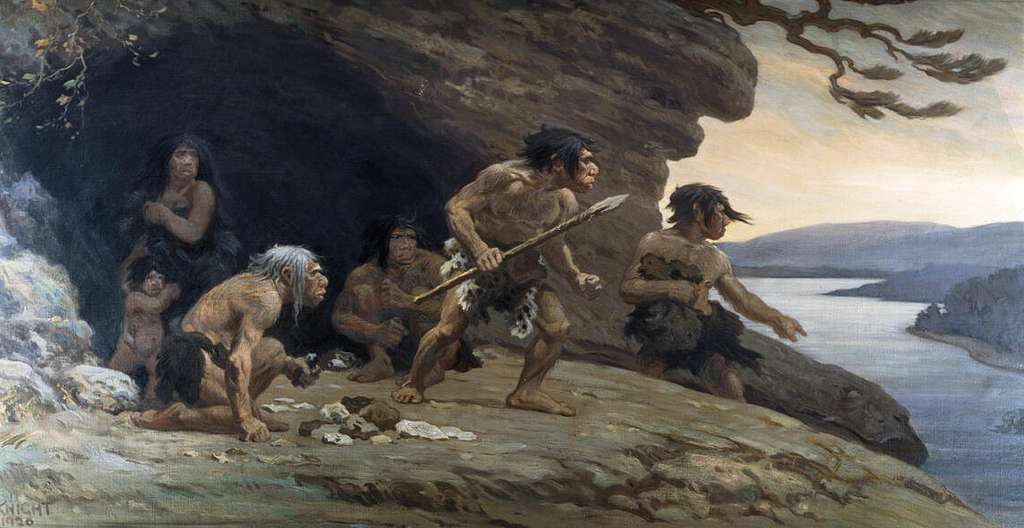
If Neanderthal groups moved or communicated across thousands of kilometres, the zones of contact with early Homo sapiens may have been broader and more dynamic. This supports models where gene flow, cultural exchange and competition occurred not just at isolated pockets but across expansive landscapes, blurring species boundaries and ecological roles.
8. Future research must test how widespread this long-distance movement was.

While the Starosele discovery is compelling, it remains one individual. The next steps involve finding more Neanderthal remains with traceable genetics, surveying multiple sites across Eurasia and mapping the full extent of the movement. Only then can we determine if this was an isolated event or a standard feature of late Neanderthal life.
9. The finding has implications for how we model human evolution and migration.

The evidence suggests that mobility, connectivity and adaptability were not unique to Homo sapiens—they applied to Neanderthal populations too. This forces a rewrite of migration models, genetic inheritance frameworks and cultural interaction narratives. Neanderthals weren’t passive backgrounds to human expansion: they were active participants in a dynamic Eurasian story.
Together, these points transform the narrative: Neanderthals may have crossed roughly 1,900 miles (3,000+ km) across Eurasia, carrying genes, tools and ideas in a way we once only attributed to modern humans. The discovery opens up a much more mobile, interconnected and resilient picture of our extinct relatives.