
A mix of silent expectations and old habits can quietly sap energy from younger guests

Family visits often carry more than just casseroles and conversation. Beneath the surface, silent customs passed down through generations can shape everything from arrival times to how emotions are handled around the dinner table. For Gen Z guests, these unspoken rules may feel less like tradition and more like emotional weight. Understanding how different generations interpret boundaries, communication, and hospitality can ease the strain and open space for more balanced interactions.
1. Always show up early, even if no one expects you yet.

Arriving early signals respect and enthusiasm in some households, especially to older relatives who see punctuality as a virtue. For many Boomers, showing up ahead of time means you care enough to plan—and they did just that, with rotary clocks and paper maps.
For Gen Z, though, unannounced early arrivals can feel intrusive rather than charming, especially when personal time or shared space is limited. One roommate scrambling to vacuum while another hides laundry piles is a familiar scene when guests land twenty minutes ahead of schedule.
2. Bring food without asking, then act surprised no one eats it.

A relative sets a casserole on the counter without warning, calling it a ‘little something’ as if the gesture speaks for itself. The baked dish, a decades-old holiday staple, rests untouched between two plant-based eaters and a gluten-sensitive teen.
To the giver, food carries love, decades of tradition, and a desire to be useful. But ambushing a host with a mystery dish rarely lands as intended—especially when it sidesteps dietary needs, kitchen plans, or even basic fridge space in a one-bedroom apartment.
3. Avoid using headphones in shared spaces to encourage conversation.
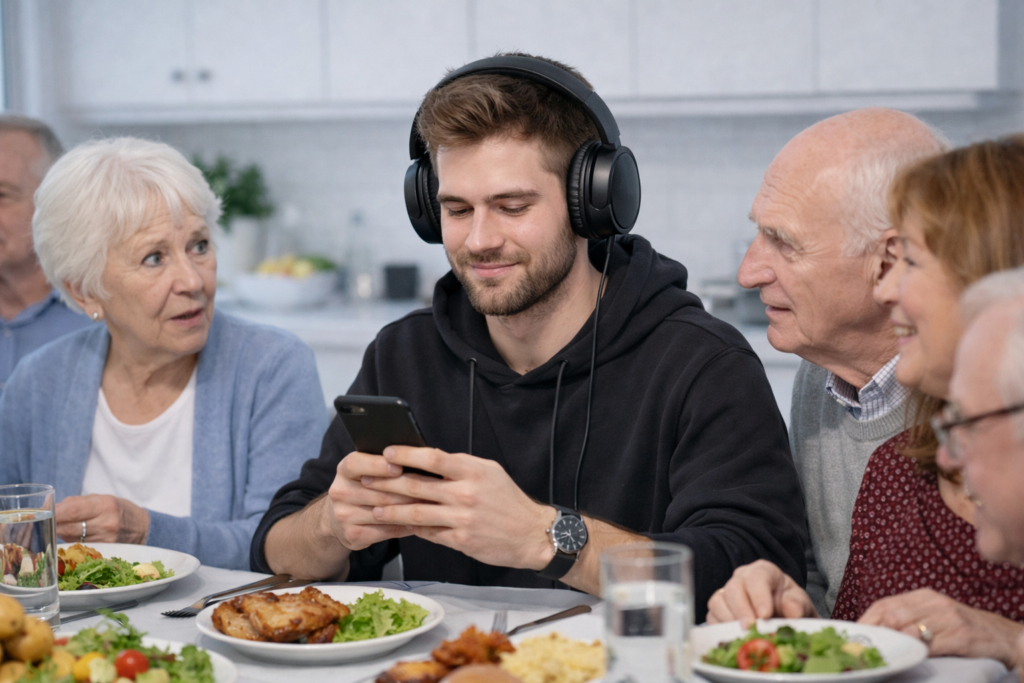
Using headphones in shared living rooms can signal withdrawal to older generations. Boomers, raised in households where the family radio or TV invited togetherness, tend to see silence as social failure rather than personal peace.
Many Gen Z visitors use earbuds to recharge, not reject. Lounging on a familiar sofa with a podcast or lo-fi playlist can feel grounding—not isolating. But in multigenerational homes, a visible cord sometimes reads as rude before comfort or boundaries enter the conversation.
4. Assume everyone follows the same holiday traditions you grew up with.

Decking the halls or slicing a hidden pickle out of a tree—traditions often come standard in family visits. For Boomers, rituals mark continuity, and holidays without tinsel or formal dinnerware can feel unmoored.
When those traditions take center stage, younger relatives might feel like extras in someone else’s show. One vegan daughter-in-law picking around turkey-themed stuffing or a grandson nodding through the same carols every year signals a deeper mismatch than just menu preference.
5. Offer unsolicited advice as a form of caring and connection.

Advice often arrives cloaked in kindness: how to budget better, apply for jobs, or cook eggs just so. Boomers grew up in eras where mentoring meant offering real-time tips—even when no one asked.
For many younger adults, unasked guidance can slice the mood. One new college grad might bite their tongue during a financial lecture, unsure how to explain that making space to listen doesn’t always mean space to fix. Connection meant to comfort can instead ignite quiet tension over authority.
6. Keep the television on in the background during every family gathering.

The television hums like a fourth guest, offering sitcom reruns or news ensembles as a buffer against lulls. Boomers often grew accustomed to TVs playing in the background, a kind of ambient glue holding the room.
Gen Z, raised on streaming and curated noise, may find the constant chatter overstimulating or distracting. A family gathering with the volume up risks splintered attention: someone checking recipes, another half-watching sports, while real connection edges out under fluorescent lights and laugh tracks from decades past.
7. Expect verbal check-ins instead of texts or messages to feel close.

Hearing someone’s voice matters to many older relatives. Boomers often equate real-time check-ins with genuine closeness—the warmth of a call feels miles richer than the clipped efficiency of a typed reply.
For younger family members used to async messages, an unexpected phone ring may spike anxiety rather than joy. One missed call becomes a signal flare in a quiet morning, while a text hours later tries to patch over the gap without quite bridging it.
8. Steer conversations away from emotions and back to daily routines.

Conversations veer toward chores, local weather, or grocery deals once emotions surface. Many Boomers were raised to prize emotional restraint; keeping things pleasant often meant keeping them surface-level.
When a Gen Z sibling opens up about therapy or anxiety only to be steered toward lawn care, the subtext lands: vulnerability still feels uneasy across the generation gap. Avoiding hard topics preserves calm—but often at the expense of mutual understanding or emotional fluency.