
Everyday interactions can turn tense when shopping etiquette clashes with heightened personal expectations

Boomer shoppers at upscale grocery stores like Whole Foods are sometimes perceived as entitled—not because of their age, but because of certain habits that disrupt the shared shopping space. From cutting lines to dismissing store policies, these actions often stem from generational norms rather than outright rudeness. Recognizing how these behaviors affect employees and fellow customers can go a long way in making the grocery experience more respectful and efficient for everyone involved.
1. Ignoring the express lane limit to buy a full cart of items.

Express lanes operate on a basic principle: speed for those with a few items. When someone pushes a full cart of groceries through the 10-items-or-less line, it disrupts that flow and forces others to wait longer for a convenience meant to be quick.
That kind of behavior can frustrate nearby shoppers who followed the limit, especially during peak hours when time feels tight. A crowded line at a sunny suburban Whole Foods on a Saturday morning illustrates just how quickly a small breach in etiquette can ripple through an entire checkout area.
2. Demanding special treatment from staff without acknowledging other customers.

Store employees work hard to help every customer efficiently. When a shopper insists on immediate assistance, calls staff away from others, or expects to cut in line for help, it can unsettle the balance between good service and basic fairness.
By positioning their needs above everyone else’s, those customers may not notice how their urgency affects workers already juggling multiple tasks. At the cheese counter, for instance, suddenly asking for six different samples during a rush can cause delays for others quietly waiting.
3. Talking loudly on the phone while holding up checkout lines.

In retail spaces, shared air and close quarters make sound carry quickly. Holding a personal or business call while unloading groceries can stall the line, especially when the shopper pauses to clarify a price or ignores staff questions.
Line progress slows when communication breaks down. A cashier repeating, “Paper or plastic?” three times while someone debates weekend plans on speakerphone shifts the checkout from smooth to awkward for everyone nearby.
4. Refusing to bag their own groceries but criticizing how others do it.

Bagging groceries can be collaborative or chaotic. When a customer refuses to lift a finger while sharply correcting the cashier’s bagging technique, it can turn a normal checkout into a tense exchange layered with contradiction.
Some shoppers expect store staff to read their preferences without offering input, then critique decisions after the fact. Holding up traffic to inspect avocado positioning doesn’t smooth the process for others in line—it just leaves bruised produce and strained patience.
5. Expecting every product to meet their personal dietary standards.
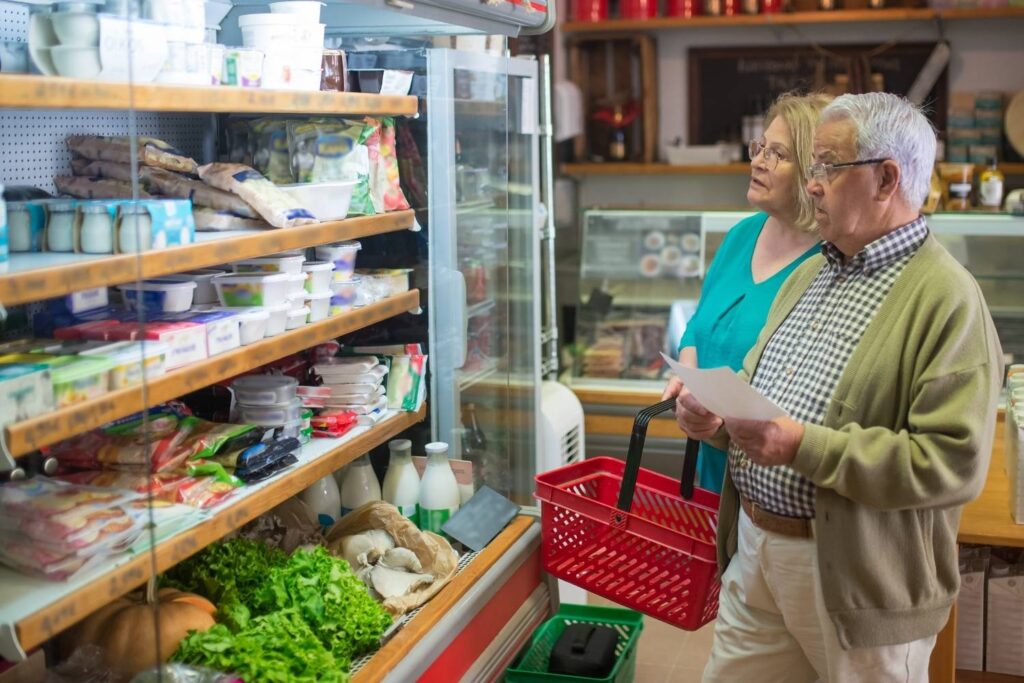
Whole Foods caters to a broad mix of nutritional approaches, but stocking every item to meet one individual’s regimen isn’t feasible. A shopper who demands soy-free, sugar-free, unbleached pasta made in a nut-free facility may not find an exact match every visit.
Voicing disappointment aloud or airing frustration at employees over product gaps assumes a level of control that stores can’t guarantee. Those around, just trying to find chickpeas or dish soap, often become unwilling participants in a rigid shopping narrative.
6. Returning half-used items and insisting on full refunds.

Returns at upscale groceries allow some flexibility, especially for items that genuinely disappoint. But when customers bring back half-used jars or empty containers, expecting a full refund, it leans beyond policy toward presumption.
Staff often navigate these exchanges delicately, knowing that refusal can cause a scene. A crumpled carton of almond yogurt two-thirds gone, handed over with disdain, puts pressure on the person behind the counter to choose between reasonable service and conflict avoidance.
7. Blocking aisles while comparing organic labels without awareness of others.
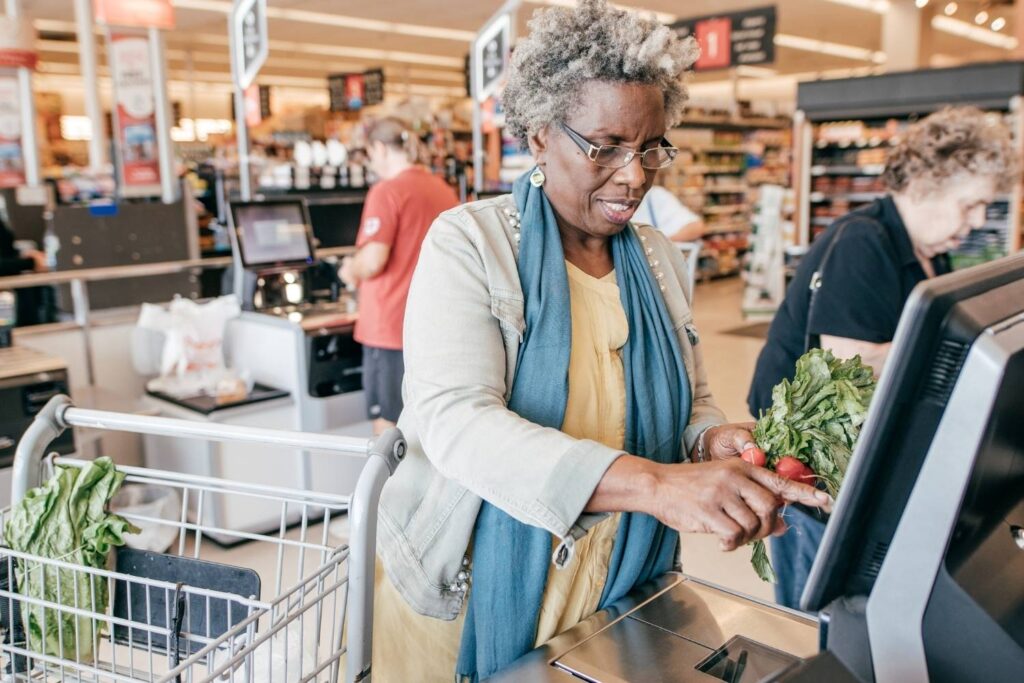
Aisles in boutique groceries brim with specialty products, but space remains limited. When someone leaves a cart sideways while scrutinizing oat milk ingredients for five minutes, traffic piles up, especially near popular sections like the dairy fridge.
Most shoppers navigate with awareness, shifting their carts or stepping aside. But when attention narrows entirely to labels, the flow of shared movement stalls, creating unnecessary obstacles for everyone else mid-list.
8. Lecturing staff about product sourcing without asking genuine questions.

Knowledge of food sourcing can spark good conversations. But lecturing a tired employee about farming practices or berating them for stocking the wrong quinoa displaces real curiosity with superiority.
Instead of discussion, the moment becomes one-sided and performative. A staff member restocking shelves at 8 p.m. shouldn’t have to field a monologue about heirloom grain ethics while trying to finish their shift duties with care.
9. Scoffing at digital coupons and insisting prices be honored anyway.

Digital coupons require systems the store already promotes—apps, barcodes, screen taps. Customers who dismiss those tools yet still expect matching discounts often force staff into a bind between policy and appeasement.
An exasperated insistence that “It should ring up lower” without engaging with the process slows transactions and rattles those in line behind. At the register, time adds up fast when personal resistance becomes everyone’s delay.