
Millennial parents favor empathy, flexibility, and emotional awareness over tradition and authority alone

Millennial parenting often looks and feels different from the approaches boomers grew up with—less command, more conversation. At its core, this shift reflects evolving beliefs about child development, emotional intelligence, and individuality. While one generation stresses respect and structure, the other leans into communication and cooperation. The contrast doesn’t mean one is better, but it helps explain why today’s parenting choices include everything from gentle discipline to screen time guided by content, not clocks.
1. Prioritizing emotional intelligence over unquestioned obedience and authority.

Rather than expecting quiet compliance, many millennial parents focus on emotional recognition—teaching kids to understand, name, and manage their feelings. It begins early, often at the toddler stage, with calming techniques and language like “I see you’re frustrated” instead of command-and-control directives.
Over time, this approach shifts the dynamic from power-based to collaboration-based. Rather than chasing respect through authority, parents model empathy and communication under stress—like narrating anxious feelings before a crowded school recital. It requires patience, but builds self-awareness kids can carry into adult relationships.
2. Using gentle discipline instead of traditional punishment or time-outs.

Some millennial parents move away from discipline rooted in fear or guilt and lean into gentle accountability. Instead of time-outs on the hallway floor, they opt for conversations on cause and effect: what went wrong, what to try next time, and how to make amends.
Though some critics call it permissive, gentle discipline still involves structure—it just trades punishment for skills-building. A child who grabs a toy might help rebuild a block tower instead of sitting alone. The result often looks quieter but demands steady boundaries and mature follow-through.
3. Encouraging open conversations about feelings without shame or dismissal.

Millennials often welcome a child’s tears or frustration as part of emotional development, not a crisis to end quickly. They choose to validate feelings with eye-level conversations and questions that invite clarity, even when a tantrum rattles the kitchen.
For earlier generations raised on stoicism, this might feel indulgent or inefficient. But over time, the method strengthens the child’s language for what they feel and why. A preschooler who breaks a crayon might say “I got mad” instead of shutting down completely—which makes future repair more possible.
4. Letting children express personal style through clothing and self-expression.
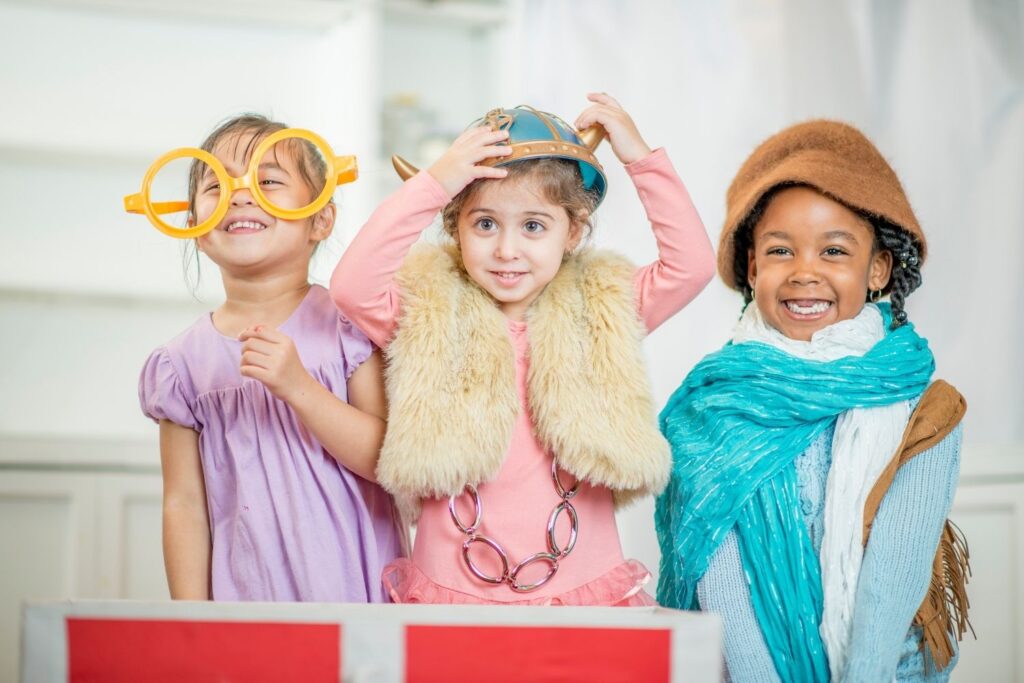
Many younger parents treat fashion and personal style as kid-level autonomy, not rebellion. Children might choose mismatched socks or a superhero cape to preschool without judgment. The goal is not aesthetics—it’s building self-image and comfort in one’s own skin.
This can run counter to past expectations of neatness as a social signal. Boomers might see tidy appearances as respect for others, while millennials value self-led expression. Allowing a child to wear stripes with polka dots doesn’t suggest chaos—it signals trust in their preferences and imagination.
5. Fostering autonomy by involving kids in everyday decision-making.

Small choices—like pouring milk or picking between two shirts—offer kids early experience with agency. Millennial parents often make room for these decisions, coaching their children through planning and natural consequences without stepping in at every turn.
Though slower than adult-led actions, this autonomy often boosts confidence and problem-solving. Picking out library books rather than having them chosen can energize curiosity. These moments are less about efficiency and more about development through meaningful micro-decisions.
6. Choosing screen time limits based on content quality, not just duration.

Rather than counting every minute, many parents now consider what type of media their children engage with. A quiet hour watching nature documentaries gets treated differently than ten repetitive minutes of loud ads and jump cuts.
It isn’t screen time alone but its emotional and cognitive effect that shapes modern limits. Educational games with story-based puzzles may earn longer use than generic cartoons. The device becomes a tool—like an art kit or musical instrument—evaluated by content and engagement, not just duration.
7. Respecting a child’s consent when it comes to physical affection.

Respecting bodily autonomy starts young for many millennial families. Children are often not expected to hug relatives or receive kisses simply because others want them to. Consent is framed as a continuous choice, reinforced through consistent language and modeled interactions.
To elders, this might seem cold or unnecessary. Yet for younger parents, the practice lays groundwork for future boundaries, both giving and receiving. Teaching a toddler to say “no thanks” at a family picnic plants the seeds of emotional safety and self-respect.
8. Modeling fairness and vulnerability instead of projecting constant control.

Older parenting styles often emphasized calm authority and control. Some millennial parents, in contrast, offer emotional transparency. They might say, “I had a hard day” or “I’m working on being more patient,” sharing their own struggles without burdening the child.
Far from undermining respect, this modeling of honesty helps deconstruct perfection myths. A parent admitting mistakes behind the steering wheel or while cleaning spilled cereal teaches resilience. Vulnerability becomes a strength, not a crack in leadership.
9. Supporting diverse family structures and rejecting one-size-fits-all notions.

The definition of family has widened in recent decades. Rather than centering one model—two parents, one home—many millennials affirm chosen families, step and co-parents, adoptive networks, and multigenerational households with equal clarity and care.
For those raised under narrower expectations, this can seem unfamiliar. But the shift isn’t out of trend—it reflects the reality many children live. A kindergarten form asking for “parent or guardian” rather than “mother and father” reflects mindful inclusion, fostering confidence in nontraditional dynamics.
10. Creating routines rooted in flexibility rather than strict schedules.

Set routines still matter, but younger parents often allow for give-and-take within structure. Bedtime might stay consistent, but the lead-up can flex—stories on the couch one night, drawing quietly the next.
This flexible rhythm helps children adjust to change without panic. If school runs late or a babysitter fills in, the world stays manageable. The goal isn’t looseness for its own sake, but a pattern that adapts with age, mood, and context—something more like jazz than metronome.
11. Using inclusive language that affirms identity and builds self-worth.

Language forms identity, and many millennial parents use terms that affirm each child’s experience from the start. Instead of locking into boy-girl labels, they might say “kids,” or invite pronoun conversations as naturally as talking about birthdays or favorite animals.
That emphasis on inclusion often filters into books, playtime scripts, and holiday traditions. A child hearing “everyone gets to be themselves” absorbs that message long before the vocabulary of identity becomes technical. It quietly expands what’s possible in relationships and self-image.
12. Prioritizing mental wellness through mindfulness and age-appropriate coping tools.

Daily stresses unfold differently across generations—and many younger parents spotlight mental health as a family value. They might use calming jars, deep breathing, or emotion charts alongside play, weaving coping tools into ordinary moments like bath time or car rides.
Those raised to “tough it out” might question the need for such measures. But to parents focused on emotional fluency, the habits build resilience long before adolescence. A child who learns to label stress at five may feel less overwhelmed by bigger feelings later.
13. Valuing shared experiences over material rewards in daily parenting choices.
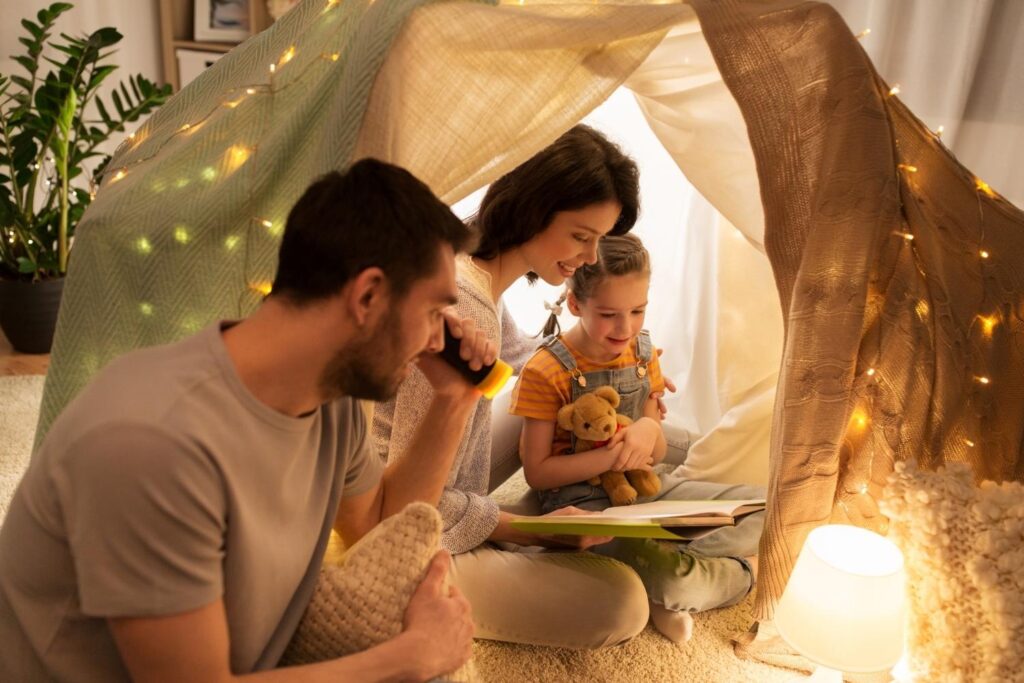
For many millennial families, the gold star isn’t a toy or sticker—it’s a shared experience. Instead of rewards in boxes, they might choose baking together, a walk to the market, or inventing bedtime stories as their version of celebration.
That shift doesn’t reject objects entirely, but reframes motivation. Joy, in this model, grows from connection, not accumulation. A kitchen covered in flour and giggles often outweighs the thrill of a new trinket, lingering longer in memory and shaping what matters most.