
The Ambush Predator’s Perspective: A Wildlife Expert’s Guide to Mountain Lion Encounters

While mountain lions (puma concolor) are masters of invisibility, human expansion into wildland-urban interfaces means encounters are increasingly possible. As a wildlife expert, I can tell you that a mountain lion isn’t looking for a fight; they are looking for an easy meal.
Most dangerous escalations occur when a human inadvertently mimics the behavior of prey. Survival depends on operant conditioning: you must convince the cat that you are a dangerous adversary rather than a fleeing target. Here is how to manage an encounter using biological principles.
1. Disrupt the Ambush: Stop and Assess

Mountain lions are obligate carnivores that rely on the element of surprise. The moment you see one, the “ambush” has failed. Stop immediately. By freezing, you interrupt their predatory sequence. Use this moment to breathe and lower your heart rate; adrenaline can lead to impulsive movements that a cat interprets as “flight,” which triggers their motor patterns to “attack.”
2. Never Trigger the Chase Instinct

Running is a death sentence in a high-stakes encounter. A mountain lion’s brain is hardwired to chase anything that moves away rapidly. You cannot outrun a cat that can hit speeds of 40–50 mph. Stand your ground. By staying put, you defy the biological expectations of prey, which creates a “cognitive dissonance” for the lion, often causing it to hesitate.
3. Maximize Your Silhouette
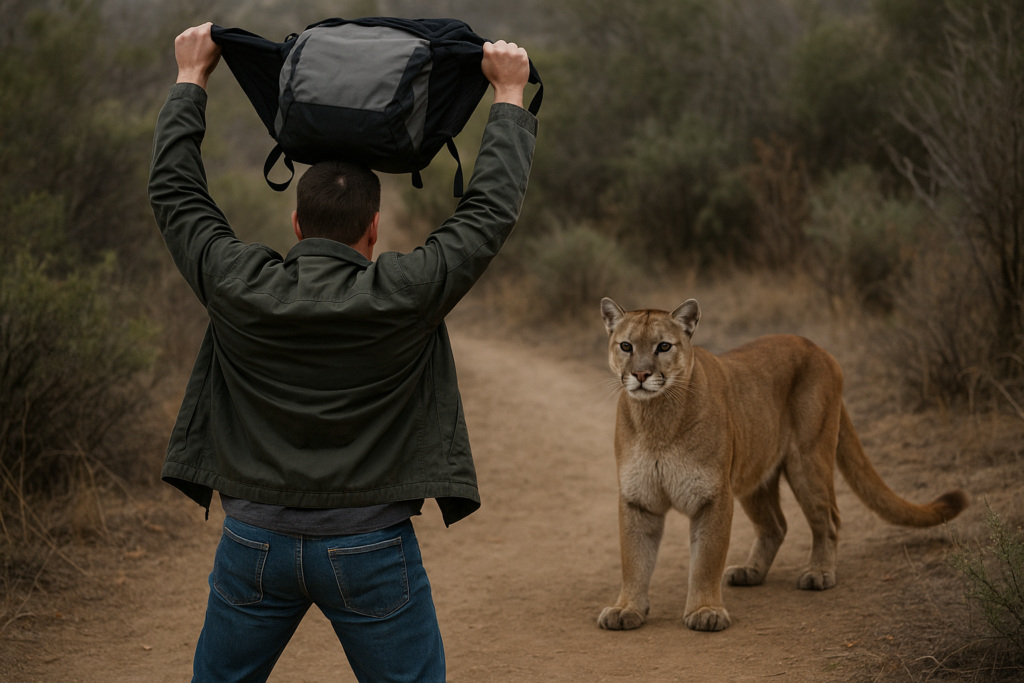
In the animal kingdom, size equals risk. To a mountain lion, a tall, wide figure is a potential threat. Raise your arms high and wide. Open your coat to break up your human silhouette and make you look like a much larger, unknown organism. Stay upright and never bend over, as bending makes you look like a four-legged prey animal like a deer.
4. Maintain Dominant Eye Contact

In the feline world, a direct stare is a challenge and a sign of awareness. Keep your eyes locked on the cat. This tells the lion, “I see you, and I am tracking you.” However, do not snarl or hiss unless the cat moves toward you, as you want to appear as a “threat to be avoided,” not necessarily a “predator looking for a fight.”
5. Use Your “Human” Voice

Mountain lions are unfamiliar with the cadence of the human voice. Speak in a deep, firm, and loud tone. Do not high-pitched scream, which can sound like an animal in distress. Talk to the cat calmly but commandingly: “I am a human. Back up.” This reinforces that you are not part of their standard food chain.
6. Secure Small Targets (Children)

Small children move erratically and have high-pitched voices—both of which are highly stimulating to a predator. Pick them up immediately without bending over at the waist by squatting instead. By pulling a child to your chest or shoulders, you eliminate a “small target” and add to your own perceived mass.
7. Maintain Verticality

Never crouch, sit, or kneel. If you are bending down to tie a shoe or pick up a camera, you are at your most vulnerable. To a cougar, a crouching human looks remarkably like a deer or a coyote. Always maintain your maximum height to signal dominance.
8. Deploy Non-Lethal Deterrents
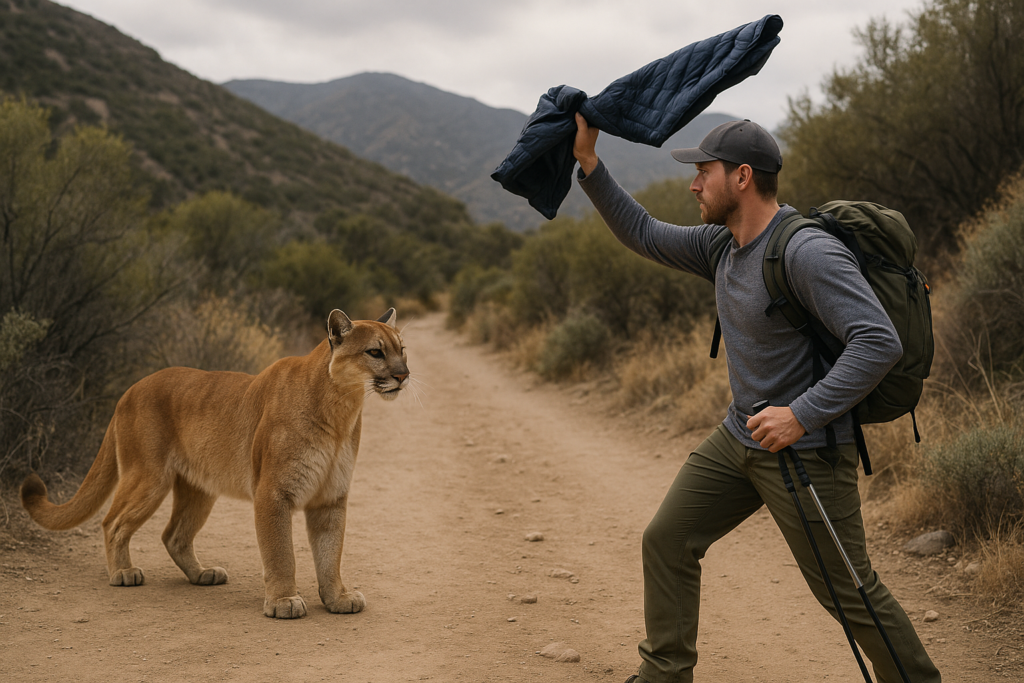
If the cat remains interested, use “biological theater.” Wave trekking poles or throw stones near the animal first to test its resolve. If it continues to approach, it is no longer a “curious” cat; it is a “predatory” one. At this point, you should prepare to use bear spray if you have it, as it is highly effective against feline respiratory systems.
9. Respond with Absolute Aggression
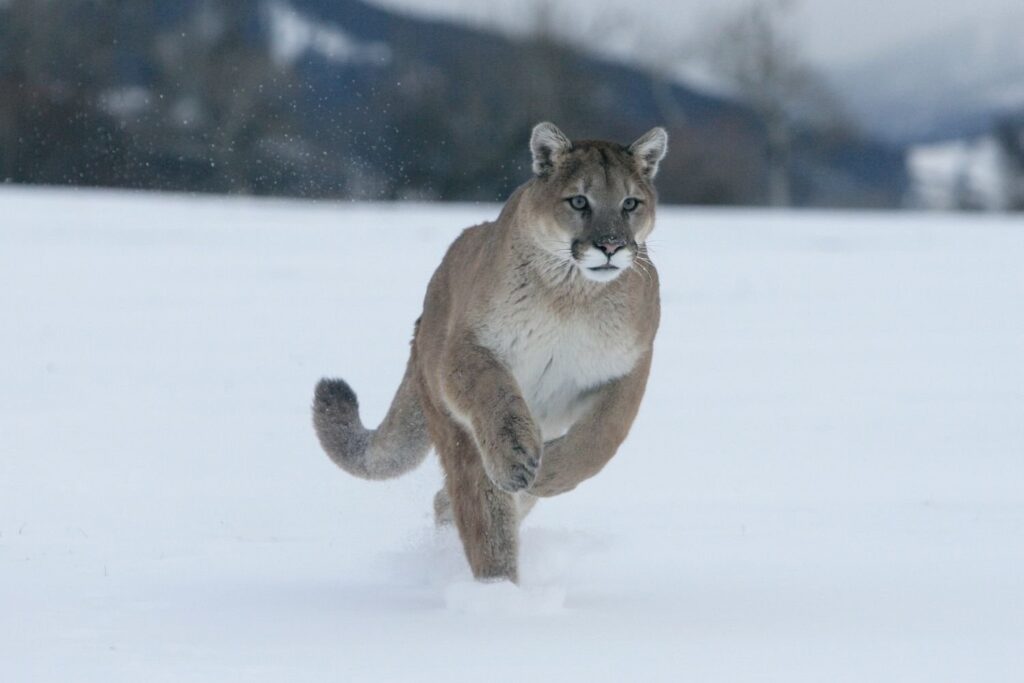
If a mountain lion attacks, the “prey” mindset must end. You are now a predator. Do not play dead. Fight back with everything: thumbs in eyes, rocks to the head, or stabs with branches. Target the face and throat. Mountain lions are “risk-averse”; if the meal starts fighting back and causing injury, the lion will often disengage to avoid a life-threatening wound.
10. The Controlled Withdrawal

Once the lion moves off, do not turn and run. Back away slowly, keeping your front toward the last known location of the cat. They are masters of “re-ambushing” by circling around. Continue to make noise and stay “large” until you are completely out of the habitat.
11. Data for Conservation

Report every sighting or encounter to your state wildlife agency. This isn’t about “getting the cat in trouble”—it’s about science. Experts use this data to identify “habituated” animals that have lost their fear of humans, allowing for management actions that keep both the public and the local lion population safe.