
Local slang reveals deep ties between language, geography, and the culture where you were raised.

Regional slang is more than just colorful vocabulary—it’s a clue to where someone grew up. The words and phrases people use every day are often deeply rooted in local culture, geography, and history, shaping the way communities express themselves. Whether it’s how you describe a soft drink or the terms you use for everyday directions, speech patterns can quietly broadcast your hometown without a map or an address.
1. Using regional phrases that only make sense to nearby locals.

Certain expressions build invisible borders. A phrase like “wicked smart” or “fair to middlin’” belongs not just to speech, but place. Regional slang often forms in tight-knit cultures where community, geography, and history shape how people talk day to day.
Hearing one of these terms outside its origin can stop conversation cold—like asking for a “garbage plate” in a city with no concept of it. Language travels, but some sayings cling to place as tightly as moss to stone walls.
2. Calling soft drinks by names like pop, soda, or coke.

Whether it’s called pop, soda, tonic, or just coke, soft drink labels work like low-key name tags. The term you learn as a child tends to stick, even when the cans or bottles look the same from region to region.
In parts of the South, “coke” means any carbonated drink, even lemon-lime; in the Midwest, “pop” holds firm; coastal cities may default to “soda.” A vending machine at a gas station becomes an unexpected dialect test.
3. Referring to highway interchanges in a distinctly local way.

Some areas label highway features with terms that feel hyper-local. A cloverleaf might be a “mixmaster” in Texas but a “spaghetti junction” in Georgia. Despite identical layouts, familiar terms shape how residents navigate and describe their routes.
Tourists might freeze at instructions involving a “stack,” while locals breeze through the exchange without hesitation. Geographic slang like this links infrastructure to identity—naming familiar shapes in shared roads.
4. Using weather-related idioms that reflect your area’s climate.

Idioms tied to climate often show up in everyday conversation. A person in Minnesota might say it’s “cold enough to freeze the balls off a brass monkey,” while someone in Arizona might joke it’s “hotter than a two-dollar pistol.”
These weather metaphors reflect not just temperature but temperament. Extreme conditions inspire dramatic turns of phrase—often passed down within families like porch thermometers that never move from the same nail.
5. Saying hello and goodbye with hometown-specific expressions.

People from different regions often have signature greetings. In Philadelphia, a quick “yo” does double duty for hello and attention-grabbing. Down South, a warm “how y’all doin’?” rings more like a daily ritual than a question.
Farewells follow the same pattern. Where some might leave with a clipped “later,” others ease out of conversations with extended blessings—evidence that leaving, like arriving, carries cultural rhythm.
6. Giving directions based on landmarks no outsider would recognize.
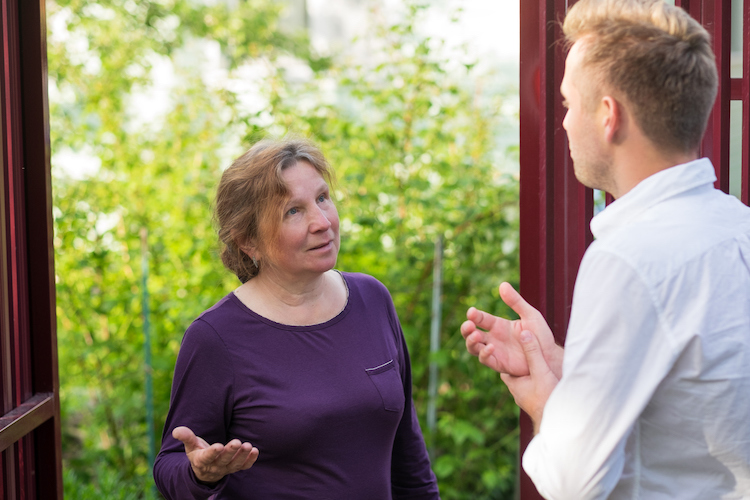
Locals often anchor directions to landmarks others wouldn’t recognize. Saying “turn left at the old mill” or “go past where the diner used to be” works only when shared memory fills the gaps.
GPS doesn’t help when instructions rely on things no longer visible. Whether it’s a mural, water tower, or collapsed barn, these reference points are part of a town’s lived history and oral mapping.
7. Describing food items with names only locals would understand.

Food terms tell richer stories than menus ever can. In one region, a “hoagie” signals East Coast roots; elsewhere, it becomes a “sub,” “hero,” or “grinder.” Each label reveals layers of immigration, trade routes, and local pride.
Someone ordering a “bag of bread” instead of “loaf” or calling sprinkles “jimmies” marks their linguistic map without realizing it. Even simple snacks can carry the accent of place.
8. Using unique fillers and pauses that echo local speech patterns.

Between thoughts, speakers lace in pauses, mutters, and vocal placeholders that show where they’re from. “Yuh know,” “eh,” “innit,” and “like” each have regional leanings, reinforcing identity through tone as much as word choice.
Such fillers rarely appear in writing but dominate spoken rhythms. A Pacific Northwest teen might match cadence with “you know what I mean,” while a Liverpool native leans on “right” to tether thoughts.
9. Pronouncing common words in a way tied to your region.

How someone pronounces ‘car,’ ‘creek,’ or ‘pajamas’ holds regional cues. Vowel shifts and stress patterns form speech fingerprints shaped by early exposure and molded by community.
Even small sounds reveal large origins: the short ‘a’ in “Chicago” might stretch or flatten depending on where someone grew up. Accents persist, often unconsciously, with surprising clarity—especially when someone’s tired or excited.
10. Switching between dialects when talking to people from other areas.

People with ties to multiple regions sometimes shift how they speak based on who’s listening. That code-switch can be subtle, like altering slang, or broader, like changing cadence and emphasis.
A New Yorker who lives in Denver might soften Rs around childhood friends but speak more neutrally at work. It’s less performance and more fluency—adapting language to context and connection.
11. Using nicknames for nearby cities or neighborhoods only locals use.

Names like “the Loop,” “SoCo,” or “the Shore” carry meaning known mostly to locals. These nicknames compress geography into personal code, often tied to history, culture, or a shared experience.
Outsiders may struggle to map them, but within the community, those shortened names feel natural—as if the places named themself. A single syllable might evoke an entire childhood route or communal event.
12. Referring to local events by shorthand known in your community.

A single word—say, “The Fair” or “Greek Fest”—can summon full calendars in towns where annual events in groove deep traditions. Locals don’t need calendar dates when shorthand wraps it all in place.
Visitors might need clarification, but for residents, such names align with smells, sounds, and rituals embedded early. Say the name, and people recall booths, music, favored routes, even parking tricks passed down.
13. Mixing in words from local immigrant or indigenous languages.

Cities with layered cultural histories often fold borrowed words into everyday speech. Terms like “yinz” or “tamale lady” or “caldo” highlight specific immigrant and Indigenous influences fused into local identity.
Language becomes a living archive, holding snapshots of past migrations and neighborhood shifts. In places like New Mexico or Louisiana, such words trace maps no signpost shows but countless conversations remember.