
Modern warfare is fundamentally transforming away from boots on the ground toward technologies that reshape traditional military doctrine.

The era of massive ground troop deployments is ending not through choice but through technological evolution that renders traditional infantry tactics increasingly obsolete. Pentagon strategists now design conflict scenarios where American soldiers never set foot on enemy soil yet achieve decisive military outcomes through coordinated technology deployment.
This shift reflects lessons learned through two decades of Middle Eastern conflicts that cost trillions while producing questionable strategic gains. Military planners are betting on approaches that minimize casualties while maximizing tactical effectiveness through methods that would seem like science fiction to previous generations.
1. Autonomous drone swarms overwhelm air defenses through sheer numbers.
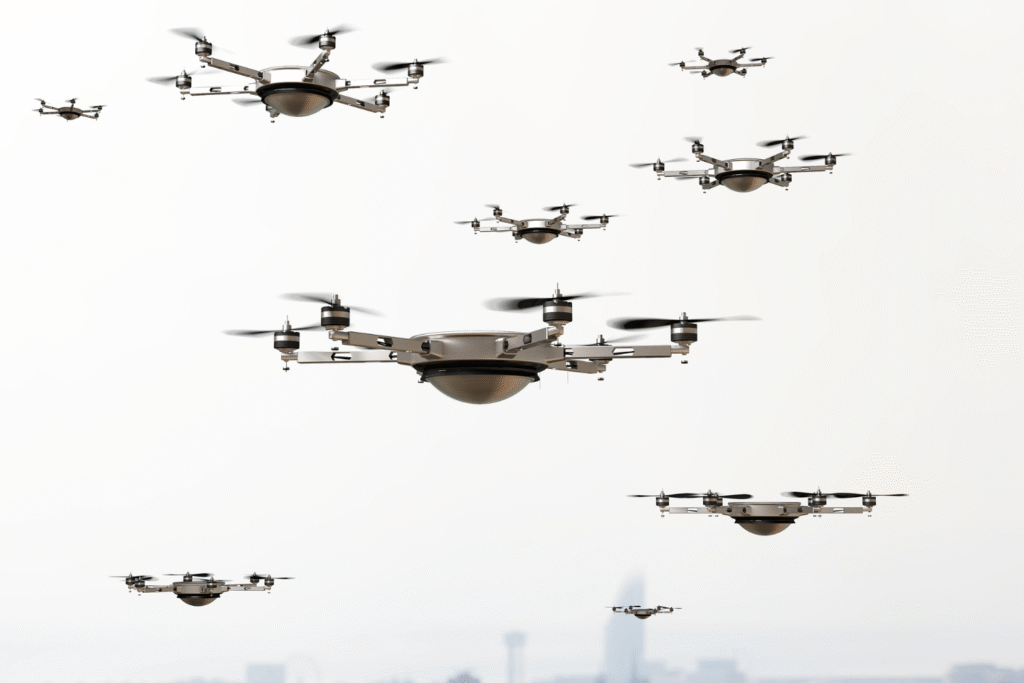
The next major conflict will feature thousands of small, inexpensive drones operating in coordinated swarms that cost-effectively neutralize expensive defense systems. Each drone costs roughly $1,000-5,000 to produce while anti-aircraft missiles cost $100,000-3,000,000 per shot. The math creates an impossible defensive equation where enemies must expend massive resources to counter relatively cheap offensive weapons. These swarms operate with artificial intelligence that allows autonomous target identification and attack coordination without human control.
Military testing demonstrates that swarms of 500+ drones can saturate air defenses designed to intercept traditional aircraft and missiles. The drones coordinate attack patterns that exploit gaps in coverage while adapting in real-time to defensive responses. Ukraine’s conflict with Russia provided proof of concept, with both sides deploying increasingly sophisticated drone swarms. American military development has accelerated dramatically, with current prototypes featuring capabilities far beyond what’s been publicly demonstrated.
2. Cyber warfare cripples critical infrastructure before kinetic action begins.

Future conflicts will begin in cyberspace long before any physical shots are fired. Sophisticated network infiltration will disable power grids, water treatment facilities, transportation networks, and communication systems simultaneously across enemy nations. These attacks create chaos and degrade military readiness without a single soldier deploying. The preparatory phase potentially lasts months or years with dormant malware waiting for activation commands.
The strategic advantage comes through asymmetric impact. Developed nations rely heavily on interconnected digital infrastructure, making them simultaneously more powerful and more vulnerable. American cyber capabilities, developed through NSA and Cyber Command operations, can reportedly penetrate most foreign military and civilian networks. The disruption creates conditions where traditional military responses become nearly impossible. Tanks can’t operate without fuel supply chains. Aircraft can’t fly without functioning air traffic control. Communications break down when cellular and internet infrastructure fails.
3. Hypersonic missiles strike critical targets with no practical defense.
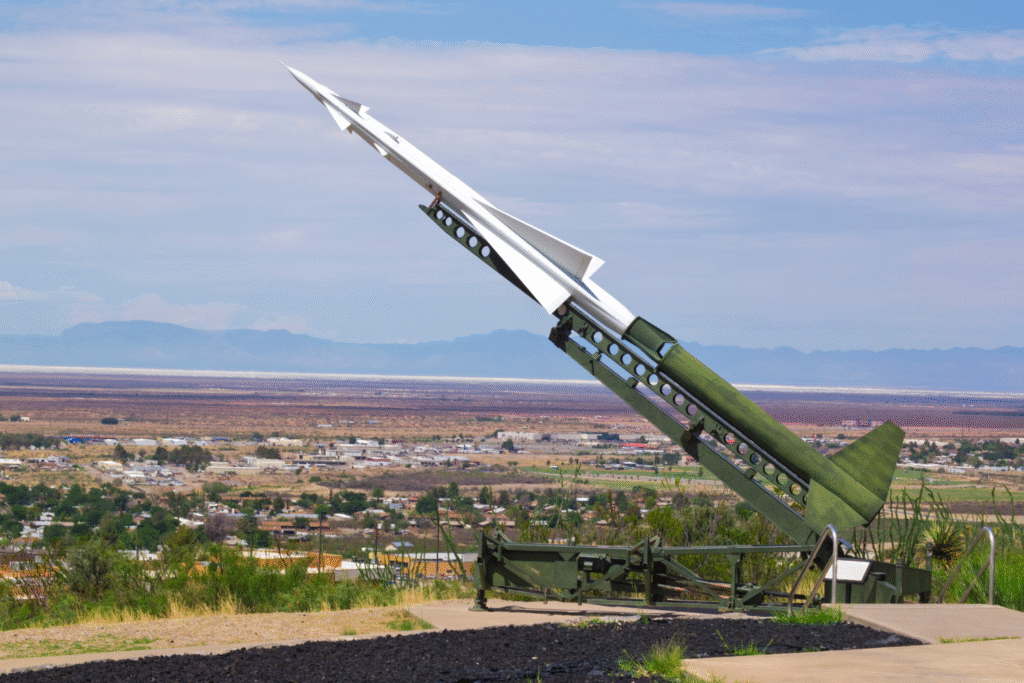
Hypersonic missiles traveling at speeds exceeding Mach 5 fundamentally alter strategic calculations by compressing response times to near-zero while rendering current missile defense systems obsolete. These weapons can strike targets anywhere on Earth within 30-60 minutes of launch. Their speed and maneuverability make interception essentially impossible with existing technology. The first hours of future conflicts will see coordinated hypersonic strikes eliminating enemy command centers, radar installations, and strategic assets before defenders can react.
Current American hypersonic programs include both air-launched and ground-based systems with ranges exceeding 1,000 miles. The weapons carry conventional warheads but achieve strategic effects previously requiring nuclear weapons. A single strike can eliminate underground command bunkers through sheer kinetic energy. China and Russia are developing similar capabilities, creating a new arms race focused on speed rather than explosive yield.
4. Space-based weapons provide persistent surveillance and global strike capabilities.

Military space infrastructure is transitioning beyond satellites providing communications and GPS toward offensive platforms capable of attacking terrestrial and orbital targets. Space Force development focuses on systems that can disable enemy satellites, redirect incoming missiles, and potentially strike ground targets from orbit. The next major conflict will include a space warfare component as critical as air, land, and sea operations.
Control of near-Earth orbit provides decisive advantages in any terrestrial conflict. Space-based sensors track troop movements, missile launches, and naval deployments in real-time with no blind spots. Communication systems operate beyond enemy jamming reach. Strike platforms in orbit can engage targets globally within minutes. Current treaty restrictions on space weaponization are eroding as major powers recognize that whoever controls space dominates future conflicts. American investment in military space capabilities far exceeds any other nation, with classified programs reportedly including directed energy weapons and kinetic bombardment systems that provide global strike capability without nuclear escalation risks.
5. Electromagnetic pulse weapons disable electronics without causing direct casualties.

EMP technology has evolved beyond nuclear-generated pulses toward conventional weapons that can disable electronics across targeted areas. These weapons destroy or temporarily disable all unshielded electronic devices including computers, vehicles, communications equipment, and power distribution systems. The effect creates technological paralysis without the political complications of causing mass casualties. Military planners view EMP as ideal for neutralizing technologically advanced opponents while minimizing collateral damage.
Tactical EMP weapons can target specific facilities like command centers or air defense installations. Strategic versions affect entire cities or military installations simultaneously. The weapons work through generating intense electromagnetic fields that induce damaging current surges in electronic circuits. Modern militaries depend so completely on electronics that EMP strikes effectively neutralize combat capabilities without firing traditional weapons.
6. Artificial intelligence coordinates operations beyond human cognitive speed and complexity.

AI-driven command and control systems represent perhaps the most fundamental shift in warfare since mechanization. These systems analyze intelligence from thousands of sources simultaneously, identify targets, recommend strategies, and coordinate forces across multiple domains faster than human commanders can process information. Future conflicts may see AI systems making tactical decisions autonomously while humans provide only strategic guidance and ethical oversight.
The speed advantage proves decisive in modern warfare where minutes matter. AI can identify emerging threats, allocate defensive resources, and coordinate counter-attacks within seconds. Human decision-making requires minutes or hours for equivalent analysis. Pentagon AI development focuses on systems that enhance rather than replace human judgment, but the trend clearly moves toward increasing machine autonomy. The nation with superior AI coordination likely wins future conflicts before human commanders fully comprehend what’s happening. Testing shows AI systems already exceed human performance in complex wargaming scenarios involving multiple simultaneous threats.
7. Directed energy weapons provide unlimited ammunition and instant engagement speeds.

Laser and microwave weapons are transitioning from experimental to operational status with capabilities that fundamentally change tactical calculations. These systems fire at the speed of light, hit with perfect accuracy at extended ranges, and operate with per-shot costs measured in dollars rather than thousands or millions. The unlimited ammunition capacity means ships and installations can defend against massive attacks without depleting magazines. Current systems can destroy drones, disable vehicles, and intercept certain missiles.
Navy destroyers now deploy with laser systems capable of engaging small boats and drones. Air Force testing includes airborne lasers for missile defense. The technology addresses the cost asymmetry problem where expensive interceptor missiles defend against cheap drones or rockets. Directed energy weapons engage targets for a few dollars in electricity while traditional interceptors cost hundreds of thousands per shot. Next-generation systems will likely engage larger targets including aircraft and missiles at extended ranges.
8. Advanced weapons and intelligence enable allied forces to achieve objectives.

American military strategy increasingly emphasizes enabling regional allies and proxy forces with advanced weapons, training, and intelligence rather than committing American ground troops. This approach provides strategic benefits without the political costs of American casualties. Ukraine demonstrates the model’s effectiveness—American weapons and intelligence helped destroy significant Russian military capabilities without a single American soldier engaging in direct combat.
The strategy involves providing allies with weapons systems previously restricted to American forces. Advanced drones, precision missiles, real-time intelligence, and sophisticated training multiply the effectiveness of allied forces dramatically. American special operations forces provide advising and coordination without engaging in frontline combat. The approach allows projecting power globally while minimizing direct American military exposure. The model fundamentally changes calculations around military intervention by decoupling strategic outcomes from American casualty risks.