
These words don’t mean what you think they do, but everyone keeps using them anyway.

You’ve probably been saying at least one of these words wrong for years—and so has almost everyone else. It’s not your fault. Over time, words get twisted, stretched, and completely redefined until their original meanings are barely recognizable. Some are misused so often that even dictionaries have started giving in.
Blame social media, pop culture, or just plain habit, but certain words have taken on lives of their own. People use them to sound smarter, more dramatic, or just because they’ve heard others do it. The problem? It leads to confusion, miscommunication, and, let’s be honest, a little secondhand embarrassment.
1. Literally doesn’t mean what you think it does.

This word used to mean exactly, without exaggeration. Now, it’s thrown around so casually that it’s lost all meaning. “I literally died laughing.” No, you didn’t. If you had, we’d be planning a funeral.
The misuse became so common that dictionaries finally caved and added an informal definition meaning figuratively. Yes, you read that right—literally now officially means not literally. It’s one of the biggest linguistic betrayals of all time.
2. Irony isn’t just anything unexpected.

If your car breaks down right after leaving the repair shop, that’s ironic. If it rains on your wedding day, that’s just bad luck. Alanis Morissette’s song may have been a 90s classic, but it didn’t exactly help people grasp the meaning of irony.
True irony involves a contrast between expectation and reality in a way that’s amusing, unfortunate, or both. A fire station burning down? Ironic. A firefighter setting it on fire? Even more ironic. Getting caught in traffic when you’re already late? Just life being annoying.
3. Peruse does not mean to skim quickly.
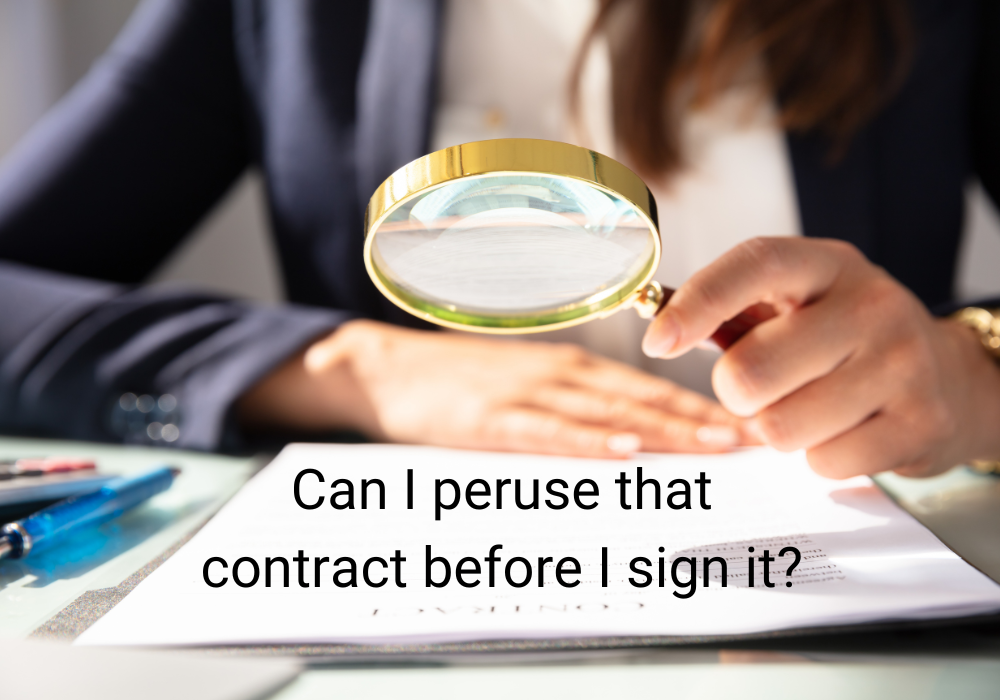
Most people think peruse means to glance over something casually, like flipping through a magazine in a waiting room, according to June Cassagrande in an article for the Los Angeles Times. In reality, it’s the exact opposite. If you’re perusing something, you’re studying it in detail, carefully analyzing every little part.
Somehow, this word’s meaning got flipped on its head. It might be because peruse just sounds like it should mean “browse.” It’s a fancier word, the kind people like to throw into conversation to sound sophisticated. The problem? If you say, “I perused that contract before signing it,” but really just skimmed it, you might be in trouble.
4. Infer and imply are not the same thing.

These two words are often used interchangeably, but they actually mean opposite things. If you infer something, you’re figuring it out based on clues. If you imply something, you’re dropping hints without saying it directly. The speaker implies, the listener infers.
For example, if someone says, “Wow, you’ve been eating a lot of cookies lately,” they’re implying something. If you take that as a comment about your diet and feel self-conscious, you inferred the meaning. See the difference?
5. Redundant is not the same as repetitive.

Many people think redundant just means saying something twice, but it actually means unnecessary or superfluous. While repetition can be redundant, not all redundancy involves repetition. Confused yet?
Here’s an example: Saying “ATM machine” is redundant because the “M” already stands for machine. So is “free gift” because a gift is, by definition, free. On the other hand, a teacher repeating a lesson to help students understand isn’t redundant—it’s just repetitive.
6. Nauseous doesn’t mean what you think it does.

Most people use nauseous to say they feel sick—“I’m nauseous” when they have an upset stomach. But technically, nauseous means causing nausea, not experiencing it. If you say “I feel nauseous,” you’re actually saying you are making other people sick. Yikes.
The correct way to say it? “I feel nauseated.” But let’s be real—almost no one says that. At this point, the incorrect use has become so common that even doctors don’t bother correcting it anymore.
7. Disinterested doesn’t mean uninterested.

If someone says, “I’m disinterested in sports,” they probably mean they don’t care about them. But that’s actually the wrong use of the word. Disinterested doesn’t mean bored or indifferent—it means impartial or unbiased.
A judge in a courtroom should be disinterested, meaning they don’t take sides. A person who couldn’t care less about football is uninterested, not disinterested. The mix-up makes sense because the words sound like they should mean the same thing, but they don’t.
8. Bemused doesn’t mean amused.

People often think bemused is just a fancy way of saying amused, but it actually means confused or bewildered. If you say, “I was bemused by the comedian’s joke,” you’re not saying you found it funny—you’re saying you didn’t get it at all.
This mix-up happens because bemused sounds so much like amused, and in some situations, confusion can be entertaining. But using the word incorrectly can lead to some awkward misunderstandings. If a friend tells you a hilarious story and you say, “I’m completely bemused,” you might leave them wondering if you were even listening.
9. Irregardless isn’t a real word (but people say it anyway).
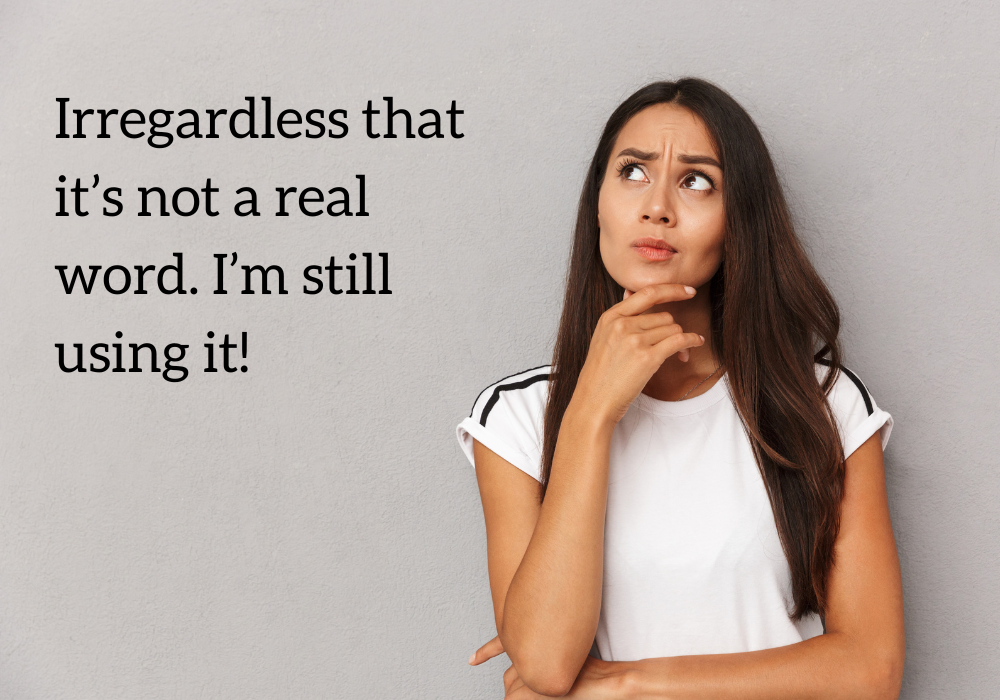
This one is a grammatical nightmare. Irregardless is a double negative—combining “ir-” (which means not) and regardless (which already means without regard). Put them together, and you get… nonsense. Yet people keep using it as if it means regardless.
Technically, irregardless has crept into dictionaries because it’s been misused for so long. That doesn’t mean it’s correct—just that enough people have used it incorrectly that it’s now considered part of the language. Still, if you want to sound polished, stick with regardless.
10. Affect and effect are not interchangeable.
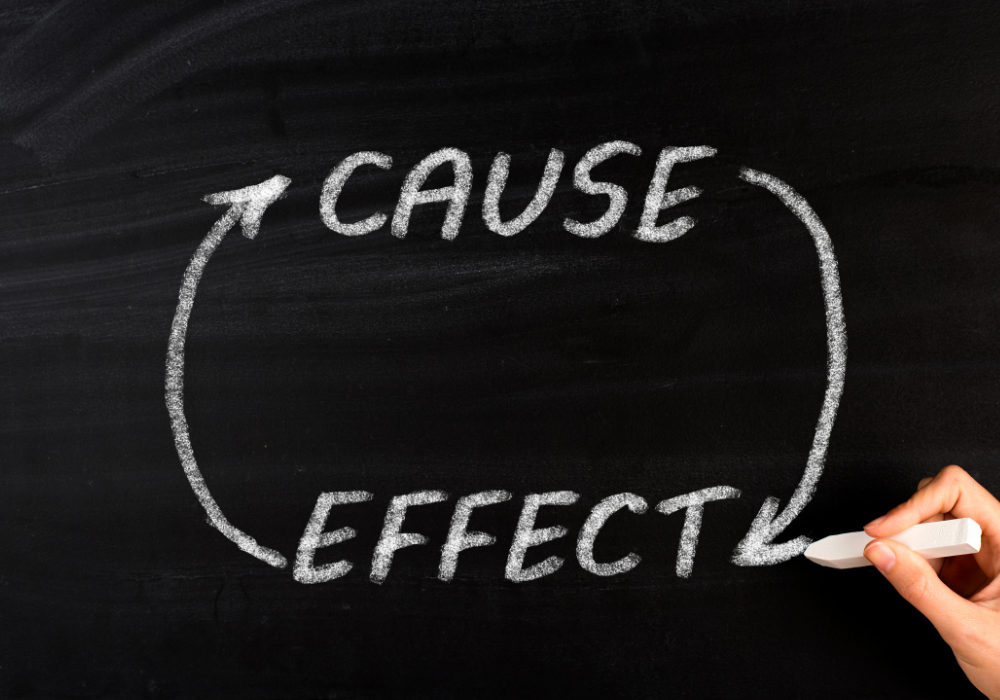
These two words trip people up constantly. Affect is usually a verb, meaning to influence or change something, while effect is usually a noun, referring to the result of a change. “The new law will affect gas prices” means it will influence them. “The new law had a huge effect on gas prices” means it already caused a change.
The confusion comes from how similar they sound, and the fact that effect can occasionally be a verb, meaning to cause something to happen. But for everyday use, remembering that affect is an action and effect is a result will keep you out of trouble.
11. Nonplussed doesn’t mean unfazed.
If someone is nonplussed, they aren’t calm, indifferent, or unaffected. They’re actually confused or unsure how to respond. Yet, many people use it to mean the exact opposite—as if being nonplussed means nothing rattles them.
This mistake is so widespread that even some dictionaries now list unfazed as an alternate definition, but traditionally, nonplussed means flustered or perplexed. If someone says, “I was completely nonplussed by the question,” it means they were thrown off, not that they handled it with ease.
12. Decimate doesn’t mean totally destroy.

Many people use decimate as a dramatic way to say completely wiped out, but that’s not what it actually means. The word comes from an old Roman military punishment where one out of every ten soldiers was executed—hence the root deci, meaning ten. Originally, decimate meant to reduce by ten percent, not to completely obliterate something.
Over time, the meaning shifted, and now people say things like “That team got decimated in the playoffs” or “The storm decimated the town,” implying total destruction. While language evolves, the original definition is still worth knowing.