
Your clutter might be more than just a mess—these warning signs reveal the truth.
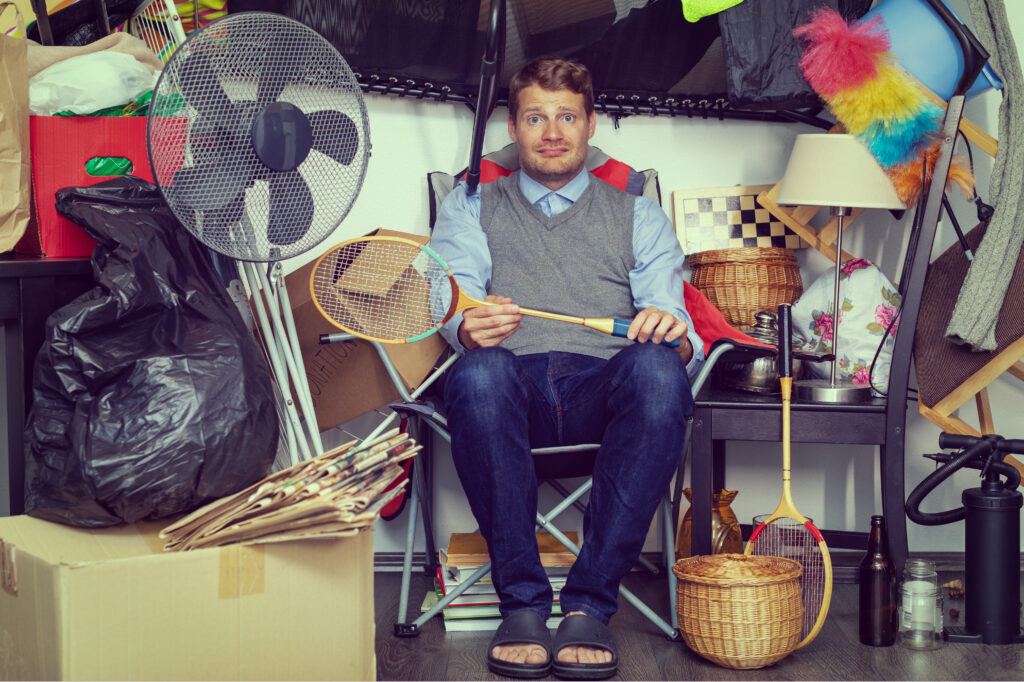
If your house is starting to feel more like a storage unit than a home, you might be hoarding without realizing it. It doesn’t always look like those extreme cases on TV, where people are buried under piles of junk. Hoarding can be sneaky, creeping in under the guise of “keeping things just in case” or “saving memories.” One day, you’re holding onto a few extra knick-knacks, and the next, you’re drowning in stuff you never actually use.
It’s easy to justify—sentimental value, future plans, good intentions—but at some point, the clutter takes over. But here’s the tricky part: hoarders often don’t see themselves as hoarders.
If you’ve ever felt a little too attached to your belongings, it’s time to take a closer look at the habits that could be piling up around you.
1. You keep things “just in case” but never actually use them.
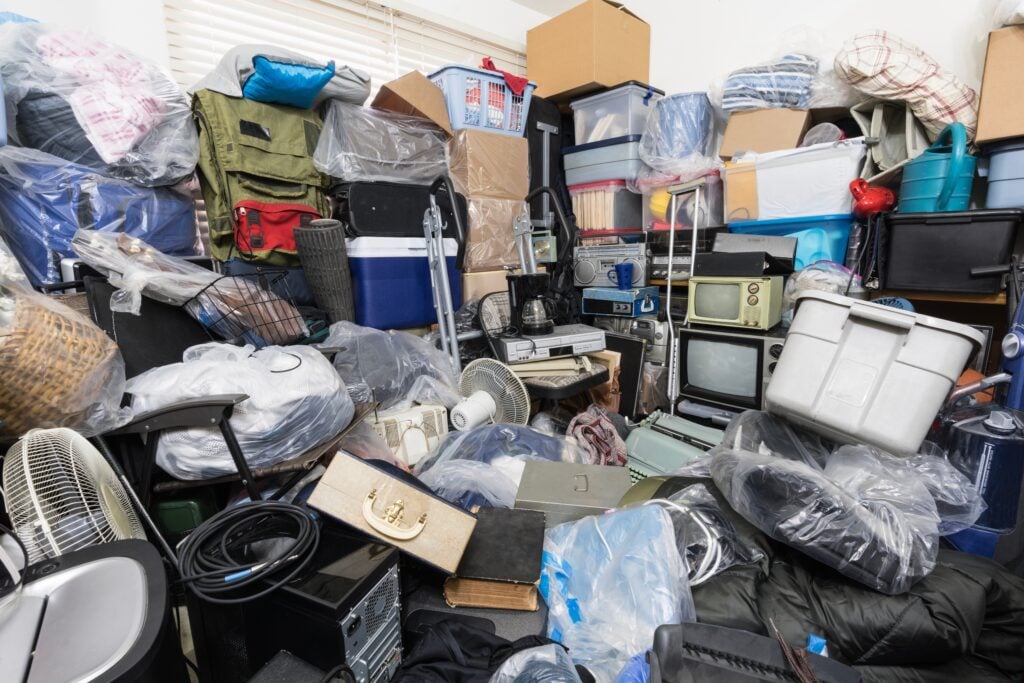
It starts with good intentions—you don’t want to waste money, and what if you need that old blender someday? But be honest: how often do you really go back and use these “just in case” items? If you’ve got a growing stash of random cords, broken gadgets, or outdated clothes, you’re not preparing for the future—you’re hoarding, says Fred Penzel Ph.D. with Western Suffolk Psychological Services.
The problem is, life moves forward, and most of those things will never be useful again. Instead of keeping everything, try asking yourself: If I needed this, would I even remember I had it? Would I go looking for it, or just buy a new one? If the answer isn’t a solid yes, it’s probably time to let it go before your “just in case” pile takes over your entire space.
2. You have entire rooms or closets filled with stuff you never touch.
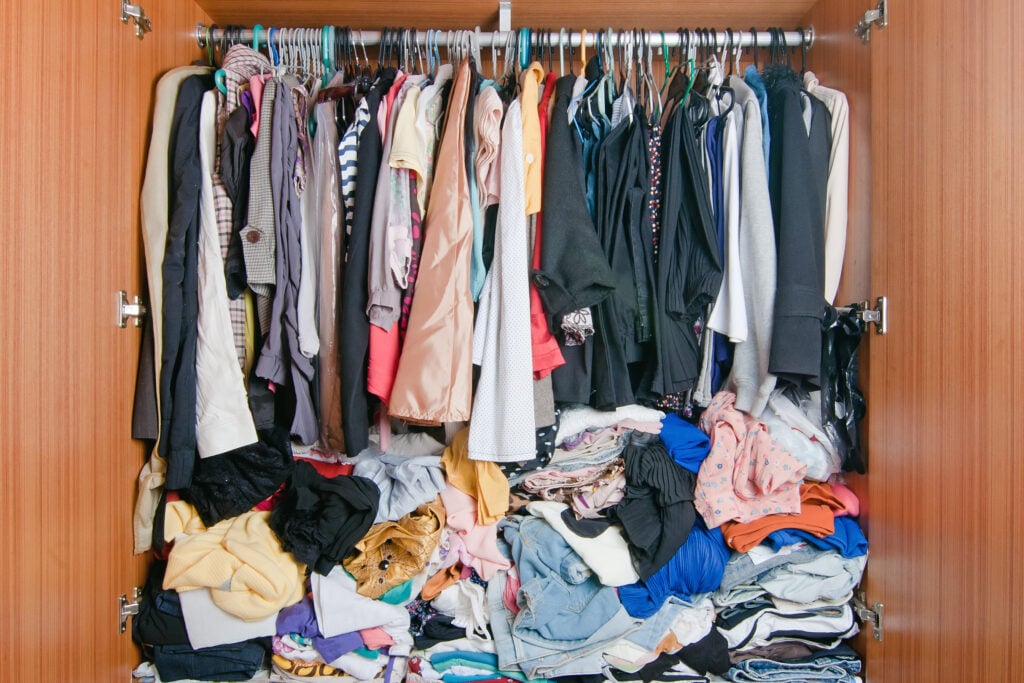
A junk drawer is normal. A junk closet? Not so much. If you have entire spaces in your home dedicated to stuff you never use, you might be hoarding without realizing it. The worst part? Clutter attracts more clutter, reminds Chiana Dickson writing for Home and Gardens. Once a room becomes a dumping ground, it’s easy to keep adding to the pile. You tell yourself you’ll sort through it “someday,” but that day never comes.
Meanwhile, you’re giving up valuable space that could actually improve your life. Imagine what it would feel like to turn that overstuffed closet into a cozy reading nook or a functional office. If your storage areas are packed with forgotten items, it’s time to admit that saving everything “just in case” is actually costing you peace of mind.
3. You struggle to get rid of things because of sentimental value.
Holding onto a few meaningful keepsakes is one thing. Refusing to part with an old T-shirt because you wore it to a concert 20 years ago? That’s a problem. Nostalgia has a way of making junk feel important. But here’s the truth: memories don’t live in objects. That old birthday card, the broken watch, the box of faded ticket stubs—those things aren’t your past.
Your experiences and relationships don’t disappear just because you declutter, as writers at For Women First remind. If your sentimental collection is creeping into every corner of your home, ask yourself: Do I need all of this to remember the good times? Chances are, a few carefully chosen keepsakes will serve the same purpose without overwhelming your space.
4. You buy storage bins instead of getting rid of stuff.
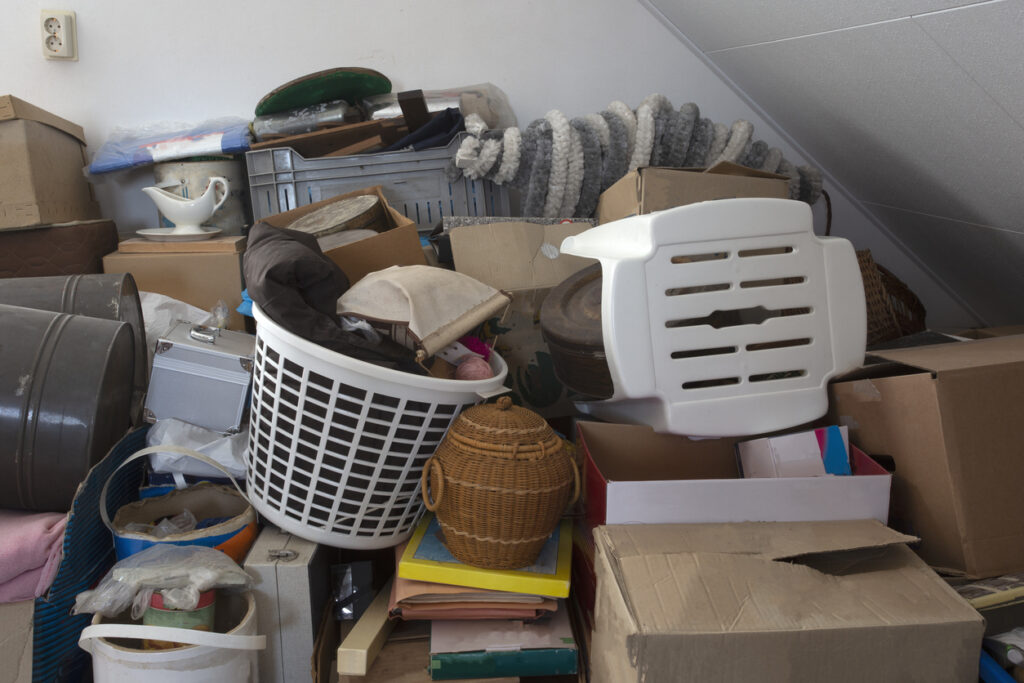
The storage industry is booming for a reason—people love buying stuff, but they hate getting rid of it. If your solution to clutter is more bins, baskets, and organizers, you’re just shuffling the problem around instead of fixing it. A well-organized hoard is still a hoard. Those neatly labeled boxes might look better than piles of junk, but they’re still filled with things you don’t actually need.
Instead of investing in more containers, try reducing what you own. If something has to be stored away for months or years, do you really need it? The goal isn’t to get better at hiding clutter—it’s to have less of it in the first place.
5. You feel anxious at the thought of getting rid of things.
A little hesitation is normal when decluttering, but if the thought of tossing anything makes you feel uneasy or even panicked, that’s a red flag. Hoarding isn’t just about having too much stuff—it’s often tied to emotional attachment. You might worry you’ll regret throwing something away, or that you’re being wasteful.
But here’s the truth: most of what we keep “just in case” never gets used. Holding onto everything out of fear doesn’t make life easier—it makes it more stressful. If parting with an item makes your heart race, ask yourself why. Are you really going to miss it, or is it just a habit? Learning to let go is like building a muscle—the more you do it, the easier it gets. And the relief that follows is worth it.
6. You have duplicates of everything because you forget what you own.
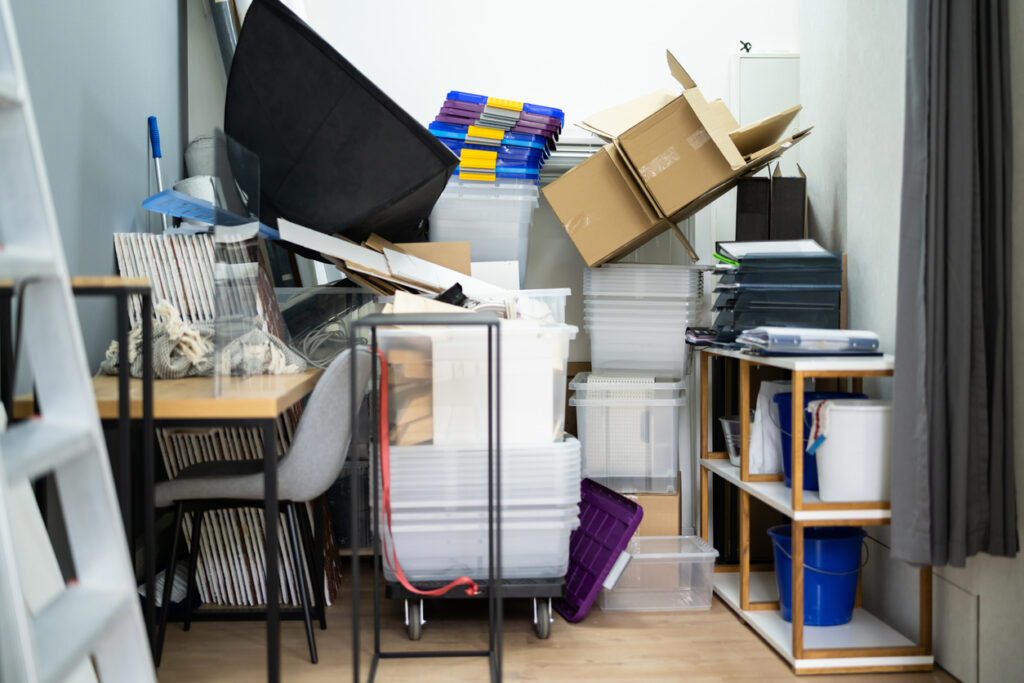
Ever bought something, only to find out later you already had three of them buried in a drawer somewhere? That’s a classic sign of hoarding. When clutter piles up, it’s easy to lose track of what you have, leading to unnecessary duplicates. This is how people end up with five can openers, six black sweaters, or a dozen half-used rolls of tape.
The cycle never ends—you buy more because you can’t find what you need, and the clutter keeps growing. If this sounds familiar, it’s time to take control. Decluttering and organizing what you already own will save you money, time, and frustration. If you’re constantly rediscovering things you forgot you had, it’s a sign you own too much.
7. You keep broken or outdated things because you might fix them “someday.”
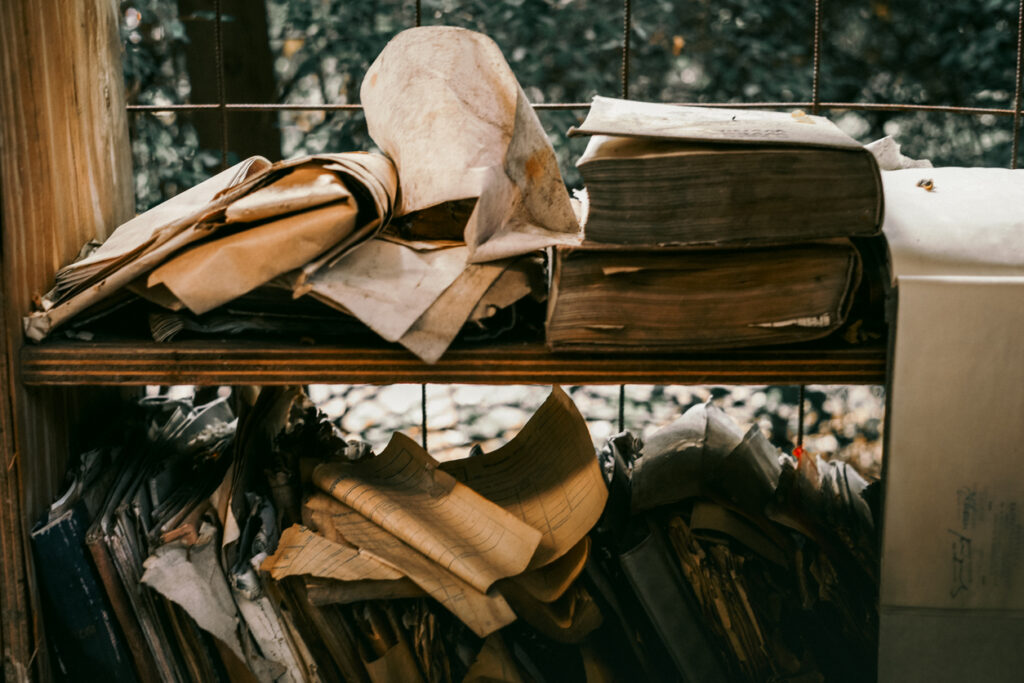
Be honest—how long has that broken lamp, ripped jacket, or outdated laptop been sitting around waiting to be fixed? If “someday” never comes, it’s not a repair project—it’s clutter. Keeping things with the intention of fixing them is understandable, but if years go by and they’re still untouched, it’s time to let go.
The reality is, most broken or outdated items never get repaired because either they aren’t worth it, or life moves on and they’re forgotten. Instead of holding onto a pile of “maybe I’ll fix it” stuff, set a deadline. If you don’t fix it within a month, it’s time to say goodbye.
8. You keep freebies, giveaways, or things you got for a great deal.
Free doesn’t mean valuable. Yet, so many people hoard tote bags from events, cheap promotional T-shirts, and random hotel toiletries because they were “free.” The same goes for clearance-rack bargains—just because it was a great deal doesn’t mean you need it. Hoarding isn’t just about emotional attachment; sometimes, it’s about the thrill of getting something for nothing.
But if you’re keeping things just because they were free or cheap, you’re not saving anything—you’re just stockpiling junk. The next time you’re tempted to bring something home, ask yourself: Would I pay full price for this? If not, you probably don’t need it.
9. You feel overwhelmed in your own home but don’t know where to start.

Your home should be a place of peace, not a source of stress. If you constantly feel overwhelmed by clutter but can’t seem to tackle it, that’s a major red flag. Hoarding often sneaks up in small ways until one day, the mess feels too big to handle. Avoiding it only makes things worse.
The best way to start? One small step at a time. Pick a single drawer, shelf, or corner and clear it out. The more you do, the easier it gets. If you’re drowning in stuff but don’t know where to begin, it’s a sign that clutter is running your life instead of the other way around.
10. You feel guilty throwing things away.

If tossing an old magazine, a broken dish, or even a worn-out T-shirt fills you with guilt, you might be hoarding without realizing it. Many people struggle with the idea of waste, but keeping things you don’t use is just a different kind of waste—wasted space, time, and peace of mind. That old birthday card from a coworker you barely remember? The pile of receipts from five years ago? They’re not adding value to your life, just cluttering it.
Letting go doesn’t mean you’re ungrateful; it means you’re making room for what truly matters. Instead of focusing on what’s leaving, focus on what you’re gaining—more space, less stress, and a home that feels lighter and more peaceful. You don’t have to keep everything to keep the memories.
11. You have piles of unopened mail, newspapers, or magazines.

If your kitchen counter, dining table, or even the floor has stacks of unopened mail, old newspapers, or unread magazines, you might be hoarding paper without realizing it. But those piles add up, creating stress and making it harder to find what you actually need. You might tell yourself you’ll get to it later, but later never comes.
If you’re saving newspapers for an article you “might read” or holding onto unopened mail out of avoidance, it’s time to take control. Set a rule: If it’s more than a month old and hasn’t been touched, it goes. Most of it isn’t essential, and clearing it out will give you instant relief. Less paper means less stress.
12. You know you should declutter, but you always put it off.

You keep telling yourself you’ll declutter—tomorrow, next weekend, after the holidays—but somehow, that day never comes. Hoarding often thrives on procrastination. The longer you put it off, the bigger the mess feels, and the harder it is to start. Maybe you don’t know where to begin, or you feel emotionally drained just thinking about it.
But avoiding it only makes it worse. Start small by picking one drawer, one shelf, or one category (like old clothes or expired pantry items). The more you clear out, the more momentum you’ll build. No one declutters their entire house in a day, but every little step gets you closer. If you’ve been waiting for the “right time” to start, this is it. Your future self will thank you.