
These everyday objects may look like clutter, but they hold deep Southern roots and meaning.

In Southern homes, what might appear to be old clutter often carries generations of memory and meaning. From frayed quilts to seasoned skillets, these items reflect traditions, family stories, and a sense of place that runs deep. Understanding why certain objects are treasured can reveal how Southern culture preserves its values through the everyday. Holding onto these keepsakes isn’t just nostalgia—it’s a way of honoring connection, heritage, and shared history.
1. Cast iron skillets seasoned from decades of family cooking.
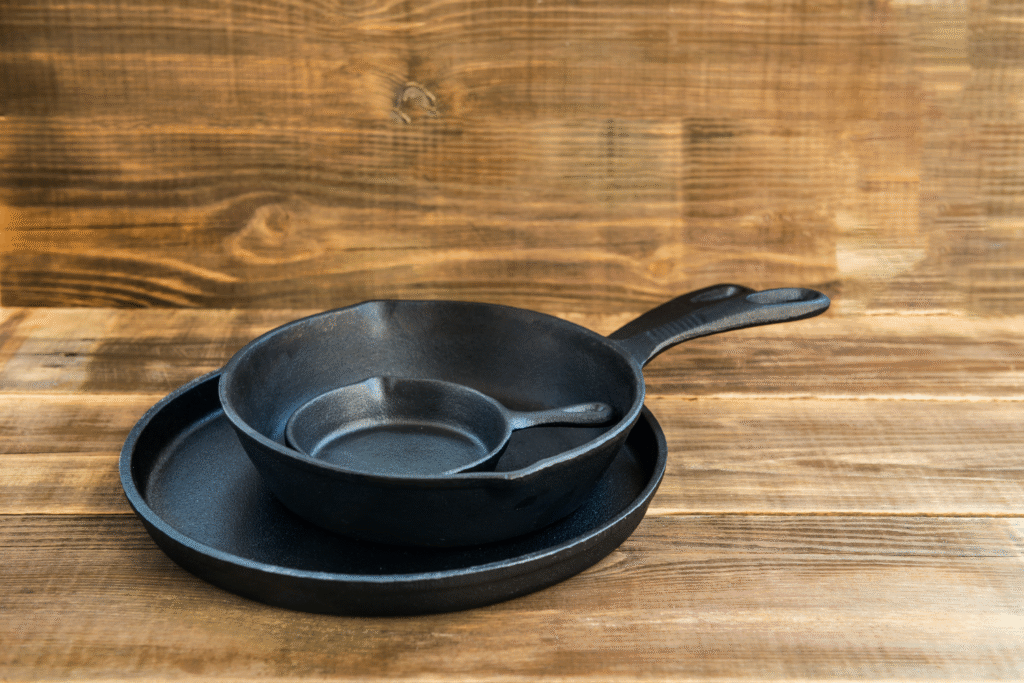
Cast iron skillets hold more than heat—their blackened surfaces absorb layers of flavor over years, even decades, of frying chicken and baking cornbread. A good one carries the faint outline of a biscuit ring or the weight of five generations of meals.
Each layer of seasoning marks time, a quiet record of who cooked what and when. Unlike nonstick pans that wear down or warp, these skillets improve with age, linking Sunday suppers to weekday breakfasts through shared tools and patient hands.
2. Mason jars saved for everything from sweet tea to loose nails.
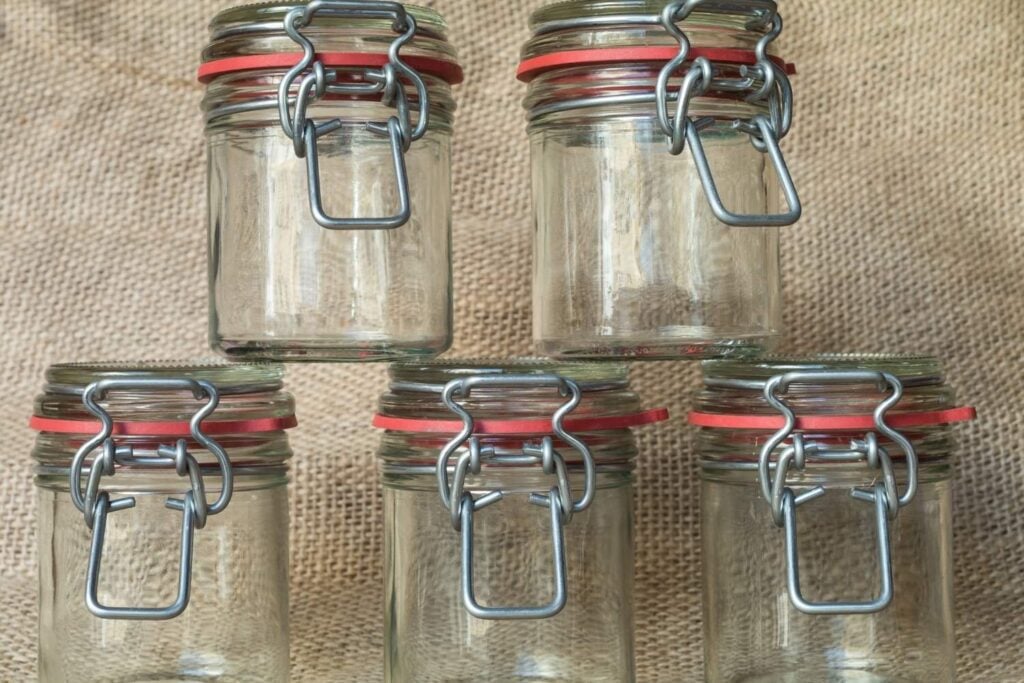
Mason jars may begin in canning but rarely stop there. Their thick glass, with faint blue or green tints, becomes a kind of Southern utility player—holding sweet tea, button collections, or a summer bouquet cut from the yard.
What looks like kitchen clutter might be a working supply. On workbenches or pantry shelves, these jars signify a rhythm of reuse and quiet ingenuity, where preservation isn’t just about food—it’s about keeping close what’s already proved useful.
3. Worn quilted blankets stitched by grandmothers and great aunts.
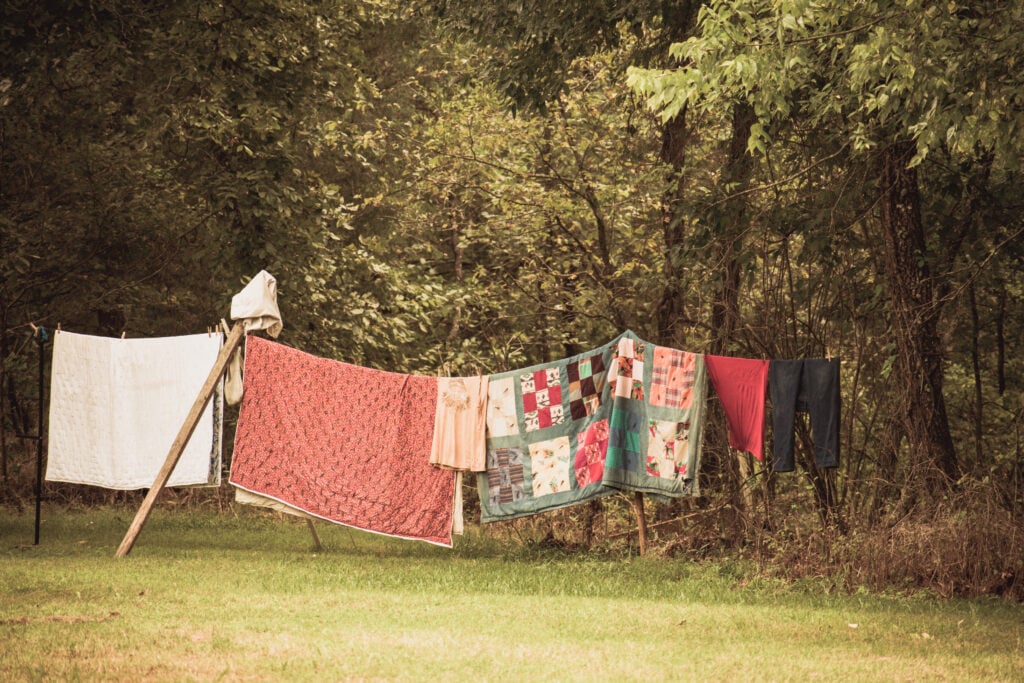
Stitched from scraps of worn shirts and baby dresses, handmade quilts wrap more than bodies. Their faded calicos and puckered seams bear fingerprints of women who gathered together to sew, stories and thread passing from hand to hand.
Some rest folded at the end of guest beds, others hang by clothespins in enclosed porches. Even when frayed, a single square can pull up an entire memory—Christmas mornings, lightning storms, breakfast under a ceiling fan.
4. Monogrammed hand towels passed down from old wedding sets.

Monogrammed towels, once part of wedding registries or trousseau trunks, often remain long after their matching linens have disappeared. The initials—bloomed slightly from washing—mark a name, a start, a household’s first layer.
After years in the linen shelf or guest powder room, they shift from use to symbol. A towel from 1964, slightly yellowed at the hem, might carry more weight than any fresh set from a catalog, because someone once deemed it worth saving.
5. Frayed cookbooks with tomato-stained pages and handwritten notes.
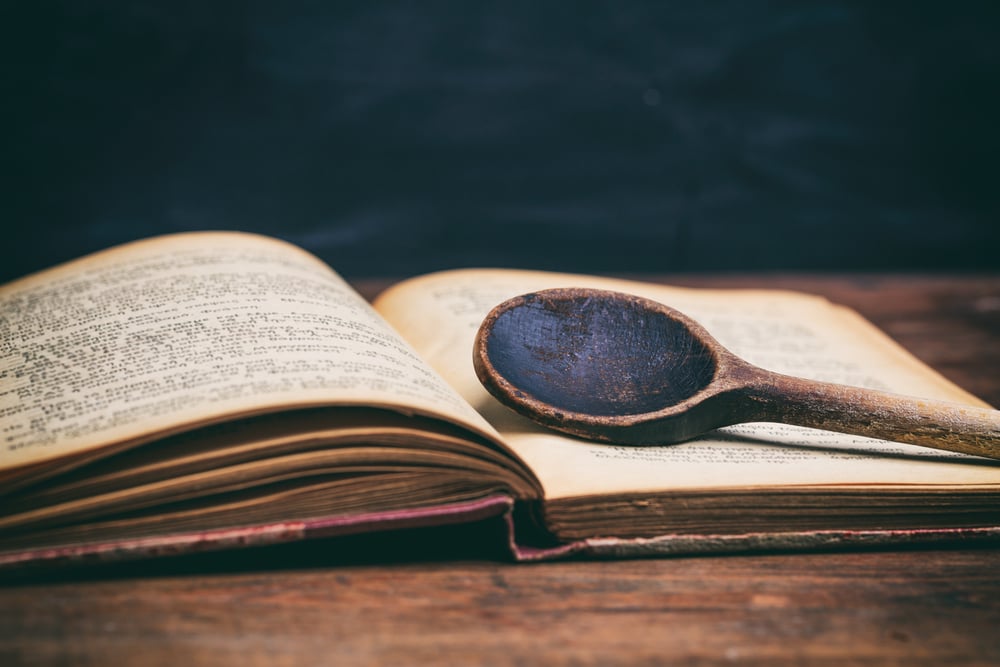
Tomato stains bloom across cookbook pages like markers of passage. These spiral-bound volumes—church compilations, family collections, local fundraisers—come crammed with margins annotated in shifting scripts.
Inside, a splatter next to “Chess Pie” or an asterisk by “Sunday Ham” preserves trial and error as clearly as the typed ingredients. They aren’t just recipes—they are archives, tuned to a specific oven, a particular gathering, a grandmother’s steady hand.
6. Bottle caps collected in coffee tins for backyard craft projects.
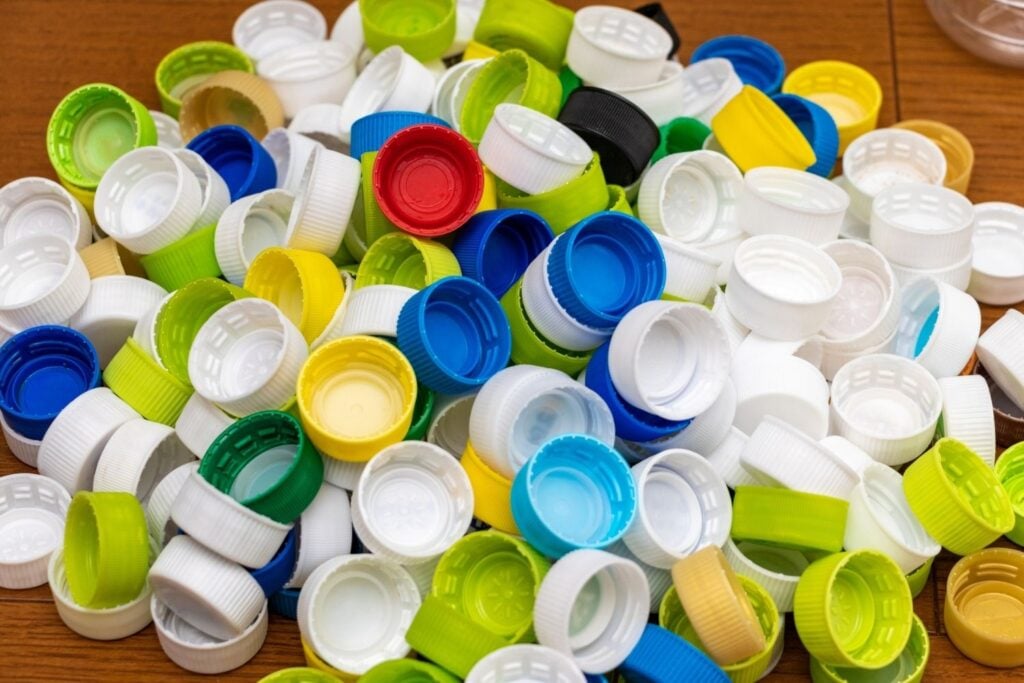
Coffee tins with faded branding often reveal a rattle: a jumble of saved bottle caps. What may seem like kid stuff can actually trace decades of front porch sodas, tailgates, or quiet evenings listening to crickets.
For many, they feed into impromptu craft nights or wind chime projects, sorted by color or brewery. Between uses, they wait on garage shelves like coins in a childhood drawer—not glamorous, but rich in repetition.
7. Vintage Coca-Cola crates stacked high in the garage or barn.
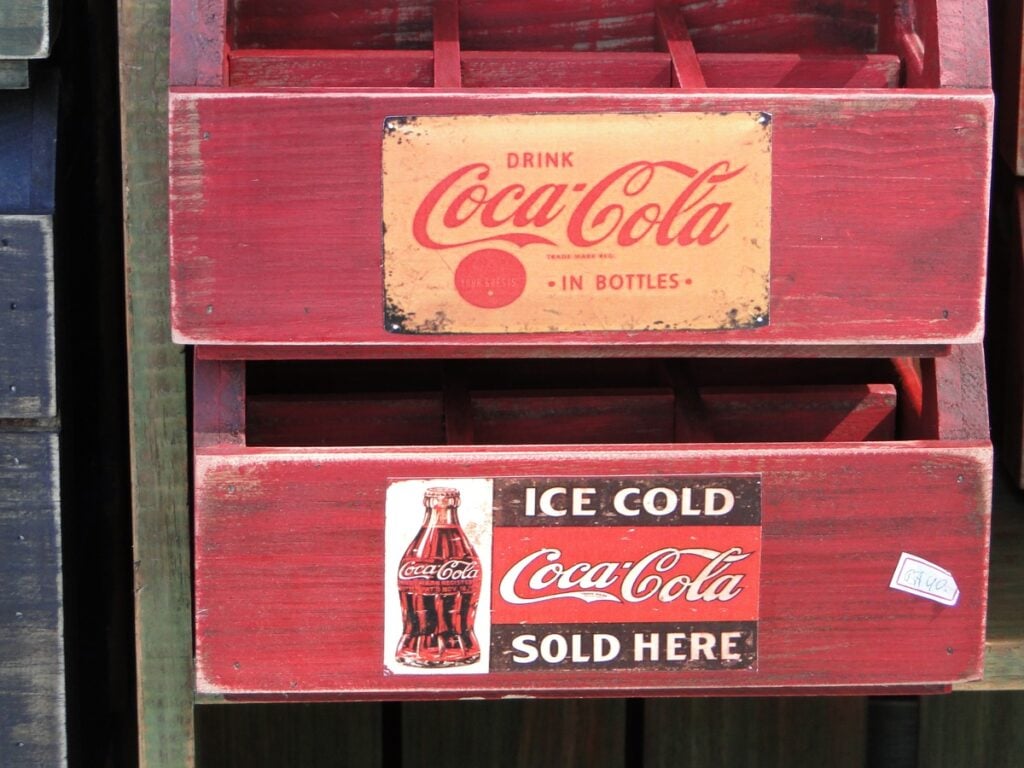
Wooden Coca-Cola crates weren’t made for display, yet many end up stacked near garden sheds or tucked behind porch rockers. Their branding, sun-faded and nicked, feels carved into the region like a small-town gas station.
While glass bottles left long ago, the crates stayed—ideal for holding tools, sorting seed packets, or cradling drinks at neighborhood fish fries. They hum with both nostalgia and practicality, square and sturdy.
8. Old church bulletins tucked inside drawers or antique Bibles.
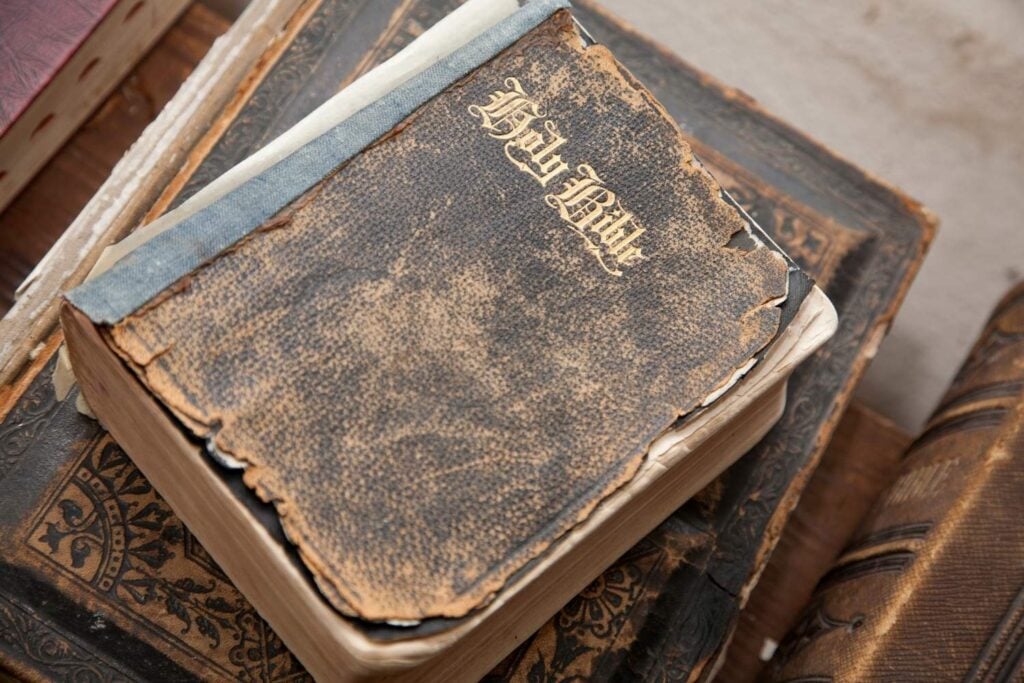
Old church bulletins tend to hide in unlikely places—in antique Bibles, side tables, or stuck between photo albums. Their folded paper, often thin and browned at the edges, carried not just dates but names.
They mark baptisms, homecomings, and choir lists that explain who sang what solo. Stashing them isn’t forgetfulness—it’s reverence, like pressing a pressed flower into a book you intend to open again someday.
9. Ceramic roosters that once decorated a kitchen windowsill.
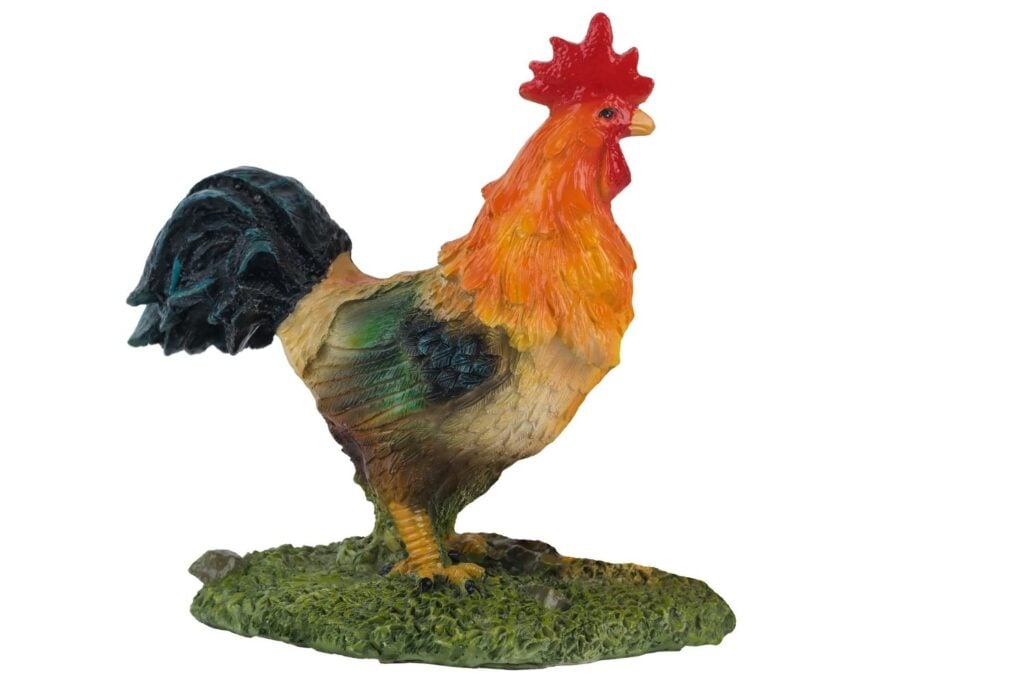
Ceramic roosters once anchored kitchen windowsills, a bit of whimsy surrounded by ivy stencils or gingham curtains. Their bright glaze and upright posture made them less about chickens, more about watchfulness—sentinels of morning coffee and afternoon phone calls.
Even chipped beaks or worn tail feathers don’t diminish their charm. They still summon the memory of family tables set with devotion and a dash of good humor.
10. Tupperware lids with no matching bottoms just in case.
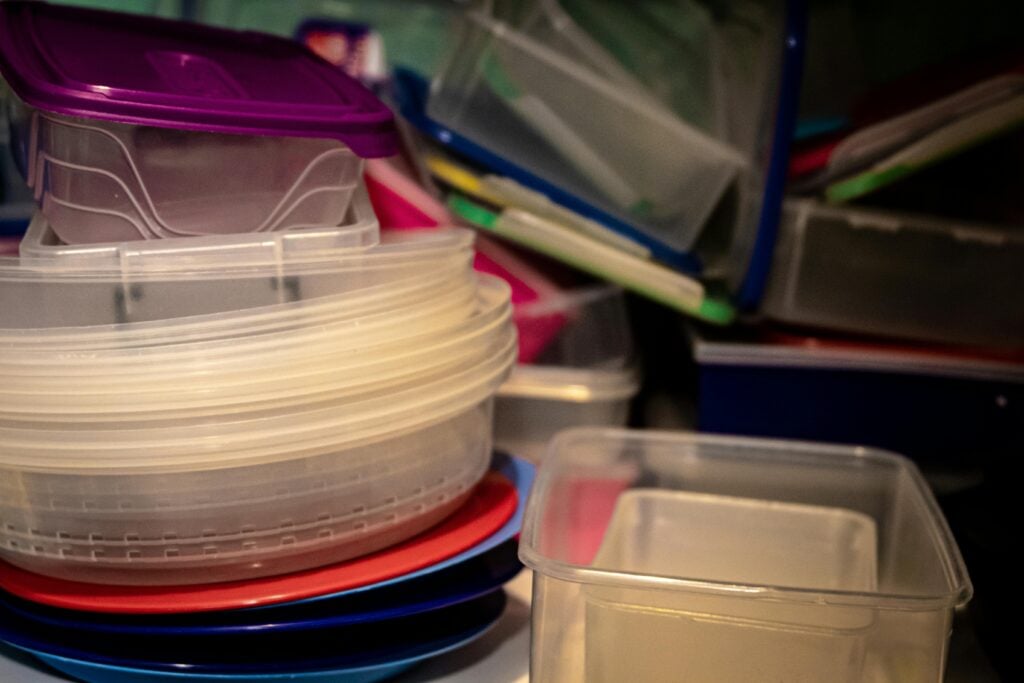
Orphaned Tupperware lids dwell in drawers on purpose. Even unmatched, they carry potential—a future casserole pan, a foil-covered bowl in need of protection, a container borrowed by someone who promised to return it.
People might forget the stews that once filled the bases, but the lids endure. Their odd shapes and faded pastels reflect a kind of hopeful expectation: better to keep than to need and not have.
11. High school football programs kept for rival memories and rosters.

High school football programs crinkle at the corners yet still hold weight. Within those pages—rosters, black-and-white grainy player photos, marching band notes—lie entire fall seasons seen from metal bleachers.
They pack away rivalries in team colors and names called by radio announcers across cool fields. Pulling one from a box can snap time forward: a son’s first touchdown, a cousin in shoulder pads, chatter from behind concession stands.
12. Wicker baskets from gift deliveries or bygone Easter mornings.
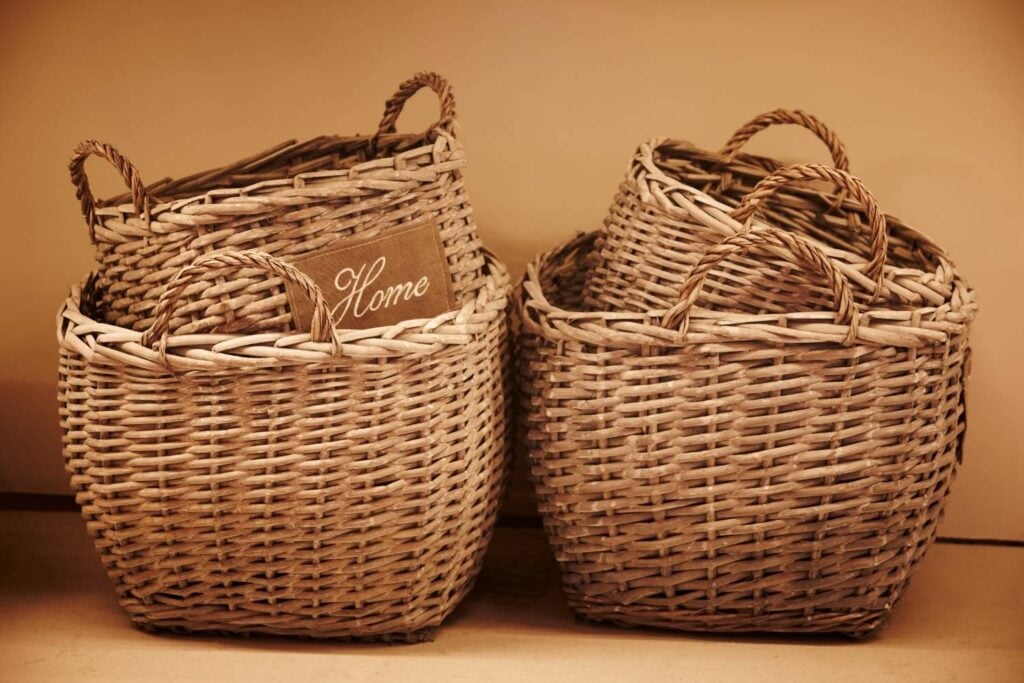
Wicker baskets may arrive with fruit arrangements or Easter treats, but often outlive their original purpose. Shaped by hand, their subtle creaks and bent handles still echo use.
Even when tucked if covered in dust, one might hold spare candles, a dog leash, or sewing scissors. They shift roles without complaint, sturdy and unpretentious, better stored than tossed because you never know when a basket will serve again.
13. Plastic grocery bags folded neatly for every future need.
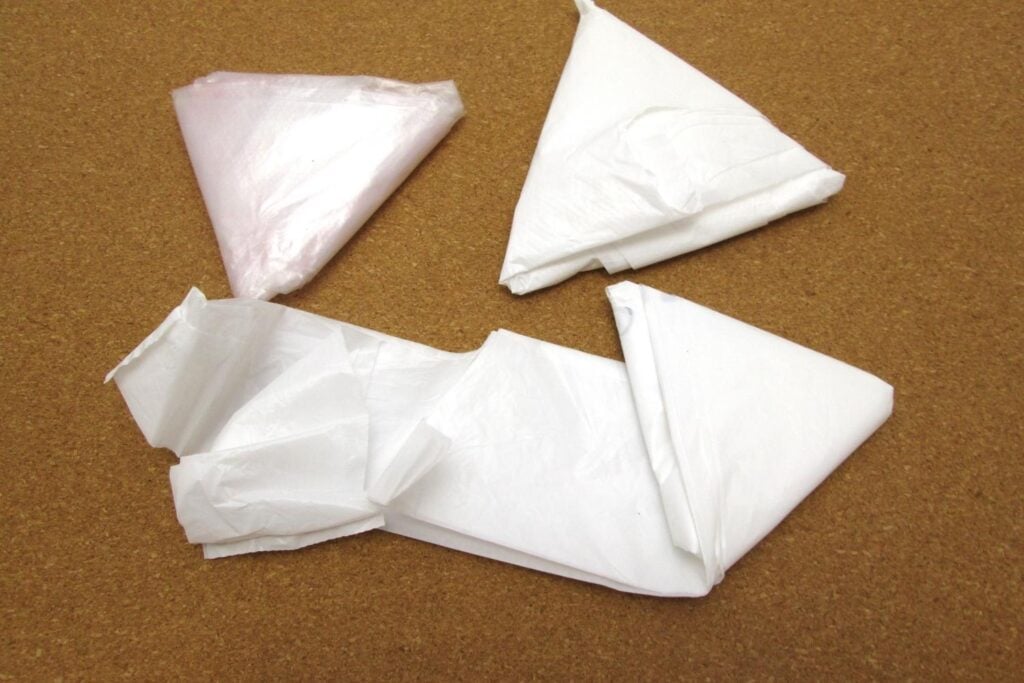
Plastic grocery bags, folded into neat triangles or stuffed in sleeves, form a quiet stockpile under many Southern kitchen sinks. Each one may reflect a past errand or late-night milk run.
Some households know exactly which store a cream-colored bag came from by touch alone. They wait, patient and practiced, for a second act—lined in trash bins, wrapped around muddy shoes, or handed out with leftovers in aluminum pans.