
Some pantry staples once praised for health benefits may actually be quietly speeding up aging.

Foods once considered healthy can sometimes hide ingredients that do more harm than good as we age. Over time, excess sugar, processed additives, and refined carbs can chip away at energy levels, gut health, and cellular resilience. Many baby boomers grew up with these items as part of a so-called balanced diet, not knowing their cumulative effects. Understanding what’s in your kitchen can help support longevity and make healthier choices going forward.
1. Fat-free salad dressings loaded with sugar and preservatives.

Commercial fat-free dressings often swap oil for high-fructose corn syrup and stabilizers. The result is a sugary, shelf-stable product that masks vegetables in sweetness while offering little nutritional support.
Over time, the added sugars and preservatives can elevate blood sugar and stir inflammation—two contributors to premature cell aging. A bottle labeled ‘light Italian’ might contain over six grams of sugar per two tablespoons.
2. Diet sodas that disrupt gut health and natural hunger cues.

Artificial sweeteners in diet sodas can confuse gut bacteria and signaling hormones tied to fullness. Though calorie-free, they may still cue an insulin response that disrupts natural appetite regulation.
Long-term intake of these sweeteners, found in the amber tint of cola cans, has been linked to shifts in gut microbe balance and an increased craving for sugary foods, contributing to metabolic slowdowns as people age.
3. Canned soups high in sodium and low in real nutrients.

Many canned soups rely on salt, preservatives, and flavor enhancers to boost shelf life and taste. While convenient, they’re often low in vegetables and protein and high in sodium per cup.
That much salt, often over 800 milligrams per serving, can stress aging kidneys and contribute to elevated blood pressure—key risk factors for cardiovascular decline that accelerates biological aging over time.
4. Processed deli meats packed with additives and nitrates.

Deli meats are preserved with nitrates and flavored with phosphates, giving them a pink hue and extended fridge life. Though marketed as lean protein, they carry a processed food burden.
In regular consumption, these additives may produce nitrosamines in the body, compounds tied to cellular damage and inflammation. A typical turkey sandwich could quietly deliver both preservatives and saturated fat without tasting overly salty.
5. Margarine spreads filled with artificial trans fats.

Synthetic trans fats in margarine helped early spreads resist spoilage but have since earned backlash. Created through hydrogenation, they interfere with cell membrane flexibility and promote LDL cholesterol.
Even small amounts, such as the golden dollop on toast, can prompt chronic inflammation and impair nutrient transport at the cellular level—two mechanisms known to speed aging inside the body.
6. Instant oatmeal flavored with excess sugar and chemical enhancers.
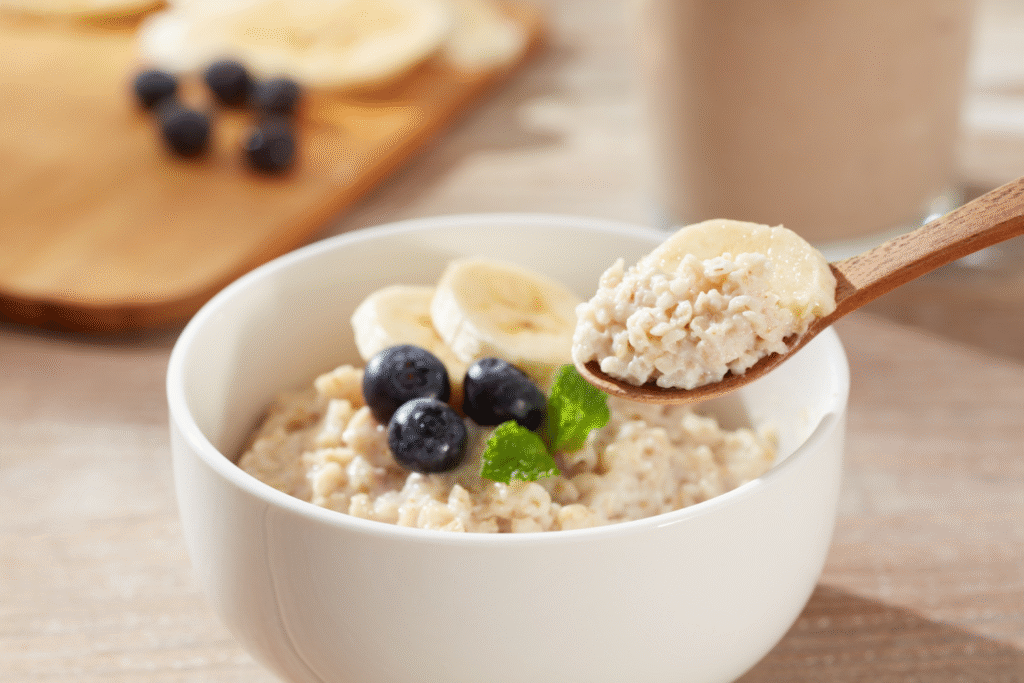
Flavored instant oatmeal often blends quick-cooking oats with sugar, coloring, and emulsifiers. While oats on their own support heart health, these prepackaged versions tilt toward dessert.
The sweetness from just one packet, sometimes over ten grams of added sugar, can cause blood sugar spikes and crashes that sap energy and contribute to insulin resistance over time, especially in slower metabolisms.
7. Low-fat yogurts with high sugar content and fewer probiotics.

Low-fat yogurts typically increase their appeal with sugar, thickeners, and flavoring agents. Reducing the milk fat may also lower the yogurt’s natural probiotic content.
A single serving labeled ‘fruit on the bottom’ might hold more sugar than a cookie, while offering fewer digestive perks due to homogenization and heat treatment—an imbalance that undermines gut health and energy regulation as the body ages.
8. Meal replacement shakes with unpronounceable ingredients and sweeteners.

Meal replacement shakes often feature synthetic vitamins and sweeteners that mimic sweetness without calories. These blends may fill temporarily but lack the fiber and chewing satisfaction of whole meals.
Long-term reliance on them can flatten metabolic response and dull taste recognition, especially when every bottle shares the same vanilla profile masking sucralose, preservatives, and powdered oils in opaque plastic jugs.
9. White sandwich bread stripped of fiber and whole grains.

White bread is made from refined flour, where the bran and germ are stripped away, leaving starch without fiber. Though soft and mild-tasting, it digests quickly into glucose.
That rapid absorption can cause blood sugar swings and increased appetite soon after a meal. A lunchtime sandwich with soft white slices may satisfy briefly but contribute to longer-term glycemic volatility.
10. Rice cakes offering empty carbs without lasting satisfaction.

Rice cakes, while airy and low in calories, offer little protein or fiber. They rank high on the glycemic index, meaning they digest quickly and spike blood sugar.
Though once favored as a diet food, they lack the staying power of balanced snacks. A plain puffed grain disk can trigger hunger again within an hour, undermining stable energy throughout the day.
11. Store-bought granola bars disguised as wholesome but overly sweet.

Many granola bars blend oats with syrups, chocolate bits, or yogurt coatings. Despite rustic-looking packaging, they often resemble candy more than a nutritious meal.
Some versions contain over 20 grams of sugar per bar, enough to propel a midmorning surge followed by a sharp slump. That chronic sugar cycling can strain insulin response and weaken skin elasticity over time.
12. Fruit juices marketed as healthy yet lacking fiber and full of sugar.

Store-bought fruit juices are stripped of pulp and often sweetened beyond natural levels. Without the fiber from whole fruit, sugars absorb rapidly and pull blood glucose with them.
An eight-ounce glass of labeled ‘100% juice’ can contain as much sugar as a soda, undermining the belief that juice equals hydration or health—especially when cumulative effects quietly elevate inflammation and oxidative stress.
13. Microwaveable diet meals overloaded with preservatives and sodium.

Microwavable diet meals rely on preservation techniques like sodium loading and chemical stabilizers. Though portioned attractively, many contain artificial flavors and few whole ingredients.
Typically low in fresh produce and high in modified starches, these meals can leave the body undernourished while increasing exposure to substances linked to mitochondrial decline—one internal sign of premature aging in tissues and organs.