
Many once-daily household chores required effort, patience, and basic tools instead of modern machines.

Before the rise of appliances and time-saving gadgets, daily chores required consistent physical effort and coordination. Tasks that now take minutes once demanded planning, hand tools, and teamwork—turning routines like laundry or yard work into half-day undertakings. For many older generations, these chores weren’t just duties but important lessons in responsibility. Understanding how much effort went into daily upkeep reveals how dramatically life at home has changed across generations.
1. Scrubbing laundry on a washboard with heavy bars of soap.
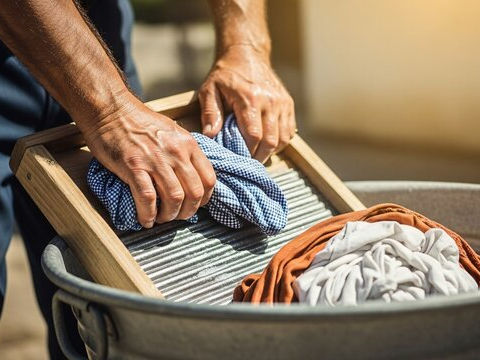
Washboard laundry called for wet knuckles and serious grit. Clothes went into tubs with hot water and lye soap, then got rubbed across ridged metal with both hands. The friction lifted dirt with each pass, but it also shredded delicate fabric over time.
Bathroom tiles and denim collars wore faster back then, not from wear, but from scrubbing. One wool sweater could take 20 minutes alone. Without commercial softeners, rinsing required multiple buckets of water to keep soap from stiffening fabric into cardboard-like folds as it dried.
2. Raking leaves into piles and hauling them away by hand.
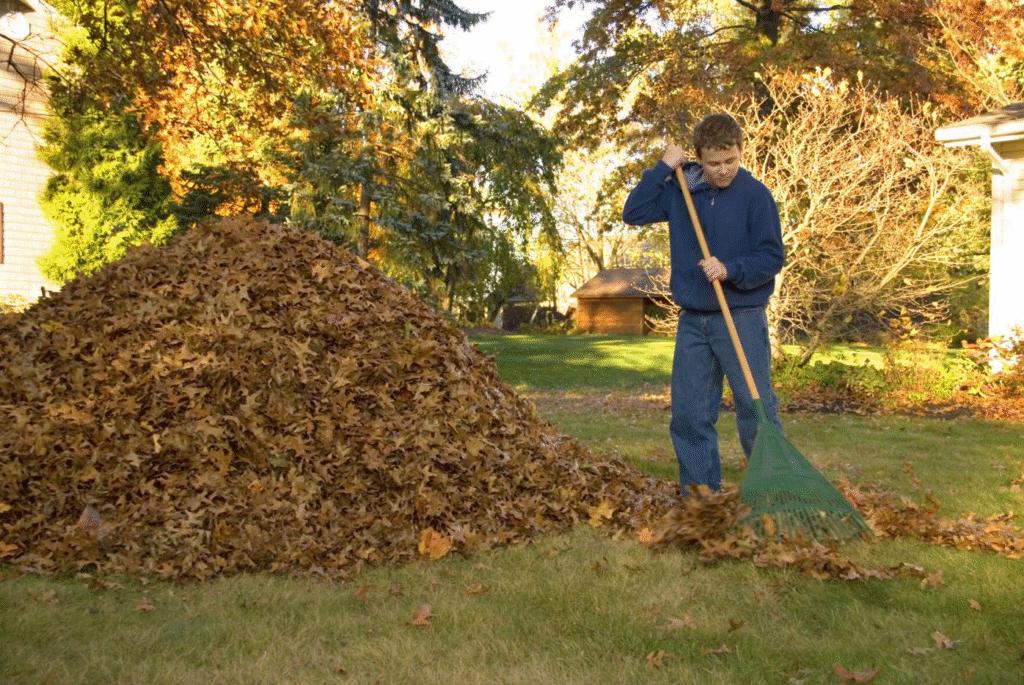
Raking wasn’t only a fall job—it was a weekly sweep of the yard. Metal-toothed rakes scraped leaves into knee-high piles that kids flattened or bagged with gloved hands. Wind meant redoing much of the morning’s work.
In the absence of leaf blowers, clearing the yard counted as a weekend event. The smell of wet leaves clung to jackets. Sometimes the piles smoldered at curbside in neighborhood burn barrels, their smoke trailing into dusk before city bans took hold.
3. Washing dishes in a sink without an electric dishwasher nearby.

Sinks filled with suds, and hands submerged in hot water did all the work. A basin held plates while one person washed and another dried, often with worn dish towels that left tiny lint fibers on glass.
Evening cleanup stretched thirty minutes or more, especially after a meat-heavy dinner. Families developed rhythms—one person soaped, another rinsed—while steam fogged the windows. Modern dishwashers save time, but those sink stations often hosted the day’s best conversations.
4. Hanging clothes to dry on a line strung across the yard.

Before electric dryers, people strung rope between fence posts and let sunlight do the work. Each shirt or sheet got pinned up by hand, hem straight, weight balanced to prevent sagging.
In cold or damp weather, drying took all day—or not at all. Towels emerged stiff. Cloth diapers froze solid in winter, crisp as thin plywood. Wind carried socks to neighbors’ yards, and clothespins became small household treasures that mysteriously vanished.
5. Sweeping dust and dirt with a stiff broom on all floors.
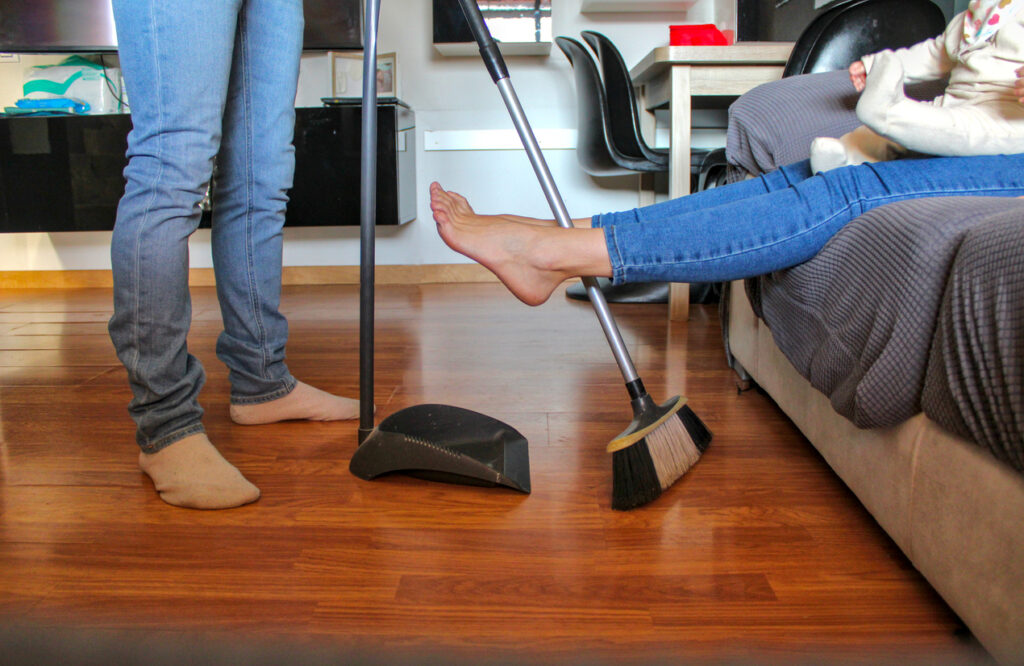
Hard-bristled corn brooms swept wooden and linoleum floors in broad motions. Dustpans filled quickly and had to be emptied outside, leaving behind little lines of gray grit.
Sweeping every floor meant bending at odd angles, moving furniture by hand, and repeating the process when shoes tracked in more dirt. Before vacuum motors hummed, brooms quelled the mess with muscle alone. Hallways echoed the low scuff of bristles scraping in arcs.
6. Ironing clothes with heavy irons heated on a stovetop surface.
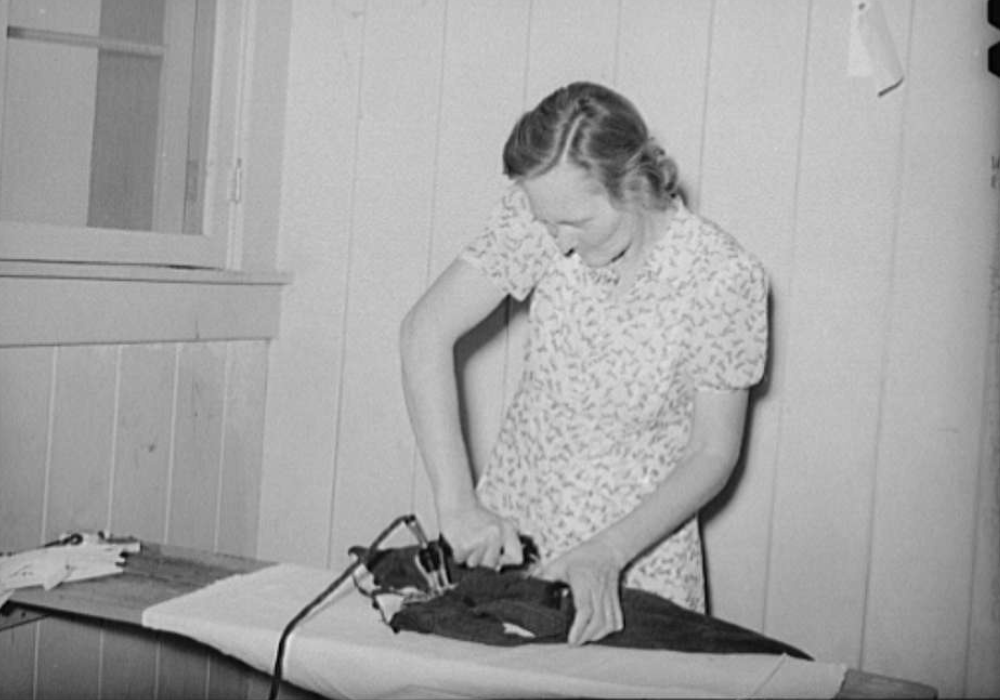
Irons once hosted fire inside. Black cast-iron ones—some over six pounds—sat on stove burners until hot enough to press collars smooth. Handles required cotton cloths to prevent burns.
Switching irons wasn’t unusual; one cooled while another heated. Steam meant spattering water from a bowl, not pressing a button. Shirts browned if left a second too long, and creases were permanent, like knife lines in starched cotton.
7. Washing windows with vinegar, newspapers, and a lot of elbow grease.
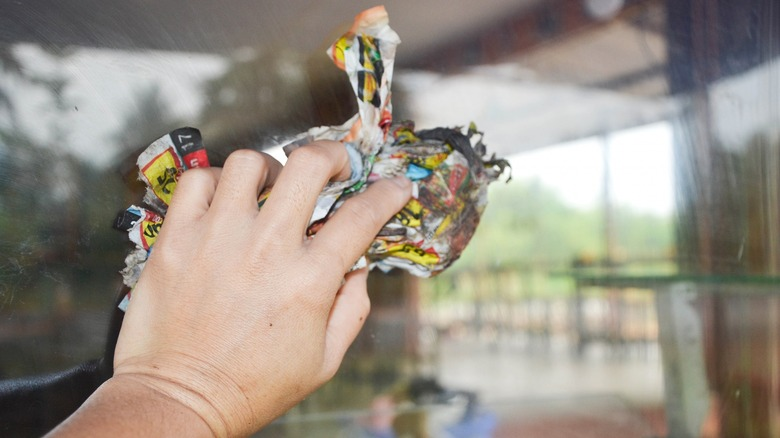
Window cleaning kits meant vinegar in a bowl and yesterday’s newspaper wadded into fists. Glass took elbow grease to shine, with extra muscle on the edges where dirt built up.
Paper tore mid-swipe. Ink smudged fingers. High ledges needed ladders sturdy enough to hold full weight. Glossy magazine pages didn’t work, and cotton rags left streaks. Clear glass reflected skill in wrist turns, not chemical spray.
8. Beating rugs over a fence to remove deep-set dust.
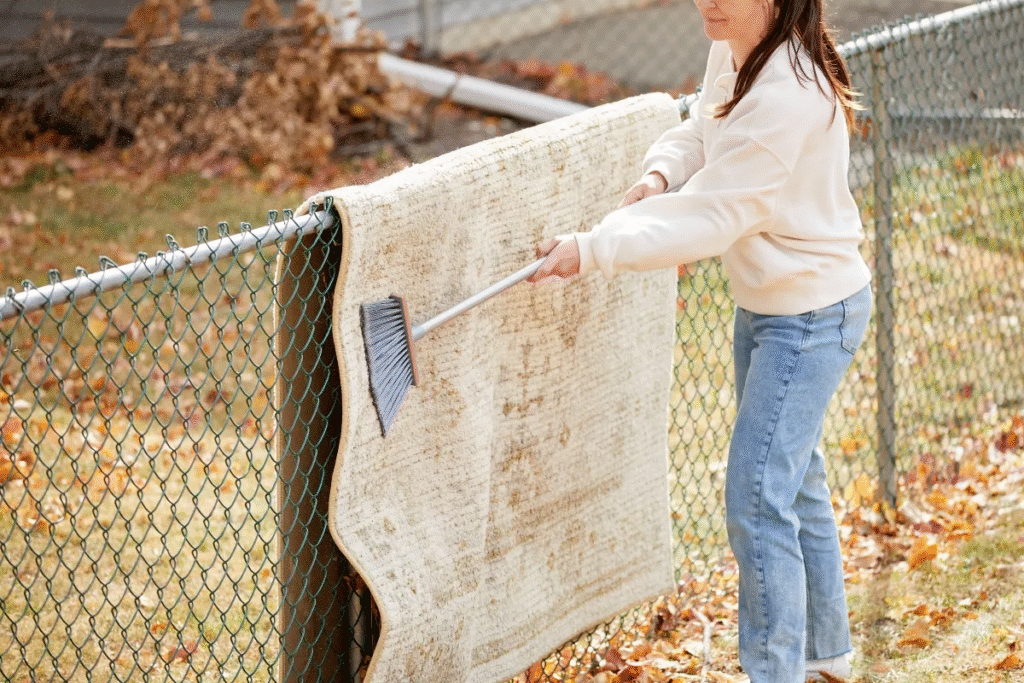
Rugs weren’t vacuumed—they were beaten. A metal rack outside or a backyard clothesline supported them as hands wielded carpet whips or sturdy sticks to smack out grit.
Each hit released clouds of dust, punching through layers of woven thread. The sound echoed like a thud drum, and neighbors heard the rhythm. Rugs flapped in the wind like sails, sometimes knocked clean off their perches after the sixth or seventh swing.
9. Churning butter by hand with wooden paddles and patience.
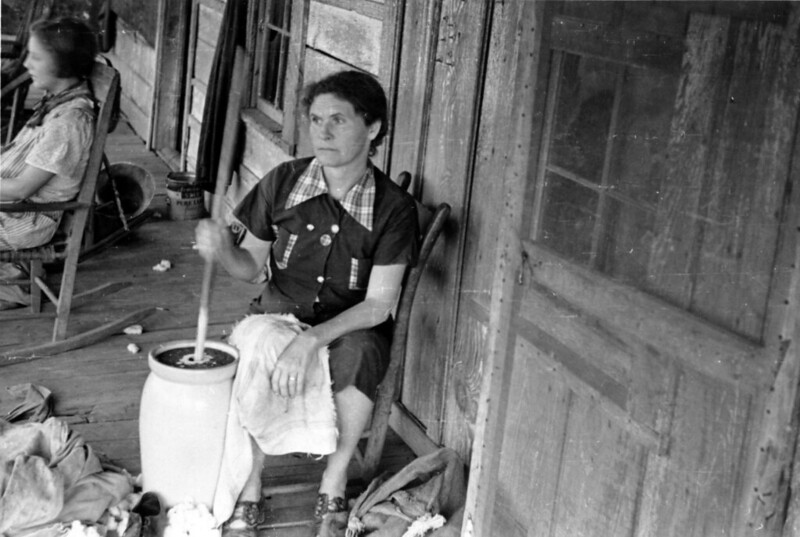
Butter started as cream poured into wooden churns. The paddle had to be worked for half an hour or longer, rhythm steady, arms aching before the transformation.
First it frothed, then it thickened, and finally, curds separated. Yellow lumps came out waxy and soft. In summer, the churn sat cool in cellar rooms to keep milk from spoiling. Butter took time and presence—a slow reveal from liquid to spreadable joy.
10. Carrying water from a well to use for household cleaning.
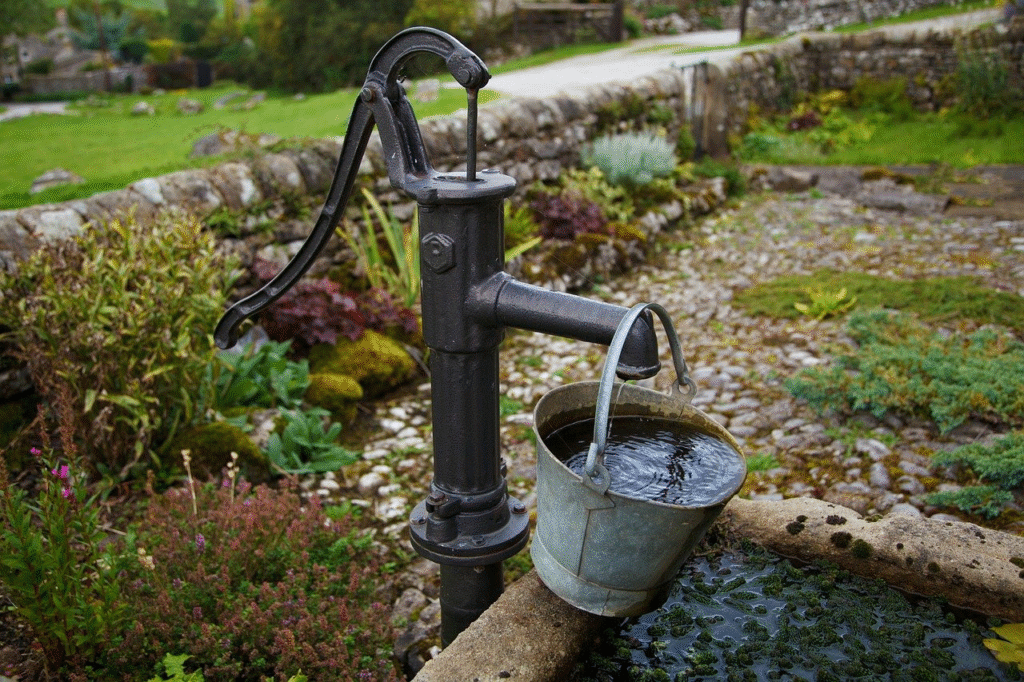
Many homes relied on wells instead of sinks. Buckets hauled water from deep underground, poured into basins for scrubbing and cooking alike.
Daily usage meant planning. Cleaning floors or bathing required multiple trips, each one a weighty chore. A splashed bucket lost part of the day’s supply. Children were often tasked with carrying smaller tin pails, their arms swinging with sloshed effort across packed dirt paths.
11. Peeling and chopping fruits and vegetables entirely by hand.

A week’s produce needed careful prep without motors or slicers. Peeling baskets of apples or trimming green beans involved dull knives and patient hands, working for hours at the kitchen table.
Blisters showed by evening, especially after cutting squash with knobby skin that resisted every stroke. Skins, seeds, cores—all compostable, all handled by hand. Today’s food processors blur the memory, but the work once left fingerprints stained red from beets and tomatoes.
12. Polishing wooden furniture using oil and cloth without modern sprays.
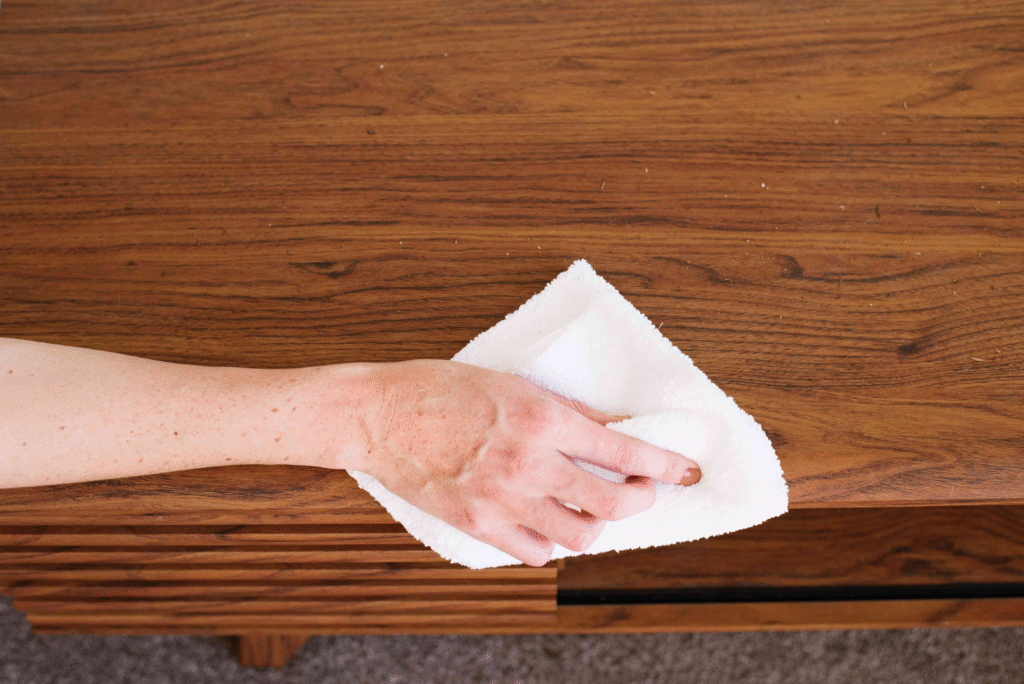
Wood polish meant linseed oil and cotton cloths, not canned mist. Every armrest and table leg got rubbed in slow circles, coaxing out luster while removing fingerprints and murky stains.
The scent—nutty, raw—clung to sleeves. Oil stained cuffs, and polishing a carved chair took an hour. Near windows, sunlight haloed the sheen as proof of care. Daily dusting became a ritual, not a checklist.
13. Mending clothes with needle and thread instead of new purchases.
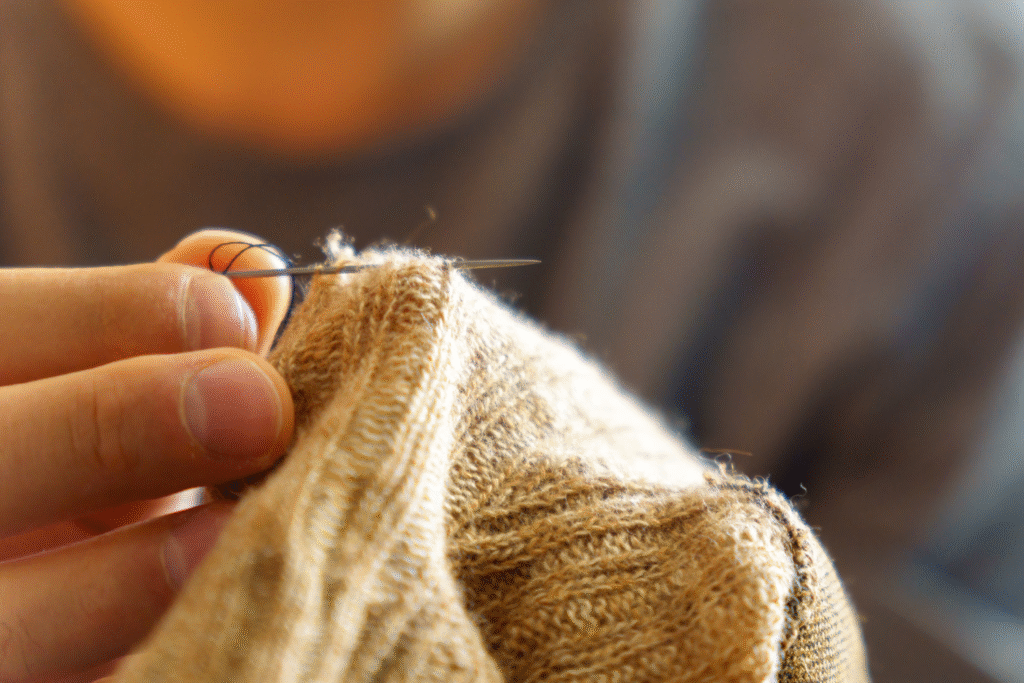
Threading a needle brought quiet focus. Mending holes in socks or reinforcing knees of jeans fell to patient hands with strong nearby light and a thimble for push force.
Buying replacements wasn’t common. A stitch in time—tight, even—meant a pair lasted years longer. Kids wore patches shaped like ovals or stars. Drawer bottoms filled with darning mushrooms, spools of thread, and silence that stretched from dusk to supper.