
Many chores once woven into daily life have quietly faded with changing tools and expectations.

Before dishwashers, microfiber cloths, and robotic vacuums, household routines demanded more time, effort, and elbow grease—especially for Baby Boomers. Chores that once shaped childhood weekends or school-day mornings now seem distant to younger generations raised with modern conveniences. From lawn mowing to window cleaning, many responsibilities doubled as skill-builders and family contributions. Understanding these generational shifts in domestic labor helps reveal not just what we do differently, but why our homes run the way they do today.
1. Hanging laundry on a clothesline to dry in the sun.
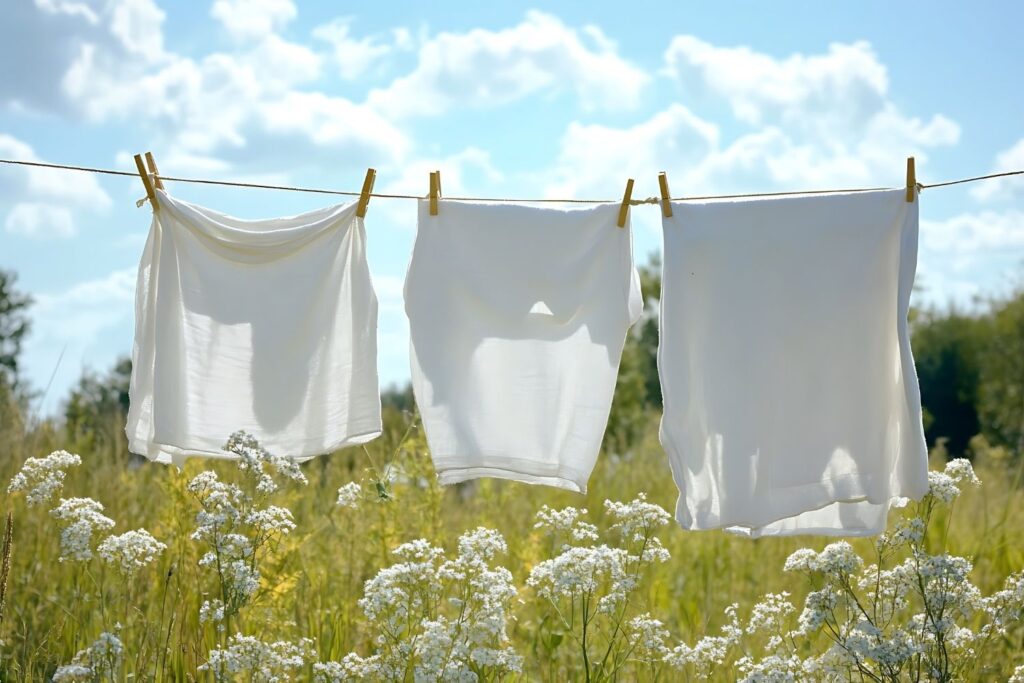
Fabric clipped to a backyard line, fluttering in the breeze, once signaled a routine chore. Hanging laundry allowed sun and wind to naturally dry clothes, saving energy but demanding time, arm strength, and attention to shifts in weather.
On summer afternoons, a grandmother might pause at the window to scan for darkening clouds before rushing out to rescue cotton sheets. Droplet-speckled clothes meant more work, not charm. For many Boomers, that drying method mixed daily labor with the rhythm of weather and season.
2. Ironing clothes each week to keep every outfit crisp.
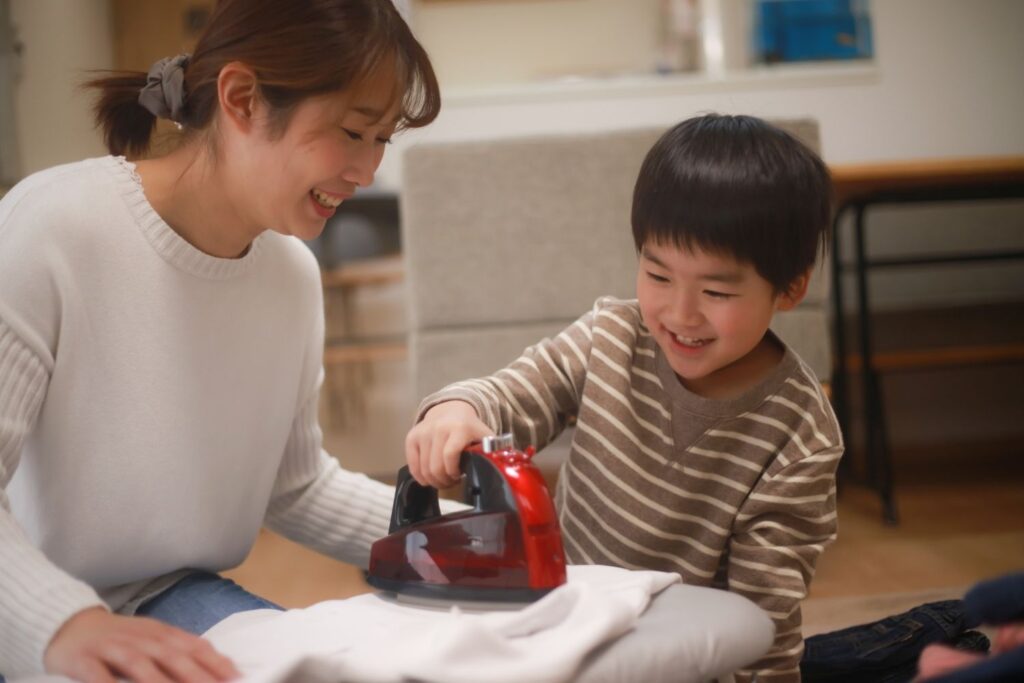
Before wrinkle-free fabrics mattered, irons hissed across denim, collars, and table linens. Weekly ironing sessions weren’t optional—they followed Sunday night laundry. A solid ironing board, a jug of distilled water, and steady hands kept pants creased and shirts sharp.
In practice, some children learned early how to glide steam over hems and pleats. School uniforms, church dresses, even pillowcases passed under the iron’s weight. Today’s relaxed fashion and synthetics eased that burden, but the muscle memory stays in many Boomers’ shoulders.
3. Polishing shoes regularly to maintain a scuff-free shine.
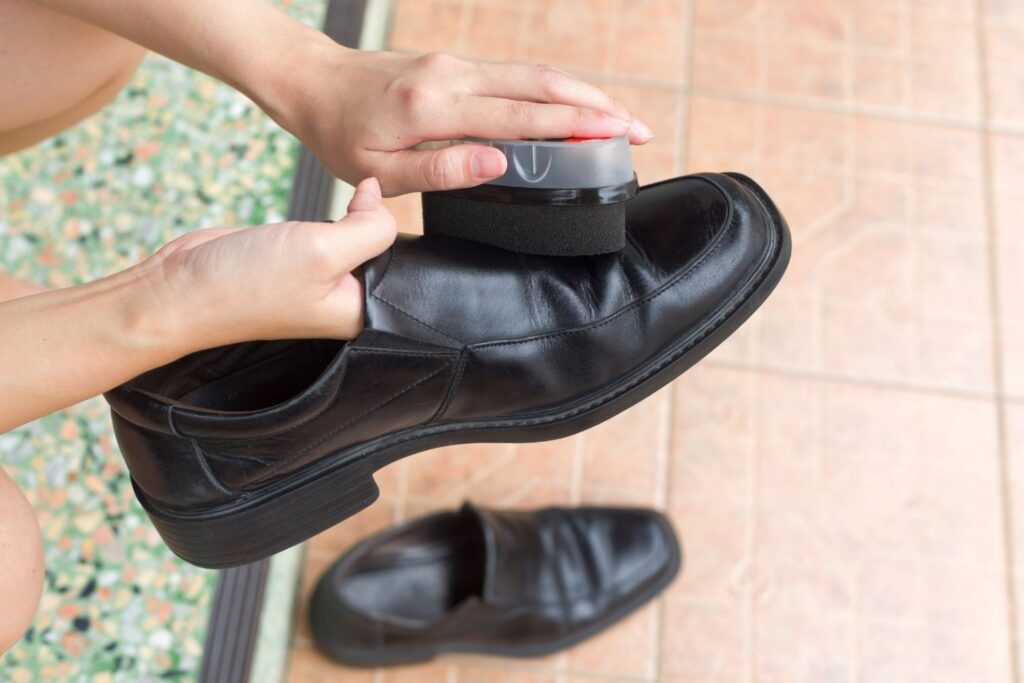
Leather shoes once needed regular polishing to stay presentable, especially for school, church, or job interviews. Shoe wax, a brush with stiff bristles, and a soft rag lived under many household sinks or in hallway drawers.
The process left a lasting sensory memory—the sharp scent of polish, the stiff swipe of horsehair bristles. For some, maintaining shoes taught attention to detail; for others, it was just another Saturday morning task, nested among yard work and errands on the family to-do list.
4. Mowing the lawn with a loud, gas-powered push mower.

Gas-powered push mowers weighed more and roared louder than today’s electric models. Boomer kids often mowed lawns as early as age ten, sweating under the sun while cutting neat stripes into long grass.
The smell of cut clover or a dusting of pollen on sweat-slicked skin came with the job. In many neighborhoods, lawn mowing signaled pride, discipline, or both. Some families even had specific patterns children were expected to follow—an early lesson in consistency over convenience.
5. Washing dishes by hand after every family meal.

Dinner ended, plates stacked, and sleeves rolled up: dishwashing by hand was automatic. Before affordable dishwashers became widespread, sinks filled with suds two or three times a day, especially in larger households.
A rotating rhythm often emerged—one sibling scrubbed, another rinsed, a third dried with a threadbare towel. The process meant more than cleaning; it structured shared responsibility. Repetition etched the routine into memory, especially for those who can still hear the clatter of porcelain under water.
6. Raking leaves into piles and bagging them by hand.
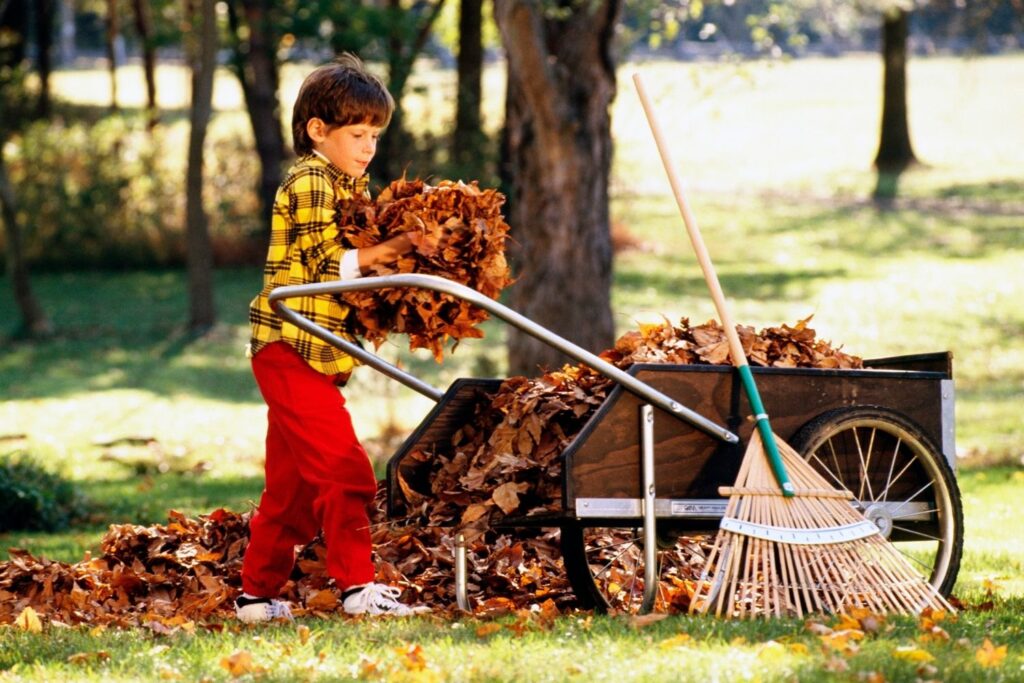
After trees dropped their gold and rust-colored coats, leaves were raked and sealed into brown paper bags. Boomers often spent autumn weekends doing the gathering by hand, dragging canvas tarps slowly across the lawn.
Neighborhoods rang with scratchy rake sounds and the swish of leaves swept into piles. For kids, it could be a chore or a game—jump, rake, repeat. But behind the fun sat a real expectation: keep yards tidy as a matter of personal and communal pride.
7. Sweeping porches and sidewalks with a traditional straw broom.

Before blowers and vacuums, straw brooms cleared dirt from porches and sidewalk cracks. These tools stiffened over time, their bristles fraying at the ends but still sweeping reliably when pressed into use.
Sidewalk sweeping wasn’t glamorous, but it marked the line between public and private care. A swept walkway told visitors they had entered cared-for ground. For many Boomers, that weekly gesture—clearing grit near the welcome mat—reflected ideals of order and hospitality passed down like heirlooms.
8. Beating rugs outside to shake out dust and dirt.

Outdoor rug-beating called for muscle and stamina. Rugs hung over thick clotheslines while broomsticks or woven beaters launched dust clouds into the air, often coating nearby bushes or siblings in grayish powder.
The task unfolded with satisfying rhythm and visible proof: each slam cracked filth loose. Many carpet types were too bulky for early vacuum models, so beating remained essential. Though seldom practiced now, some still recall the cloth’s thud and the grit-softened soles that followed.
9. Cleaning windows using vinegar spray and newspaper sheets.

Glass panes gleamed after vinegar and newspaper teamed up against smudges. Boomers grew up watching parents spritz homemade cleaner and rub in tight circles, paper crinkling with pressure that left streak-free shine.
Before microfiber cloths and commercial sprays entered the scene, crumpled sports pages and white vinegar were household staples. The sharp scent hung in the air, especially near spring-cleaning time. Done right, reflections sharpened in the glass—and kids sometimes caught their own after-school shapes taking form.
10. Dusting every surface with a cloth instead of a duster.

Dusting by hand relied on feel and daily habit. A damp cotton cloth chased particles across polished wood, picture frames, and table legs, often scented faintly by lemon oil and quiet purpose.
Children learned how static built up in corners and how quickly a week’s film could gather. Feather dusters existed but weren’t always trusted to trap grime. Many Boomers can still recognize the low glide of soft cloth across a coffee table as a sound of home.
11. Separating laundry by fabric and color before washing.

Laundry didn’t reach the washer until shirts, socks, and towels were precisely sorted. Whites, darks, and delicates sat in neat piles—often on a linoleum floor—awaiting their turn in the tub.
Mixing loads meant faded colors or ruined fabrics, especially with older machines lacking cycle settings. Kids who helped learned the difference between polyester and wool by folding damp clothes across laundry baskets. That sorting step was both caution and ritual, passed down with apron strings and simple efficiency.
12. Shoveling snow from the driveway before school or work.
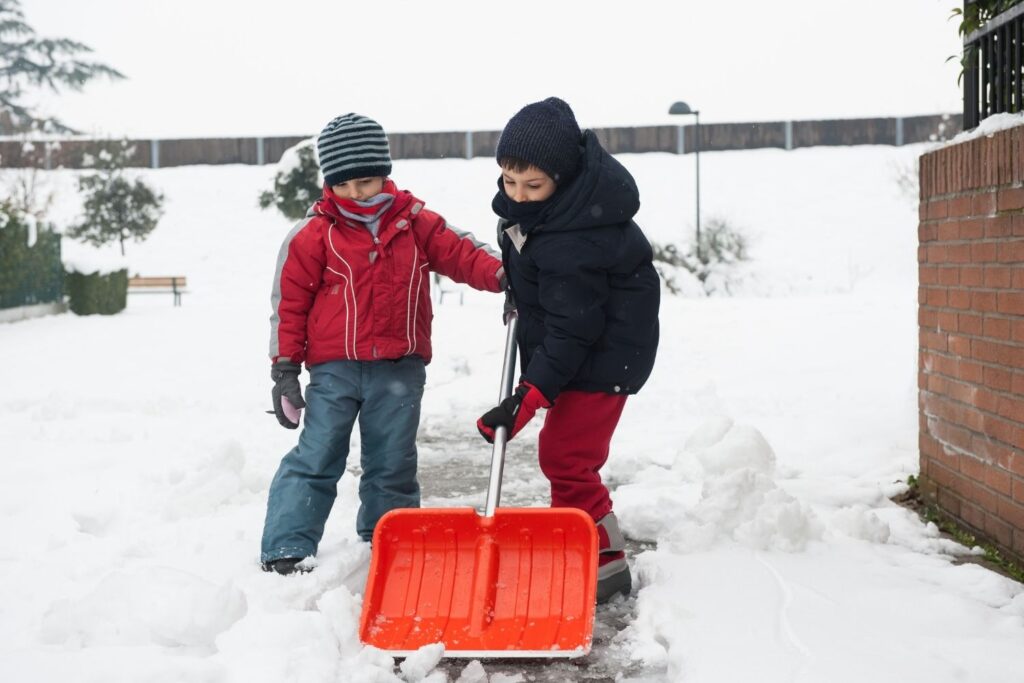
Early winter mornings often began with a shovel and a silence broken only by scrape and crunch. Fresh snow called for fast work before bitterness set in or schedules kicked off.
Driveways had to be cleared so cars could back out on time, and heavy drifts meant layered coats, stiff gloves, and frozen lashes. Many Boomers remember numb fingers warming slowly over a kitchen vent after thirty minutes of shoveling—a chore treated less as hardship than household expectation.