
Live television made history personal for a generation shaped by shared national broadcasts and moments

From moon landings to televised funerals, Baby Boomers experienced history in real time through the glow of broadcast television. These live moments weren’t just news stories—they were emotional touchstones that united living rooms across the country. For a generation that came of age alongside the rise of TV, watching events unfold live left lasting impressions. These broadcasts helped define collective memory, framing not just what happened, but how it felt to witness it together.
1. The moon landing broadcast that captivated millions around the world.
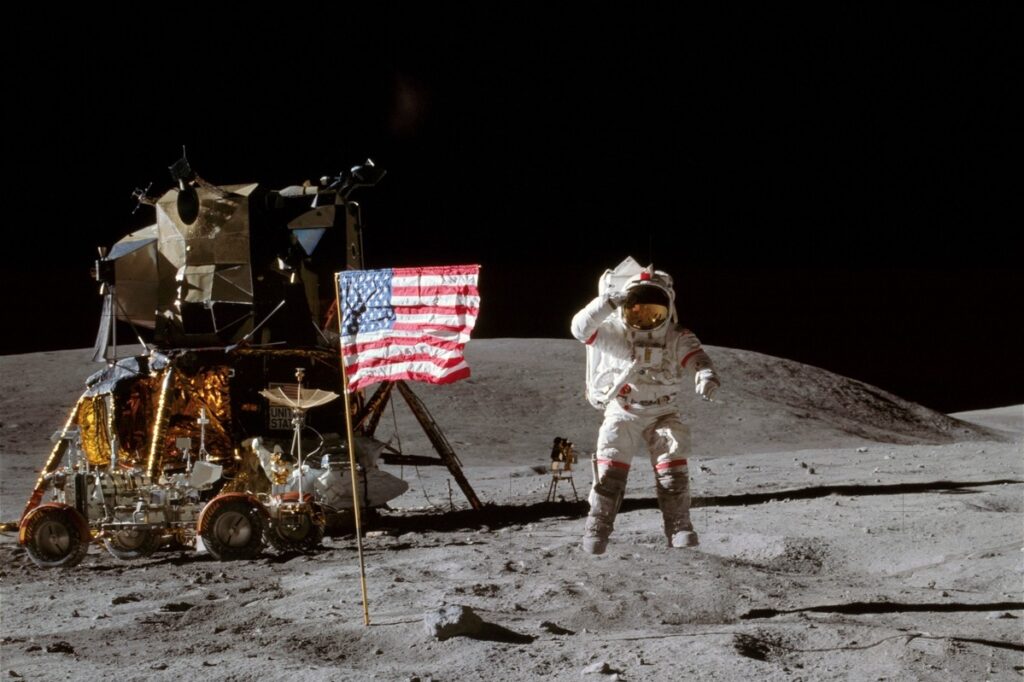
Television sets flickered with grainy footage as Neil Armstrong stepped from the lunar module and onto the moon’s surface in 1969. The live broadcast, carried in real time across networks, fused science fiction with fact for viewers crowded around living room screens.
Not every home had color TV, but that didn’t dull the moment’s gravity. Neighbors gathered, children were allowed to stay up late, and for one night, the world seemed to hold a single collective breath as a man pressed a boot into powder-gray dust 240,000 miles away.
2. The Beatles’ first appearance on American television shaking pop culture norms.
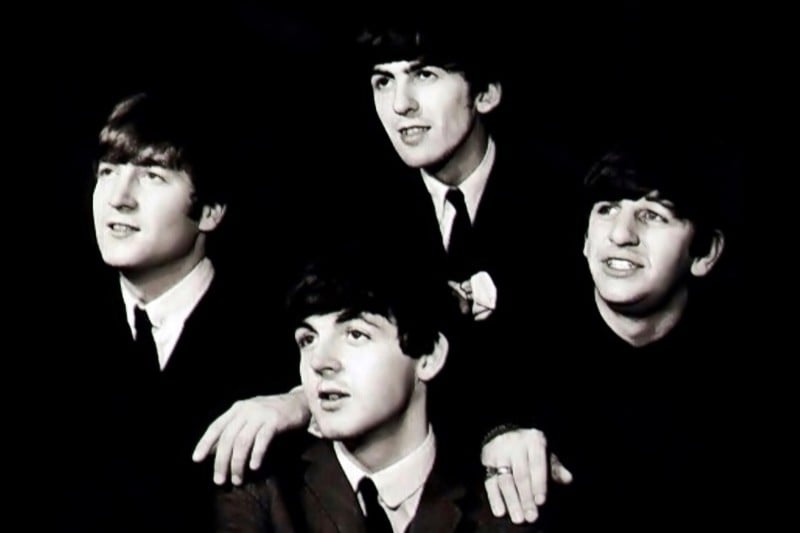
A shaggy-haired quartet from Liverpool took the Ed Sullivan stage in 1964, met by a mix of squeals and gasps from a spellbound audience. The Beatles’ American television debut wasn’t just a performance—it was a cultural rift beginning to widen.
Their tailored suits and jangling guitars dropped into millions of homes simultaneously, altering fashion, sound, and youth identity. Outside of school the next day, teens gathered on stoops and at lockers, humming lines from ‘All My Loving’ and feeling the current shift beneath their feet.
3. The televised funeral procession for President John F. Kennedy.
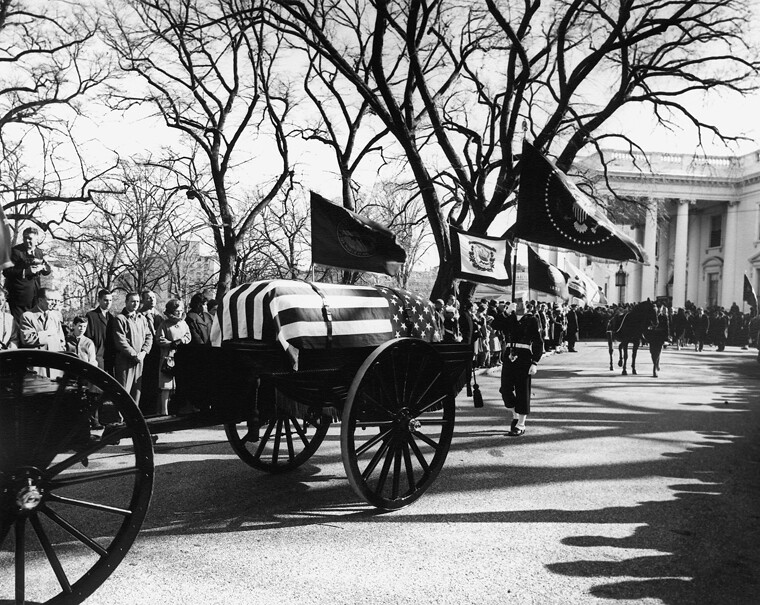
Broadcast live from Washington and surrounding streets, the state funeral of President John F. Kennedy turned American television into a national mourning hall. Black-and-white footage followed the riderless horse, the flag-draped casket, and a grieving Jackie Kennedy through the city’s solemn procession.
Households fell silent as the drum cadence echoed through cathode rays. For days, TV replaced regular programming with images of grief and ceremony, setting a precedent for how collective sorrow unfolded in public—on screen, in silence, across living rooms coast to coast.
4. The first live news coverage of the Watergate hearings in Washington.

During the summer of 1973, wall-to-wall network coverage of the Watergate Senate hearings transformed civic procedure into a daily habit. Viewers found themselves absorbing testimony and cross-examinations typically hidden behind closed doors, all live and largely unfiltered.
The scenes lacked flair—wood-paneled hearing rooms, stern questioning—but gripped millions. Cafés played them at lunch. Office radios tuned in. For the first time, many Americans saw democracy scrutinizing itself in real time, and it made the idea of transparency feel tangible rather than theoretical.
5. The launch of the first Space Shuttle marking a new era in spaceflight.
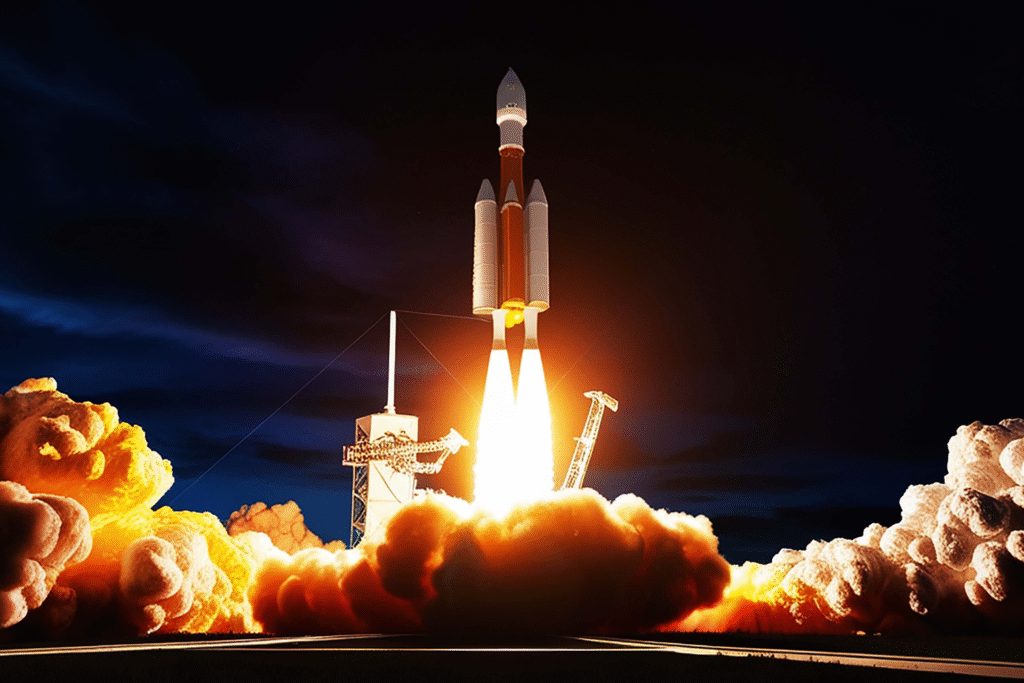
In 1981, the maiden launch of NASA’s space shuttle Columbia lifted from Florida under sharp morning light, its ascent broadcast live from multiple angles. Viewers watched the countdown, ignition, and thunderous climb of a reusable orbiter meant to usher in a new era.
Unlike the Apollo missions, the shuttle program promised routine access to space. Students crowded school gymnasiums to witness that first flight. Though quieter than moon landings, the launch reshaped spaceflight from heroic spectacle into planned ambition—an institutional reach rather than an isolated miracle.
6. The fall of the Berlin Wall shown in real time around the globe.

Across divided Berlin in 1989, cameras caught citizens scaling concrete slabs and hammering away at long-imposing walls, their cheers rising louder than commands. The fall of the Berlin Wall didn’t arrive on a tidy schedule, but TV crews captured it unfolding in real time.
As guards stepped aside and East Germans flowed westward, history unrolled unpredictably. Viewers tens of thousands of miles away sat stunned on couches, watching modern political tectonics shift—not as a summary, but as raw footage, emotion in motion framed by floodlights and static.
7. The announcement of Elvis Presley’s death sparking national mourning.

Even in an era before smartphones, news traveled fast when the King of Rock ’n’ Roll died. In August 1977, television broke into regular programming to announce Elvis Presley’s sudden passing, breaking hearts and sending crowds to Graceland that evening.
Anchors spoke in hushed tones, and tributes looped as stations scrambled to fill airtime. Fans wept openly on camera. Though the cause would be debated for years, the shock landed instantly. Viewers weren’t told the legend had passed—they watched a nation realize it together.
8. The broadcast of Martin Luther King Jr.’s “I Have a Dream” speech.

Under the hot sun and the shadow of the Lincoln Memorial, Martin Luther King Jr. delivered a speech that soared well beyond its amplifiers. In 1963, major networks carried portions of the March on Washington live, including King’s most stirring declaration.
Though not every word aired in real time, the phrase “I have a dream” echoed out over screens and into public memory. For many, watching the moment live gave civil rights rhetoric physical form—a man at a podium, a crowd stretching across the Reflecting Pool, a shared aspiration formed aloud.
9. The live images of troops leaving Vietnam marking the war’s end.

After years of bitter footage, viewers saw something unfamiliar live from Vietnam: helicopters lifting off rooftops, carrying away the final U.S. personnel. As Saigon fell in 1975, cameras rolled, documenting the war’s chaotic end for audiences fatigued by years of combat imagery.
The images didn’t celebrate victory. They conveyed complexity—diplomats hurried up ladders, locals crowded gates. Veterans and families watched quietly, often without easy words. It marked an ending, but not closure, and for many, the broadcast crystallized a conflict that had never fully made sense.
10. The rescue of Apollo 13 as millions anxiously followed updates.
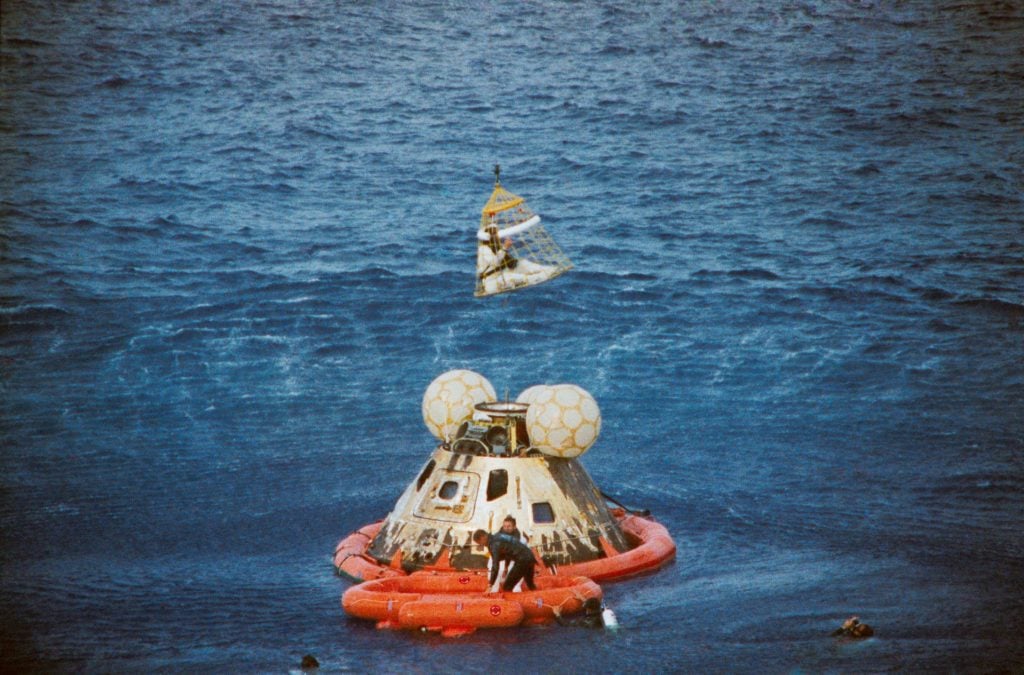
Tension tightened across households in 1970 as networks interrupted programming to follow updates on Apollo 13’s crippled spacecraft. An oxygen tank explosion left astronauts stranded, and while NASA worked to bring them home, millions clung to their televisions.
Shots of mission control—men in short-sleeved shirts hunched over blinking consoles—became symbols of calm under pressure. No special effects, just suspenseful updates and uncertain outcomes. When the capsule finally splashed down safely, the collective exhale echoed through living rooms like a thunderclap of quiet relief.